
When Beyoncé dropped Lemonade in 2016, pop culture had to take a moment to grapple with her new image as a proud black woman. This is different from her earlier personas because after years of avoiding the controversies associated with talking about race, she finally acknowledged the importance of her race on her art. This came at a time when African Americans began to assert their identity in the face of racial profiling and police brutality. While Beyoncé holds an unparalleled position as a powerful and fascinating artist, it is equally important to hold her accountable to the causes which she incorporated into her album. My essay will be a critical analysis on how successfully Lemonade mainstreamed and connected to the Black Female experience. Although I intend to write an essay for this topic, I am open to making a visual essay, since most of the content will focus on the audio and the visuals.

Firstly, one has to attempt to decipher Beyoncé’s appeal as a black artist. As non-black people, some context is needed in order to understand and appreciate the dominance of a proud black woman within pop culture (which extends beyond just her music). For that, I wish to anchor my essay in the some of the readings we have done in class, mainly the work of Du Bois and Christina Sharpe. Du Bois’ investigation into the black experience in Souls of Black Folks is not just helpful in understanding the motifs in Lemonade. His double conscious echoes in Lemonade as Beyoncé comes to terms with her identity as an African-American woman. She, much like Du Bois, attempts to overcome being a problem (to her black husband as opposed to the white man) through introspection and a hope for the future.
Similarly, Beyoncé’s ability to connect personal trauma with historical legacies matches Sharpe’s efforts to be in wake by incorporating the intimate with the global. Through lyrics and the lingering camera shots on her face, Beyoncé shows a range of complex emotions that forces the viewer to see her as more than a one-dimensional figure. Her complexity and attempt to move past her pain allows people to connect with her on a personal level. Throughout Lemonade, Beyoncé stands alongside unknown women, and merges their faces with stories of her mother, her grandmother. They are connected across space and time by their trauma of racism and sexism, and efforts to redeem their minds and bodies. This connection is further reiterated by her decision to release her album on HBO, so that it may be available to the public.
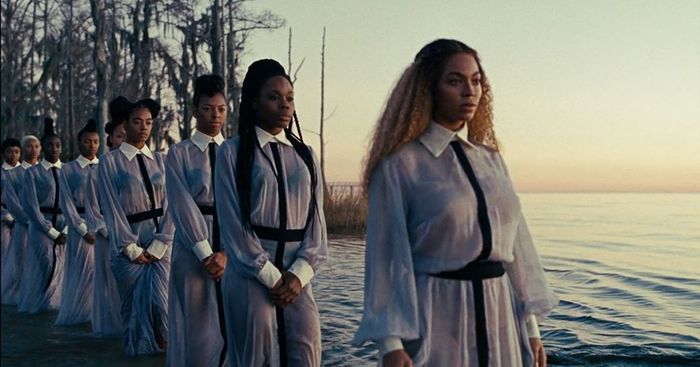

But critics have rightfully pointed shortcomings in this narrative, namely the validity of Beyoncé’s experience as a radical black feminist experience. Some even go as far as accusing her of sterilizing the pain of black women by bringing it down to personal struggle. She is heavily criticized for ignoring the nuances, such as the way black women internalize racism (bringing to attention Beyoncé’s own efforts to look whiter). Black radical feminists like bell hooks accuse Beyoncé of presenting an over-sexualized or violent image image of self-emancipation. This re-affirms harmful stereotypes which are perpetuated by white and black men alike, and then used against black women’s. Critics have questioned Beyoncé’s sincerity in involving herself with everyday struggles of black women. Many believe that Beyoncé’s “performative” sympathy has to do with capitalizing on fetishizing black experiences in order to make it palpable and consumable to a broader audience.
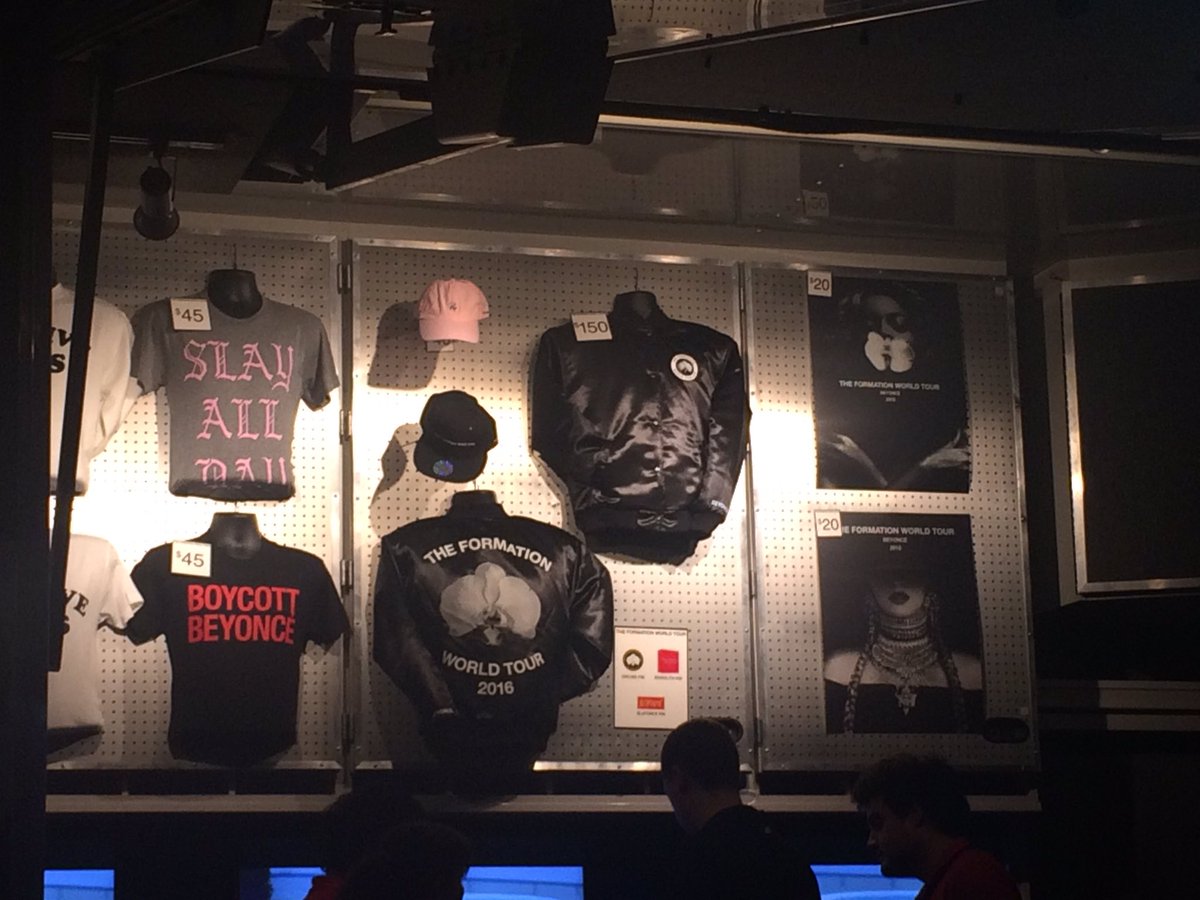
As more black female artists like Solange, Cardi B, Janelle Monae incorporate into popular culture, it is necessary to think of the the issue of representation versus fetishization of the Other in popular culture. In particular, the idea of mainstreaming black radical expression while simultaneously allowing it to remain true to its values and history. By acknowledging a lineage and connection, Beyoncé recognizes that the black woman’s pain is never-ending. Even if we doubt Beyoncé’s sincerity towards these causes, we have to acknowledge the significance of a powerful and charismatic black woman in a largely white male space. What is problematic is her position as a messiah who will “slay” away the years of discrimination. If the artist is to reflect the times, we as viewers and consumers of popular culture must look beyond the art and hold artists accountable for their sincerity in the cause.

 Decoloniality and Decolonization