Lessons from the Black Radical Tradition

The Black Radical Tradition (BRT) has been a deep and winding journey into the ideas and events which created the Black struggle for emancipation. But, while the has been deeply moving, it did make me long for my radical tradition. About my Selma March, my Black Panthers, my Black Pride. But BRT can exist for me, and can also provide a blue print on how to have indigenous discourse on resistance. The Black Radical Tradition has much to teach South Asians about the importance of both the discursive and manifest ways resistance and struggle. I argue that through discursive introspection and proper documentation of struggles, we can at least begin to understand what decoloniality (or post-coloniality) means for us as South Asians.

Before this course, I felt like the Black Radical Tradition (BRT) was the furthest from my experience as a South Asian woman. We have not gone through the mass devastation and trauma that slavery (except perhaps those whose ancestors served as indentured labor). And, even within South Asia – whether one looked at individual countries or the commonalities between South Asians – there is deep internalized racism for anyone who was considered “black” (the state of non-being) whether they were religious minorities, ethnic minorities or anyone who does not fit within the norm. Perhaps it can be said that the BRT makes us question our histories, and what we consider as the norm amongst ourselves. In our insular communities, we fear the same abjection we force onto the non-being actors, and in this way systems of domination continue with new faces. And therein lies a unique trauma, one which we in South Asia (or at least Pakistan) have not properly been able to articulate. How does one begin to address this shortcoming?

Firstly, we as South Asians need to stop considering BRT as something completely alien to our context. The point of calling it a tradition was to let these ideas pass from one generation to another as a coming-of-age, even if that meant the generation was in a completely different historical/cultural context. What BRT offers us is the ability to think radically. It has been the radicals who dared to dream of a completely new world free from oppressive and homogenizing forces. Not all of these ideas would be practical, but they move and inspire us to question the robustness and seeming innocence of the status quo. In the early 20th Century, WEB Dubois and Cesaire struggled for black people (or the colonized) to be recognized for their complexity and wholesomeness just as the white man was seen as complex and wholesome. But when these ideas became mainstream, the likes of Fanon and Malcolm X suggested new radical thoughts which sought the complete breakdown of race itself. A movement closer to my heart has the black women’s fight for intersectionality. At the time, it was seen as a deeply radical and even counterproductive movement, but it set a precedent for how women of color demanded more form the mainstream feminist movement.

But discourse also needs to be translated onto something concrete, and perhaps the best way to do so is through the archive. Just as there were stories of black oppression and resistance, there are no doubt stories of anti-colonial, revolutionary struggle within South Asia which are yet to be recorded. Toni Morrison urged us to find the missing blackness in our stories, both as a way to make the narrative more holistic and to allow representation to those who were otherwise left out from mainstream narratives. The people who have existed within our marginalities (Pashtuns, Baloch, Christians, Ahmedi) should be allowed to articulate their experiences in their own terms, without our impositions. But one way for us as privileged members of society to show support is to record their words, and disseminate them to the pubic. Thus, the act of archiving and citation can become a vehicle for allowing marginal narratives to diversify our common histories (the word common here means these histories are shared but also are also uniform and uninspiring).

BRT can be mine because it teaches me about my oppression, but it also has the power inspire a more South Asian tradition of historiography and discourse. Anti-colonial and racial equality movements were once considered radical and dangerous, but now they generate feelings of pride and unity – a radical tradition. We as students of history need to extend that same sentiment to those who remain on the peripheries of our stories. Then, can we create our lacuna of narratives, experiences and memories that bring about a sense of pride in our South Asian Experience. The narratives of oppression and resistance in South Asia (whether anti-colonial or post-colonial) are mine, but I can only recognize them if I put in effort to pay attention to them, just as those of the BRT paid heed and tribute to the journey of their movement.

The Serpent Spirit

‘Borderlands La Frontera’documented Gloria Anzaldúa’s experiences of existing in the borderlands of geography (Mexico and the US), culture (Indian-Mexcian-Anglo) and sexuality (as a queer woman). She subverted these artificially created boundaries by fusing poetry and prose, English and Spanish, and all aspects of her Chicana identity. One of the more striking aspects is Anzaldúa’s text was her gradual embrace of the supernatural and her reinterpretation of the mystical forces rejected by her society.

For Anzaldúa, the supernatural has been intimately tied to Chicano history and tradition. According to the myth, the Aztecs decided to settle on the land where an eagle sat with a writhing snake in its mouth (which also features on the Mexican flag) – a symbol of triumph for a civilization. She also talked about the three Chicana mothers: la Guadalupe, Chingada, and la Llorona who may presently be worshiped under different names, but their significance as old-world entities have remained the same to the Chicanos. Even on an everyday level, Anzaldúa recounted the Mexican love of storytelling the belief in superstitions into which she was socialized (which can still be seen in the way she narrates ‘Borderlands’). These beliefs, she recognized, are important ways of preserving indigenous spirituality that’s existence has been threatened by Western rationality and modernity.

But the problem is not just that these spiritual elements are in danger of being exterminated from the outside but also from within. She talked about how the myths and images of her people where dismissed as being irrational and pagan by white rationality. But more so, she pointed out how Chicano glorify myths which perpetuate harmful gender stereotypes by emphasizing submissiveness in women. One such instance was the story of Guadalupe who had been sanitized of her ambiguity and rebellion to be equated with the chaste and sacrificial Virgin Mary. But, even in her new sanitized image, she is held in regard as the patron saint of the poor and marginalized, whether they were the wrong race, sexuality or gender. Guadalupe can signify a greater emancipation from more ingrained divisions designed to suppress the wholesomeness of the feminine experience (the dangerous aspects and the maternal qualities). Anzaldúa did not necessarily suggest a subversion of the same gendered stereotypes so that women can dominate over men. Instead, she argued that the separation and subordination of masculine and feminine, the spiritual and the religious close off the possibilities of a multiplicity of identities and experiences which can bring meaning into our lives.

In reinterpreting Guadalupe, Anzaldúa attempted to redeem the otherworldly aspects of herself. Her unique take on her spirituality came from her position as a queer Chicano-Mexican woman, someone who has been on the borderlands of her community, as well as the modern world. She particularly recounted the time she drank the blood which gushed from a snake bite, feeling herself becoming snake-like. Anzaldúa went into great detail describing the importance of the serpent in pre-Columbian America as a feminine entity with a deep connection spirit world – that which wad both dangerous and familiar. Her snake-bite incident allowed her to tap into what was spiritual and powerfully feminine and that which society fought hard to repress. This may not refer to any particular aspect of her life, but it was a recognition of instinctive forces which gave her life meaning in a way organized religion could not. It also connected her to Coatlalopeuh, the indigenous manifestation of Guadalupe that represented the inexplicable and mystical. In recognizing Coatlalopeuh’s wholesomeness, perhaps she could recognize the harmony between the rational and supernatural within herself.

The conquering of rationality/organized religion over the mystical/supernatural is seen by Anzaldúa as a largely gendered process with multiple layers. One cannot ignore modernity and its benefits, but should also recognize its limitations as being oppressive and exclusionary. Especially to the women of color, Anzaldúa’s piece calls for a recognition of the ambiguities of our lives. To suppress the otherworldliness of our lives is to submit to language which seeks to subdue our potential wholesomeness. The way to subvert that tyranny is to allow for the existence of multiple identities and multiple possibilities.  

Understanding Feminist “Theory”

Catharine Mackinnon and Judith Butler have been prominent feminist thinkers of the late 20th Century who sought to reframe feminism in order to encompass its many interpretations or sub-categories like black feminism, queer theory etc. Although Mackinnon and Butler have been on different sides of the argument, it is not impossible to reconcile between the two as there is common ground between them. They sought to bring about a broader definition of feminism that has space for intersectional politics, by determining what oppression and struggle looked like for all women.

On a surface level, it has been difficult to see common ground between them because both represent differing sides the of structuralism vs. post-structuralism debate. Mackinnon, a lawyer as well as a theorist focused on creating a feminist method that arose from the private, emotional, institutional workings of women – a feminist method created from a women’s consciousness. Butler dismissed all of that, denying the possibility of truth and “consciousness” that existed independent from power relations. Her main approach was that nothing about womanhood is natural or innate: if the oppression was socially constructed then so is the “consciousness”. For example, Mackinnon explained the role of sexuality in a woman’s life, stating that although nothing is inherently sexual about a woman’s body. But the experience of recognizing and resisting objectification would allow women to recreate a newer understanding of the power of their sexuality. Butler would reject the possibility of creating a new definition for sexuality altogether because this new definition would still depend on language which no one had no control in shaping.

Though their aim is similar, their methods then differ in terms of structure and language. Mackinnon sought to find a theoretical solution within specific issues like legal issues and class struggle. It has been very easy for those like Mackinnon to misunderstand Butler’s words as hopelessness. Saying there was no agency outside an existing realm of power relations could encourage capable women to abandon material resistance in favor of more discursive or detached politics. But Butler’s critique for those like Mackinnon would be to question what is “common sense” because common sense has been constructed (equal rights for all women might be common sense for some and not others). To question this status quo was the first part of resistance. For Black feminists to subvert the racist norms of their white counterparts, they needed to articulate their struggles within the context of a society that sees it as subversion – i.e. the society of the 70 and 80s in which black feminists began to reassert their existence as both black and women. Butler refused to see anyone as a victim because all of humanity is chained to language they did not take part in creating, and there has been no neutral arbitrator in the matter.

But both come together to create a theory that is unifying and not dividing. Mackinnon lamented the lack of method in understanding feminism: instead of a unifying theory there are only “loose collection of factors, complaints and issues which…describe rather than explain” sexism. Butler extended this argument by arguing that women should not simply focus on issues of womanhood (reproductive choice, equal pay etc. as opposed to environmental policy or taxation) because some women may not recognize their interests or may not consider themselves oppressed. One can take an example of black feminists like bell hooks and Kimberly Crenshaw who felt alienated from both the feminist and civil rights movement because their aims were defined without their presence. White feminists simply did not see the issue of race being important because race and gender were two exclusive realms. hooks’ response to this was, “the question we must ask again and again is how can racist women call themselves feminist.” Then, the issue of subverting the patriarchy is also an issue of bringing down other structures and hierarchies that support it, because those other structures (like class or race) facilitate the patriarchy and vice versa. This line of thinking is perhaps best summed up in Crenshaw’s iconic line “when they enter we all enter.”

There might be other ways in which Butler’s work interacts with Mackinnon’s work. But it is important to know that such a reading has been possible if one wishes to imagine an inclusive feminism. Using both viewpoints, one can understand feminism as radical (in its questioning the status quo) and practical (in its support for on-the-ground resistance). Butler encouraged women to go beyond issues which simply involved women such as housing issues and environmental policy because they affect what is common to us (as opposed to identity politics which could divide us). And Mackinnon taught us that even if we as women still work under existing frameworks, our ability to act and create communities for each other allow us the opportunity to subvert the structures which oppress us. Through the recognition of history and struggle, mediation and negotiation, feminism can be seen as truly intersectional.

Language Through Music

One of the reasons why the songs in the playlist are so iconic is their use of language to capture feelings so emotively and powerfully. Language, as understood by both James Baldwin and Toni Morrison possesses the power to be a measure life and also create order from the disorder of life. Looking through the lens of both Morrison and Baldwin, there is overarching debate found within these songs. Despite spanning across different genres, the language used within these texts point to the struggle between how things are and how they are ought to be seen. This is done through three broad emotions: hope, anger, and pride.

The earlier songs of black protest songs evoking hope such as “Go Down Moses”, “Change Will Come”, “We Shall Overcome” and “Glory” use more general, abstract language. The phrases in them rely on biblical references and invocations of a rough life but the will to dream of a better future. We may not know what happens after overcoming racism, what the world looks like when change comes, or what happens when black people are free. Perhaps Baldwin is right, in that there is so much written on the pain and suffering of the African-American that prevents nuances and chances of possibility are ignored. Similarly, in her Tower of Babel anecdote, Morrison points out that the through the failure to incorporate or to articulate in other languages, the Babylonians could not consider the possibility that heaven lay beneath their feet.

In this way, songs of general hope do not allow for the language of anger. But the songs of anger address a valid problem: the black man is not free even after all the progress of the civil rights movement. In this instance, music is used to express frustration of unfulfilled promises. This is particular to more recent songs such as “This is America”, “Changes” and “Alright”, but even dates as far back as “Mississippi Goddam” and “Strange Fruit”. Unlike first group who used vague language, these songs are more comfortable naming instances of injustice. By naming them, describing them in detail with feelings of anger and disgust, they seek to rise above them just as Baldwin had done (as opposed to simply accepting their lot). The feelings which they expressed are not dissimilar to Morrison’s anecdote about empty hands. As opposed to mocking the older generation, the newer artists may genuinely demand answers from their elders in order to seek a wisdom they need, and they feel are being withheld from them by virtue of their age.

But, just as Morrison and Baldwin’s words say, there is room for language to be broad enough to articulate an array of sentiments and experiences in the creation of a distinct identity. One way to reconcile with how things are and how they should be is to see what is common to both: the shared history and struggle. From “Say it Loud”, “Respect” to “Redemption Song” moving into the present with “We are Here”, “Formation”, “The Revolution Will Not Be Televised”.  The language used in these are combinations of Ebonics, colloquialisms or even shared references which fuse together to the creation of a black identity. This act, in Morrison’s words, is a radical act because it fully utilizes language as a system, a controllable living being and an avenue for agency. Baldwin takes this further when he explains that through hurt and help, one creates a distinct artistic voice in an indifferent world. For him as an artist, he needed to know the historical context, the traditions of black expression – in short, he needed to unlock the Negro within him to be a good writer. And he can do that through language itself and the accumulation of language as a story.

There can be significant overlap between these three categories and neither a hierarchy of quality; each person would interpret a song differently. Like Morrison’s bird, language is in the hands of the people whether they use it to express the dream of a better future, frustrations with progress or simply their unique identity. Baldwin and Morrison understand the potential and malleability of language in expressing the wide range of emotions regarding the civil rights struggle, and they encourage us to do the same with our experiences. They teach us that through language “the way things are” can be infused with “the way things are supposed to be seen and vice versa.

The Black Internationalism of Malcolm X and CLR James

In 1938, CLR James published Black Jacobins in an attempt to give black history as the staring point of world history as we know it. About twenty-five years later, Malcolm X aimed to subvert racial order by making African-Americans feel pride in their identity and struggles. Among the things both highlighted, they mention the need for internationalizing racial emancipation. While Malcolm X explicitly called for a worldwide black nationalism, James – at least in the first edition of Black Jacobins –  did not really engage with that idea. But by using Malcolm X’s words to understand the history presented by James, one can understand how an international struggle has always been a part of racial emancipation as imagined by black people.

Although James and Malcolm X focused on the West Indies and the United States respectively, they both speak of experiences of slavery. Both used their sharp command of language and irony to articulate the suffering and degradation of identity that came about through the institution. Malcolm X pointed out that those who attended Bandung realized that the Belgian, Englishman, Frenchman were all white colonizers who viewed their individual colonies as racially inferior to them. That statement makes sense once we look at James’ text because slavery was used to advance the colonial project. But through Malcolm X’s emotive imagery (and the reaction of the crowd) can one orient oneself in James’ anger and sarcasm as he explained the conditions of the slaves. And even as the colonies became nations, there were few to no laws which could alter their conditions for the better. The need for international solidarity existed because the state failed to guarantee rights and safety for the black slaves. And if that occurred in the United States, then black people in other countries could be facing similar circumstances.

In light of this stance, the only way to ensure international solidarity was to frame the issue as a human rights violation. In The Ballot or the Bullet,Malcolm X insisted that considering black freedom a human right would legitimize their struggle in the eyes of the international community. Human rights are both internationally recognized and universally accepted. Once those rights were curbed, black people could seek the support of international organizations like the United Nations. One can see seeds of this thought in Black Jacobins. James recounted Abbé Raynal who used Enlightenment ideas of freedom and liberty (which now constitute the basis of European liberalism) to mobilize a slave revolution for the relief of Africa and Africans. And, as James mentioned, these ideas were later used by Toussant L’Ouverture during the Haitian Revolution. So, when Malcolm X called out for seeing the civil rights struggle as a human rights struggle, he was movingly echoing the words of L’Ouverture, who was the first black man in world history to successfully turn these ideas into action.

That is not to say there have not been other efforts to create international links since 1791. In the Appendix, James connected the revolutionary ways of L’Ouvrerture with those of post-WWII revolutionaries like Castro. What was pertinent here is how he traced proto-Negritude feelings among the Haitians lead to the creation African Bureau and the idea of Pan-Africanism. All these movements were the attempts of black people to reconnect with their ancestry and seek to define themselves in their own terms. Malcolm X witnessed legacy of these movements when he traveled abroad 1964 and encountered worldwide support for him. He believed that the same could be achieved in the black national movement once people focused on their shared struggles as opposed to individual differences.

One can look at the words of both men in succession: the ideas which originally sprang up with the Haitian Revolution and in James’ work remained within intellectual tradition till they ended up Malcolm X’s ideology. But this idea can also be inverted: the emotion and the frankness used by Malcolm X to state the condition of black people can help us not just appreciate the boldness of earlier black revolutionaries (like L’Ouverture, Lumumba, Nkrumah etc.) but that of James who told their stories. It was James who went against conventional narratives (just as Malcolm X), and wrote a history which placed black people at the front and centre of it. And one can conclude from looking at both texts together that the strength found in a large community of proud black people in an international arena would surely prove to be a powerful and formidable force.

Mainstreaming Lemonade: An Analysis

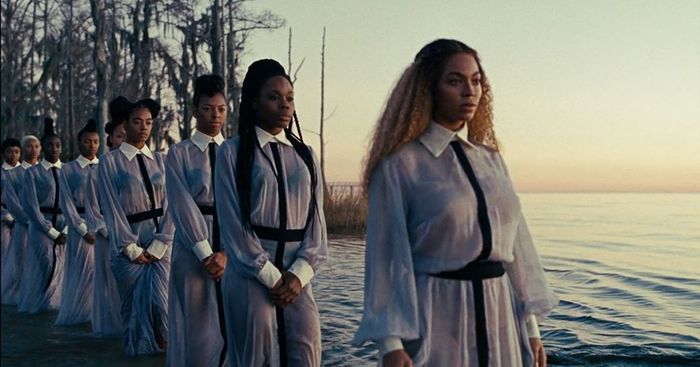
When Beyoncé dropped Lemonade in 2016, pop culture had to take a moment to grapple with her new image as a proud black woman. This is different from her earlier personas because after years of avoiding the controversies associated with talking about race, she finally acknowledged the importance of her race on her art. This came at a time when African Americans began to assert their identity in the face of racial profiling and police brutality. While Beyoncé holds an unparalleled position as a powerful and fascinating artist, it is equally important to hold her accountable to the causes which she incorporated into her album. My essay will be a critical analysis on how successfully Lemonade mainstreamed and connected to the Black Female experience. Although I intend to write an essay for this topic, I am open to making a visual essay, since most of the content will focus on the audio and the visuals.

Firstly, one has to attempt to decipher Beyoncé’s appeal as a black artist. As non-black people, some context is needed in order to understand and appreciate the dominance of a proud black woman within pop culture (which extends beyond just her music). For that, I wish to anchor my essay in the some of the readings we have done in class, mainly the work of Du Bois and Christina Sharpe. Du Bois’ investigation into the black experience in Souls of Black Folks is not just helpful in understanding the motifs in Lemonade. His double conscious echoes in Lemonade as Beyoncé comes to terms with her identity as an African-American woman. She, much like Du Bois, attempts to overcome being a problem (to her black husband as opposed to the white man) through introspection and a hope for the future.

Similarly, Beyoncé’s ability to connect personal trauma with historical legacies matches Sharpe’s efforts to be in wake by incorporating the intimate with the global. Through lyrics and the lingering camera shots on her face, Beyoncé shows a range of complex emotions that forces the viewer to see her as more than a one-dimensional figure. Her complexity and attempt to move past her pain allows people to connect with her on a personal level. Throughout Lemonade, Beyoncé stands alongside unknown women, and merges their faces with stories of her mother, her grandmother. They are connected across space and time by their trauma of racism and sexism, and efforts to redeem their minds and bodies. This connection is further reiterated by her decision to release her album on HBO, so that it may be available to the public.

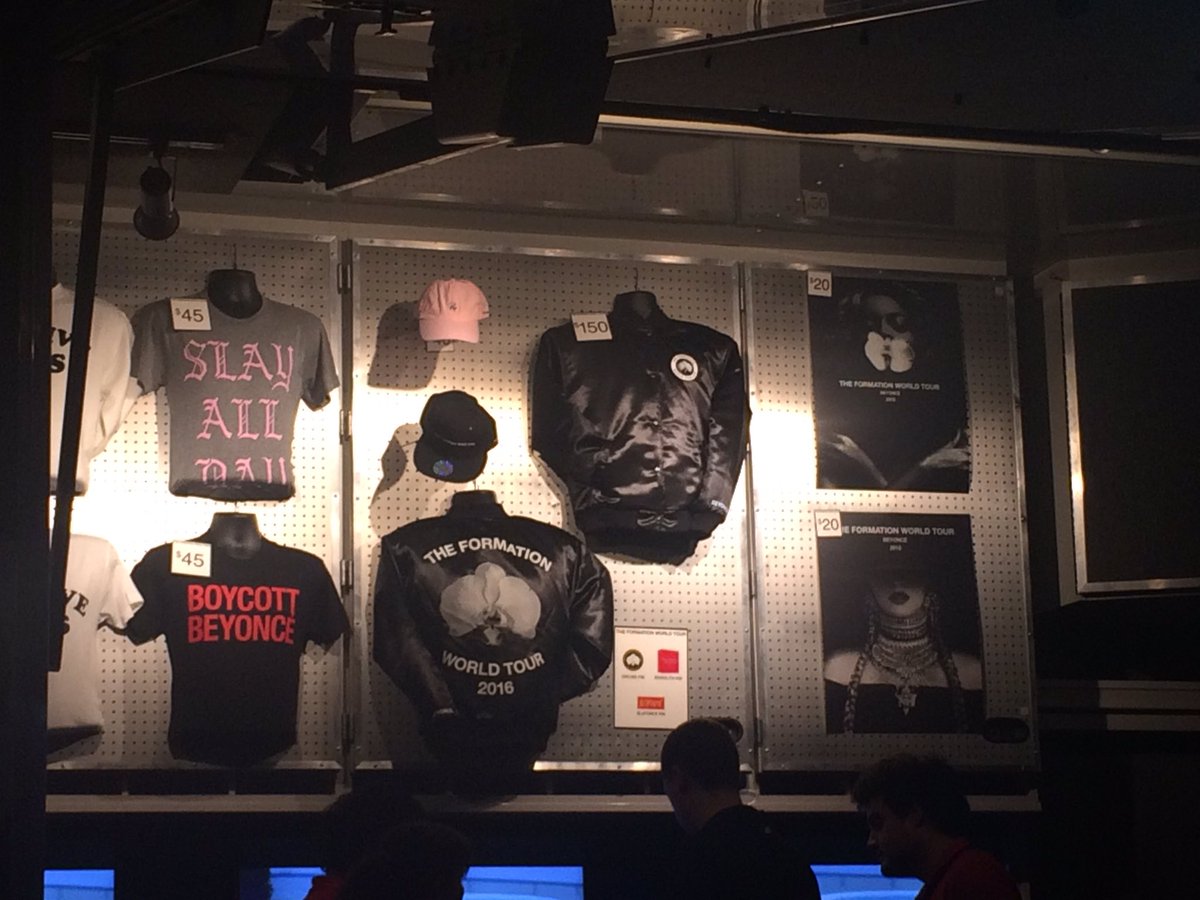
But critics have rightfully pointed shortcomings in this narrative, namely the validity of Beyoncé’s experience as a radical black feminist experience. Some even go as far as accusing her of sterilizing the pain of black women by bringing it down to personal struggle. She is heavily criticized for ignoring the nuances, such as the way black women internalize racism (bringing to attention Beyoncé’s own efforts to look whiter). Black radical feminists like bell hooks accuse Beyoncé of presenting an over-sexualized or violent image image of self-emancipation. This re-affirms harmful stereotypes which are perpetuated by white and black men alike, and then used against black women’s. Critics have questioned Beyoncé’s sincerity in involving herself with everyday struggles of black women. Many believe that Beyoncé’s “performative” sympathy has to do with capitalizing on fetishizing black experiences in order to make it palpable and consumable to a broader audience.

Source: USA Today. Notice how the Boycott Beyonce shirt is also being sold as merchandise.

As more black female artists like Solange, Cardi B, Janelle Monae incorporate into popular culture, it is necessary to think of the the issue of representation versus fetishization of the Other in popular culture. In particular, the idea of mainstreaming black radical expression while simultaneously allowing it to remain true to its values and history. By acknowledging a lineage and connection, Beyoncé recognizes that the black woman’s pain is never-ending. Even if we doubt Beyoncé’s sincerity towards these causes, we have to acknowledge the significance of a powerful and charismatic black woman in a largely white male space. What is problematic is her position as a messiah who will “slay” away the years of discrimination. If the artist is to reflect the times, we as viewers and consumers of popular culture must look beyond the art and hold artists accountable for their sincerity in the cause.

The Spirituality of Senghor

In “Negritude”, Senghor attempts to surpass traditional notions of Negritude that simply view it as black expressionism. What is more interesting is his understanding of Negritude within a wider conversation with the other ontologies of his time. He sees it as a movement which would not just empower black people, but would ultimately benefit all mankind. Senghor conceptualizes Negritude as a universal spiritual reawakening of the world but the gaps within his argument prevent his interpretation from fully realizing its potential. He does so by deducing the idea of spirituality from within scientific discovery, outlining what this rediscovered spirituality means for humanity but also ignoring some inherent contradictions within his analysis.

In the first half of the text, Senghor uses science to rationalize the existence of an overarching spirit of the world. European modernity failed to explain new scientific phenomena of the 1880s such as relativity and the wave-particle because it saw the world as “static, objective, dichotomic”. Senghor then uses those very same European scientific discoveries of Heisnberg and Bergson to suggest “…that there is not matter and energy, not even matter and spirit, but spirit-matter, just as there is space-time” (479). He sees spirit-matter manifest as a series of networks around a centripetal spirit of the world. These spiritual centres exist in every living and non-living thing; they can be felt and understood indirectly through material sensations like sight, taste and touch. For Senghor, mastery and transcendence of the material world –which is the hope of all scientific breakthrough – requires acute knowledge of the internal, psychic and qualitative world.

Senghor’s Negritude, then, is universal because it seeks to re-enchant world by re-introducing man to the spirit of the world. He seeks to undo divisions between man and nature created by Western Humanism by bringing together contradictory aspects of material and psychic reality. By re-presenting, re-creating and re-storing the harmony of man and nature, heaven and earth, humanity will ultimately find God (the Force that Creates all things) and by virtue of finding God, will find self-confirmation. Senghor believes that Africans hold the key which unravels this path; to him, they have historically been in tune with the external world and its contradictions. What Europeans perceived as passivity is instead seen as a deep respect for nature and all the things which inhabit it. Senghor sees Africans as sensitive to qualities such as touch, sight, taste etc. because these are qualities help mankind find the spirit, and effectively, a profound meaning of life (479). He already saw its effect during his time in art movements like cubism, expressionism etc. These movements, which originated from black art, inspired the likes of Picasso and Braque to depict “the interplay of life forces” in order to showcase a knowledge of Man (not just Man’s knowledge), and to find a human value to artistic expression which was lacking before (481).

But the way in which Senghor conceives the African as exclusively connected to the spirit of the universe creates a self-righteous moral high ground for the African which closely resembles that of the European. He entirely misses the importance of struggle and rebirth to achieve harmony with God and oneself. This is especially problematic when contemporaries like Cesaire and Fanon discuss the importance of struggle and trauma within the black experience (if there is a homogenous black experience). To believe that the African is aware of and moved by the unseen networks a priori would allow them authority to enforce a set of ideals onto non-Africans, but does not give room for diversity. This rigidity prevents the evolution of the Negritude movement itself because it does not allow room for a two-way exchange of ideas and interpretations between Africa and non-Africa. Negritude would then no longer be as universal but just as restrictive as Western Humanism was for Africans.

Senghor offers a unique take on the Negritude movement not just as an expression of the black experience but as a pathway to the spiritual connections of the universe. His harmonious symbioses of the manifest world and latent energy offers a way back to spirituality which otherwise cannot be conceived by Western humanism. It requires an intimate understanding of the relationship and exchange between the living and the non-living. Perhaps he so fervently wants to situate the movement next to scientific discoveries and artistic movements of the time because he wants Negritude to be taken seriously as an original but equally insightful ontology. But if one seriously wishes to consider Senghor’s understanding of Negritude as a way to for humanity to be re-enchanted and reacquainted to the mysteries of the world, it is important to add room for historical change, diversity and exchange between the African and non-African world.

Chandra Mohanty and Third World Feminism

Chandra Mohanty’s article has been deeply important in analyzing intersectionality within feminist theory. It criticizes the work of First World Feminists which view the Third World Woman as perpetual and monolithic victim who has static wants and but be liberated by the enlightened Western Feminist. Through Mohanty’s analysis, one can understand both the dangers and the necessity in having feminist works that keep in mind historical contexts but also unifying ideas of struggle and liberation.

She highlights her objective for writing her paper every early on in the text: “…to create international links between women’s political struggles.” If the First World and Third World are bound together by historical, political and economic networks then there are political implications of how women of the West look at Third World Women. The crux of her argument comes in the end when she states that the Third World Woman does not exist as a baseline of all women but as a peripheral Other which allows the Western Feminist to take the centre of all matters concerning women’s liberation. One does not see the Third World Woman as sister to be liberated from her own struggles, but a gauge or worse, a living fossil for the First World Woman to remind herself of how far she has come. But what it means to be liberated in practical terms differs from discursive liberation on the basis of historical and cultural contexts. For example, Mohanty uses the example of how the veil came to represent liberation, defiance and oppression within different time periods of Iran’s history.

But by focusing too much on the contextual differences, one jeopardizes the existence of an overarching theory about oppression and liberation. Mohanty herself has no unifying theory and in an attempt to be creative, she risks committing the same mistake as First World Feminists i.e. being too simplistic in what constitutes as liberation or struggle. For example, Mohanty criticizes Hosken’s study of Female Genital Mutilation (FGM) as the study treats women as perpetual victims and men as perpetual accusers. However, the issue of FGM will never be simple, especially when one assumes a moral argument, because there will be women and men who will both support it and be against it. Additionally, cycles of prohibition and uniformity has the potential to treat First World Feminists as imperialistic perpetrators even if they do acknowledge and incorporate the work of indigenous feminists within their work (something that both Third and First World Feminism needs to be aware).  

Going back to her initial aim, it is still important to have some consensus on what feminist liberation and struggle look like. She is allowing room for a new kind feminist discourse which takes into account a sameness in oppression but also the difference in historical and cultural circumstances. Not only does this help escape simplistic binaries and vicious cycles but also allow room for agency on the part of women. Mohanty’s comments on Cutrufelli’s study of Bemba women is a great example of this. Mohanty argued that through certain ritual practices women had agency and the opportunity not just to overpower but to live in harmony with their husbands. Earlier, Mohanty herself admits that this kind of framework can be useful for any discourse that creates cultural Others. The issue of finding pockets of agency and resistance is particularly pertinent in contemporary situations which involve gender fluidity, migration or race within first world contexts.

The path to breaking out of this simplistic and problematic cycle is complicated and difficult to solve, but must be done anyway. Western Feminists maybe concerned with liberating their Third World sisters, but Western Feminists must understand their privileged positions is rooted in a theory which was created under “the hegemony of Western scholarly establishment” as Mohanty phrases it. To allow the existence of such a complication creates space for indigenous feminists to express her concepts of feminism without inadvertently using the Western feminist as an Other (thereby reinstating the same vicious cycle which fell on them) and perhaps bring about new concepts of what it means to struggle and to be liberated.

Dada Khan and Dream of Communist Internationalism

In ‘Chains to Lose’, Dada Amir Haider Khan recounts his experiences in the USSR. Around the same time in the 1920s, Soviet Realism began to take shape as an art form meant to inspire and mobilize the masses towards the greater cause of Communist revolutions. While Soviet propaganda posters were supposed to one-sidedly highlight the might of the USSR, Dada’s feelings capture the on-the-ground sentiment of people who experienced Communist Internationalism at its peak. If one uses Dada’s account as a lens to view these posters, one sees a genuine belief in the promise and the hope Communist Internationalism had to offer people of the Third World. The future under communism promised a new opportunity for the lowest echelons of society to become powerful and create a more equal world under Marxist-Leninist principles.

The University of Peoples of the East seems to be emblematic of Dada’s conception of the USSR: comprehensively organized but also egalitarian. It took in people of all ages and backgrounds, including people who belonged to bourgeois families. In order to enroll, race and education came second to social background and political consciousness. From then onwards, each student is given a holistic education -including military training- and is divided simply on the basis of effective communication. Additionally, the university also included periods of reflection and improvement, focusing on the collective action.

“Russians and Indians are brothers” (date unknown, found on Pinterest)
“The Master of the World will be Labour” (1920) (found on Instagram)
(found on communisme-bolchevisme.net) “Working people of all countries and oppressed colonies. Stand up under the banner of Lenin!” (1932)
“Long Live USSR, 1921” – G. Klutsis (found on Christies.com)


Perhaps the most interesting aspect of Dada’s account is the prominence of Indian students in the university (most books often place emphasis on east Asians or Non-Russian soviets as opposed to people of African and Indian descent). They are not without their internal skirmishes, as showcased by Dada’s altercations with M.N Roy or the Indians on the ship but this was the first time I came across someone from this part of the world who was wholly participating for communist revolution on a global scale. But Dada expresses a deep reverence for the Bolsheviks and Russia’s history in Dada’s narration. It is not difficult to understand why someone like him would believe that Russian culture and history should be the medium of revolutions exported abroad. But his instructor offers the counter opinion that in order for values of the revolution to be successful, the people must educate the masses using their culture and language.

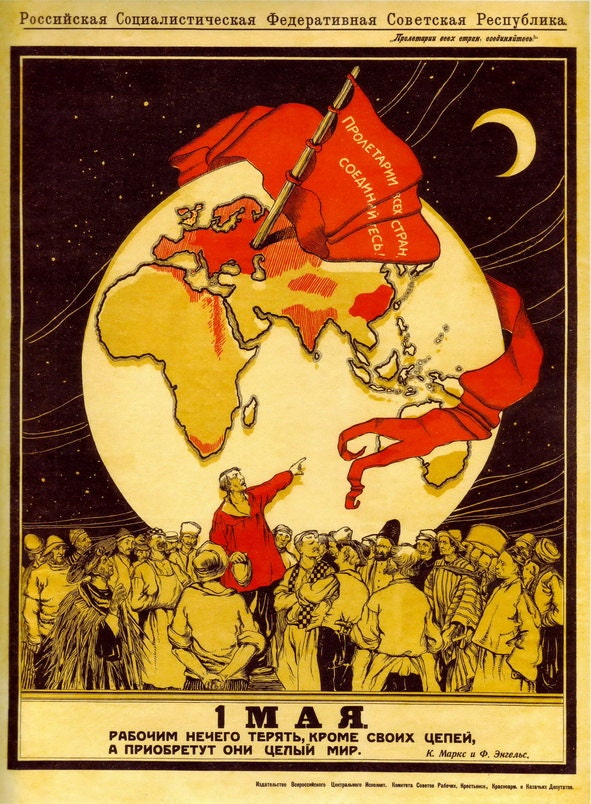
That sticks out specifically in the posters; although the proletariat is in equal footing with one another and they are all in traditional clothes. Not only are all workers of the world welcome to join the revolution but also can be accommodated for without letting go of their own cultures. It was these very identities which the colonizer attempted to stifle but communism was ready to accept. But, it was the communist’s duty to export the revolutions to their own motherlands. The last poster specifically depicts the people of the world organizing the revolution. One can notice areas shaded in red (notably South Asia and the Eastern edge of China) which could represent areas already making significant headway in 1919.


“The 1st of May. Workers have nothing to lose except their chains, but they have the whole world to get. Moscow 1919.” — A. Apsit (found on Etsy)

Dada reluctantly decided to return to India as a part of his duty towards the communist cause. Here, the difference between anti-colonialism and nationalism is stark because Dada neither has any connection nor emotion towards the anti-colonial movement. But it seems as though he feels a sense of responsibility towards the USSR in return for the personal growth and education which he experienced there. And there would be many other Dadas of the Third World who shared the same sentiments but do not make it into conventional narratives for their political orientations.

There are some internal skirmishes which the posters hide and Dada only briefly discloses (he only briefly mentions the tension between the Trotskyists and Stalinists as well as the USSR’s economic problems), and indeed the ambitious beginning became overshadowed by violence and suppression. But, one needs to pay attention to the fact that this was a global project which was not only fully realized but also considered a serious threat to capitalist states. It held tight – at least initially – to its principles of equality and emancipation for all peoples of the world.

The the Spirituality/Colonization Dichotomy in Death and the King’s Horseman

‘Death and the King’s Horseman’ is Wole Soyinka’s extraordinary piece which deals with keeping alive a deep and complex culture in the backdrop of colonial rule. In the play’s preface, Soyinka urges the reader to focus of the play’s spiritual aspects than to reduce it to a mere ‘clash of cultures’, though there is much attention paid to both aspects. This antagonism echoes Gandhi’s understanding of the conflict between religion and modernity in ‘Hind Swaraj’. Using Gandhi’s understanding of spiritualty, one can reconcile the friction between Spirituality and Colonization using Soyinka’s efforts to represent both the indigenous and colonizers. This can be done through the understanding of spirituality within the play, the variation of characters and the question of representation without understanding.

In ‘Hind Swaraj’, Gandhi laments the encroachment of modernity (not English culture) on what he sees as an inherent religiousness in South Asia (pg. 15). But, the conversations between the native characters show that in their world spirituality remains undeterred by colonialism. In scene One, the Praise-Singer articulates that the tribe’s devotion to spirituality protects it by giving the people within an identity (pg. 309). This is not just in contrast to the white man, but their own superficial desires that could distract them from the ultimate goal of connecting with their ancestors. Elesin himself falls victim to this when he delays his death in order to marry a beautiful woman. The inevitability of Elesin’s death is reiterated in Scene three as something a white man cannot prevent (pg. 337), and that prophecy is fulfilled when Elesin kills himself in the final scene.

However, Soyinka takes pains to give his characters different identities in an effort to express different relationships with colonialism and spirituality. Elesin rejects the colonizer but indulges in worldly affairs, the officer Amusa works for the colonizer but has not let go of his beliefs, Joseph the convert does not believe in “black man juju” (pg. 329) altogether and Elesin’s son Olunde serves as a bridge between modernity and his culture/beliefs. In contrast, the white characters have more or less the same views on the natives. This is meant to illustrate the unifying violence of the colonizer who in Olunde’s words, “have no respect for what [they] do not understand” (pg. 353).

This begs the question of representing the Other without necessarily understanding them. At various times, Pilkings and his wife depict an inability and insensitivity while interacting with native customs, such as using the masks of dead egungun ancestors as costume pieces. Pilkings intervenes in Elesin’s death not because Pilkings likes Elesin but as a way to show The Prince that this colony is “safe” from conflict (pg. 350). They also genuinely want to support Olunde’s dreams and wish to show him the best of their culture (pg. 358). But as Olunde points out (in ways which mirror those of Gandhi), the colonizer is unable to reconcile with their own culture. They lament their countrymen who are dying in WWII but also throw a party to forget that a war is occurring in the first place. Over emphasizing the Pilkings’ intervention as a culture clash would risk committing the same kind of violence as they do by failing to understand the spiritual importance of Elesin’s journey in the play. Soyinka frees himself from the epistemic violence of colonialism by creating vivid and succinct representations natives who exist in and interact with a colonial environment. But, just like Gandhi evokes, the true struggle for freedom hinges on a more internal and meaningful struggle for one’s beliefs and one’s identity within their own selves.

Cited:

Death and the King’s Horseman, Wole Soyinka, Contemporary African Plays, edited by Martin Bahman and Jane Plastow, 1999

Hind Swaraj or Indian Home Rule, M.K. Gandhi, Printed & Published by:
Jitendra T Desai, Navajivan Publishing House.