A New Dawn

To filter down the Black Radical Tradition (or what little I have studied of it) to the few key points I have learned would be a disservice to all those individuals who spent their entire lives in this pursuit. Nonetheless, I will venture to highlight the objectives the Black Radical Tradition has illuminated right in front of me in my particular context. Maxwele’s words, seconds before he desecrated Cecil Rhodes statue in South Africa, come to mind, “Where are our heroes and ancestors?”. What the Black Radical Tradition has offered me is the vitality of the preservation of histories, stories, works or, in other words, everything that lends force to our voice after centuries of lying crushed beneath the colonial jackboot.

The lack of Urdu books to be found online, on one count, is disturbing to say the least. The Black Radical Tradition has offered me an idea to go about changing this. Extrapolating from that idea, the preservation of material beyond books to ensure nothing is lost in the passage of time or the blood-spattered pages of history has become an objective at the conclusion of this course. The names of our heroes and our history in other words should be preserved as well as those who are yet in the making.

Moreover, the Black Radical Tradition has taught me to find beauty in the most unexpected places. There is a certain aesthetic to be found in Coltrane’s Alabama which is pleasing to the ears. While the subject of the song is grim, the chaotic nature of jazz which somehow falls into place in the holistic view of the melody is beautiful to listen to.

Conclusively, together, they provide hope. To find beauty in the unlikeliest of places and the objective of preserving our tradition serves to establish a blinding bright spot on the horizon. This is what the Black Radical Tradition has offered me: inspiration to follow or at least try to follow the footsteps of those who made the Black Radical Tradition what it is without the bitter cynicism most commonly and often stereotypically associated with those who have strived for years against oppression of all kinds but to no avail.

Between a rock and a hard place

            Gloria Anzaldúa’s Borderland/La Frontera: The New Mestiza,by shedding light upon her people living at the US-Mexican border who conform to neither a fully American identity nor an entirely Mexican identity, brings forth the inhabitants of borderlands that have been phased out of history owing to their non conformity and lack of homogeneity when compared to the rest of the populace. These “borders” are not limited to the physical realm of states but rather spread over into other spheres of life. Borders exist everywhere as Ms. Anzaldúa points out. Between people on the basis of race, religion, caste, creed, sexuality etc. There is a leap between one group and the next which leads to a distinction between the two. The author describe her people who cannot distinguish between the US-Mexican border on multiple levels and possess characteristics of both and have formed a ‘hybrid’ identity. For me, the idea of borders being so deeply embedded in us on multiple levels was a revelation and the most striking thing in Borderland.

The author being a both a Chicana and lesbian activist brilliantly employs her book in her quest to call upon the majority of the people on either side to change their attitudes which are nurturing this divide and silencing of the borderlands. Far from being a highly localized work, the idea of borderland dwellers are apparent elsewhere around the world as well. For example, the case of the Federally Administered Tribal Areas in Pakistan and their inhabitants who have not fully conformed to either a Pakistani identity or Afghan identity for centuries. Their resulting silencing has led to much unrest since the time of the British-Afghan Wars and has spilled over into the current status quo as well. By force of habit and owing to the dominant state narrative, many of us assign wholesome identities, to borderland dwellers, of a binary nature refusing to entertain the possibility of a hybridization between cultures on both sides of the border. Ms. Anzaldúa moves away from this manufactured perspective of culture and people in borderlands to provide these people with their own voice. A direly needed different perspective to fully understand how much even libertarian politics can squash the voice of millions by establishing borders among states which dissect cultural identities as well in their quest to serve national objectives.

All in all, Gloria Anzaldúa’s book struck me with the idea of how long the journey remains yet. Despite covering an entire course, I never once thought about the people living in borderlands, dismissing them as either part of one manufactured identity or the other. Until Ms. Anzaldúa’s book that is.

Concerning Intersectional Politics

In a world where the cries for democracy seemingly coincide with the ideals of Western liberalism, the ‘free’ world in other words, the cries of minorities and women lie crushed beneath the patriarchal majority’s jackboot as they have for thousands of years. The branch of feminism which we know as intersectionality caters to this problem. Breaking down the political and social structure with regards to gender discrimination, it delves into the alarming problems associated with the ideas of seemingly flawless systems in the free world as well as blatantly totalitarian systems.

The productivity of intersectionality relies, as the word indicates, on the multifaceted deviance from mainstream politics to what we refer to as identity politics. Intersectionality brings to light the many faces of oppression often ignored or glossed over in the face of seemingly bigger issues such as race, religion etc. It is due to intersectionality that there is resistance in favor of the doubly, triply and so on, oppressed members of society. Take African American women, for example. In light of their people’s history in the United States, the idea of racial equality has remained prevalent at the forefront of the civil rights movement. The women were considered victims of merely racial prejudice and not gender based prejudice. This double oppression was ignored in the face of the race question and therefore without intersectional politics these intricate, societal foundations for discrimination never come to light. Take African American women who are part of the LGBTQ community. They suffer what we can call a triple form of oppression i.e. racial, sexual and gender-based discrimination. Without intersectional politics only the racial part would have ever come to light though usually people under the weight of this three-tier oppression have their voices drowned out altogether.

Conclusively, intersectional politics can be productive in shedding light on multifaced forms of oppression instead of ignoring the rest and focusing on the one big question. Moreover in their deviance from mainstream politics provides a different perspective that might cater to the needs of the minorities and women in society. Unlike mainstream politics, intersectional politics leave out nothing and no one in their many pronged approach towards long established hierarchies and other structures in society.

Let my people go!

The man himself, Louis Armstrong.

The widespread fanbase of classic rock and roll owes its very existence to the African American community and the culmination of their expression in the form of music. That music which the world had the good fortune of hearing forms the premise of the platform on which later artists like Led Zeppelin, The Rolling Stones etc. stood. If it were not for Willie Dixon’s masterpiece You Need Love and Muddy Water’s excellent performance, Led Zeppelin would not have topped the charts with Whole Lotta Love. This far reaching influence of African American music, however, is not limited to the evolution of blues and jazz but rather the love it propagates. That love which despite suffering centuries of cruelty, still manages to seep through. Louis Daniel Armstrong’s music has moved generations to tears. His rendition of Go Down Moses is an integral part of the beautiful mosaic formed by what we know as ‘protest music’.

The reference to Exodus, the migration of the people of Israel out of Egypt after years of lying crushed beneath the Pharaoh’s jackboot, to link the biblical event to the conditions of the African American community in the United States might be obvious. However, the shocking jolt of the words “Let my people go!” from Armstrong is not a reminder of the violent death of the Egyptian host under the crushing waves of the Red Sea. It sounds more like a peaceful call for freedom than anything. It is here where the true beauty of the song lies. The centuries of bondage, one would think, would serve to create nothing but raw loathing. However, Armstrong’s vocal performance of “Let my people go” is anything but. The calls for a savior along the lines of Moses, the migration of millions of African Americans to the northern states, the blazing hot summers of Texas to the serene, green and cool environment of Connecticut are all mental images that cross one’s mind throughout the song.

Unlike Exodus, however, the song is not a reference to the biblical wrath of God. It is neither a reference to African American wrath. It is a mere expression of the conditions of oppression of the black community in America through the most beautiful genre of music ever known to man through the sweet voice of Louis Daniel Armstrong. The piano tones down the intensity in the lyrics at points and the perfect harmony between the instruments and Armstrong’s vocals serve to create one of the most beautiful songs that rose from the tragic silencing of black voice and floated across the world, touching the hearts of millions and inspiring others to do the same later when the conditions of the Vietnam War became public. A story for a later time.

Still Got The Blues

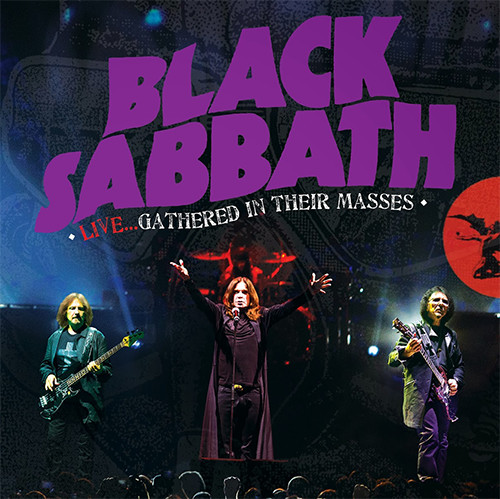
Music speaks to us all, in one way or the other. You might even consider it as something ‘universal’. In the latter half of the 19th century during the ‘rock n’ roll’ revolution numerous artists were brought to the forefront of the world stage who now have been immortalized in our memory for eons. The Beatles, The Rolling Stones, The Unholy Trinity of Britain (Led Zeppelin, Deep Purple and Black Sabbath), Pink Floyd etc.

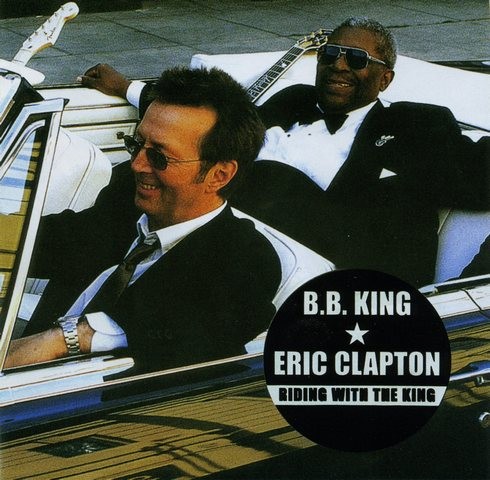
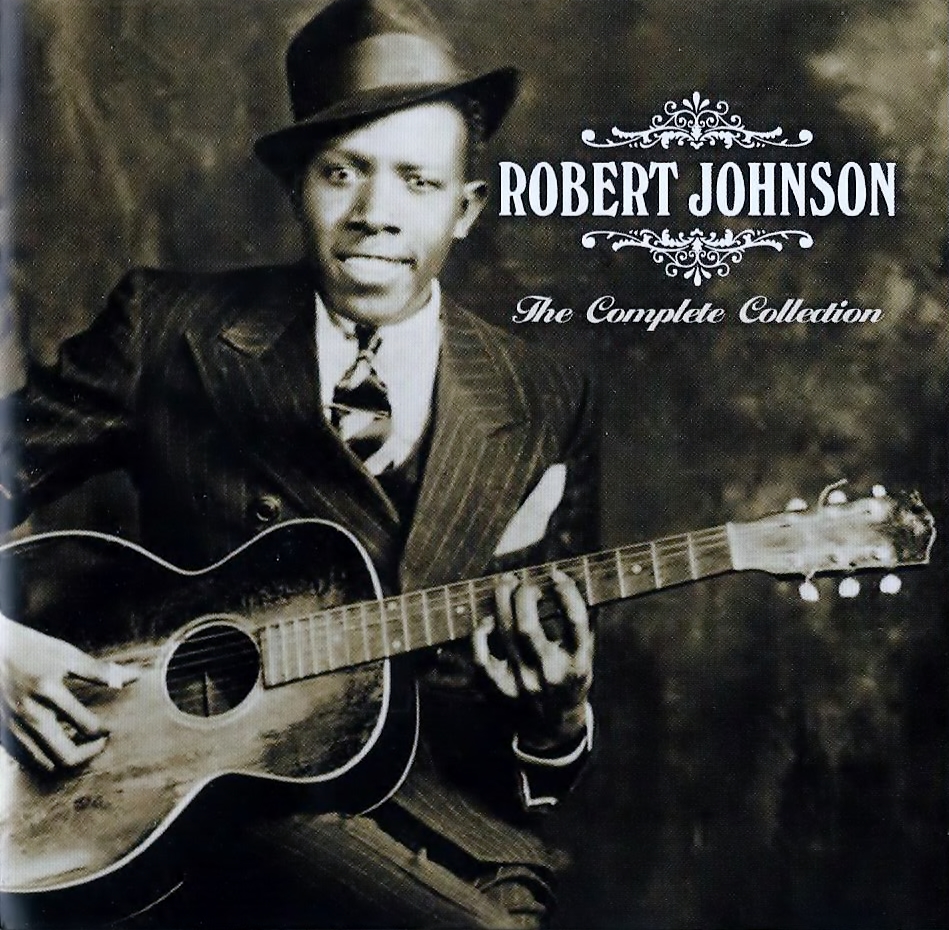
A superficial glance into the past will reveal these well-known names (not to take the spotlight away from these legendary groups) but not their forerunners, their inspiration. The jazz and blues artists of the former half of the 19th century. Robert Johnson of the crossroads who influenced Zeppelin to no end, Elmore James whose style with his slide guitar was something carried onwards by men like Stevie Ray Vaughan, B.B. King who was approached by Eric Clapton to produce Riding with the King (an album whose name alone stands as testimony to the magnanimity of these people who performed in racially segregated joints in southern United States throughout the 1920’s and 1930’s). These people brought joy to not only their people, but their beautiful sounds were heard all over the world.

I am toying with the idea of making a short documentary because to understand the aesthetics related to music, it must be heard first. The reason for delving into this particular topic is not just because it is prudent to the prompt of the final project but also because these artists have helped me through particularly difficult times. The latter has helped me better understand the context of their work back then and to better grasp the essence of the influence they have had on future artists. When I think about the ‘aesthetics of decolonization’, my mind jumps, instinctively, to a mental image of Robert Johnson sitting on a stool with his guitar in a juke joint in Mississippi. My project will also be a sifting of the range of emotions the music brings about in me and uncovering the links to the context of the course. At the end of it all however, the project would aim for and ultimately find the true beauty of their music and where it comes from. Sources will range from studio albums and lyrics of songs to old interviews of particular artists, covers by future bands, their interviews and references in their music to these earlier artists.

Sounds from the Deep South

If you take the Mineral Bluff Highway at Copperhill in Tennessee to cross state lines into Georgia, you enter the Chattahoochee National Forest roughly half an hour later. Climbing to the nearest summit gives you a breathtaking view of serene Georgian country for miles around. It gets quiet, the only sounds being those of the forest. At that moment, it is hard to believe that you are at ground zero of the what W. E. B. Du Bois calls the “color line” segregating African Americans from White Americans. This ground zero spans one state to the east and four states to the west: the cotton states of America, contingent on the functioning of thousands of plantations powered by the blood and sweat of African slaves for centuries.

The segregation which Du Bois delves into in great detail stands in stark contrast to the natural landscape of the American Cotton Belt. The Mississippi River and its basin is the lifeline of agriculture in the South and transcends both state and national borders. One is left to ponder, as a result, the depths of cruelty to which humankind can descend in the context of Du Bois’ “color line”. The source of all problems, as he puts it, of the 20th century. The reason for the turbulence and instability of the 1960’s. The one massive and unsurpassable obstacle for the African American community in their quest for emancipation be it political, economic or physical. The segregation in every sphere of life leaves out the African Americans from the fast-paced life of progress in America, condemning them to a life of squalor and misery. From churches to schools, market places to bars, theaters to hospitals, graveyards to railway cars, there is a literal division of the people into ‘black’ and ‘white’. The silence at the summit in the Chattahoochee National Forest is one that blankets the music issuing from jazz clubs in the Deep South, the pain of the black people under the Jim Crow Laws. The echoes of slavery, the cries of families torn apart, the loss of loved ones are all silenced behind what Du Bois calls the “Veil” that forms the color line blackening out the African American community from light which shines upon the ‘American Dream’, pushing people from all over the globe towards the ‘land of opportunity’.

The loss of Du Bois’ own son when he was refused medical treatment because of racial segregation is a mere albeit bitter taste of life behind the Veil in The Souls of Black Folk. His twisted (for lack of a better word) happiness at the death of his son whom he imagined rid of the miserable life behind the Veil is a startling insight regarding the extent to which the African American community had been driven to over the course of a couple of centuries.

From the Bald Mountain to the Gulf of Mexico, from the South Carolina coastline to the Texas-New Mexico border, the lives and sounds of millions of innocent African Americans stand hidden behind the Veil and have been for generations. A Veil that was erected centuries ago and stands testament to one of the greatest tragedies of humanity. A Veil that defies the natural order of things. A Veil which stands in direct opposition to the natural landscape of the region from where it originated.

Concerning Senghor, Alkebulan, Negritude and the Universe

While the word ‘negritude’ may imply a restriction towards only the African people, it transcends racial/ethnic/cultural/what-have-you boundaries. The ontological connotations associated with negritude or rather defining negritude alone should stand as a testament against the charges of it being racist and ‘nativist’ for it is not only the ontology of the African people but rather of all beings. Lest it be forgotten, it originated thousands of miles west of Alkebulan. In Senghor’s negritude the transcendental elements are dove into blatantly, leaving no room for the aforementioned charges to stand.

The constant referral to the African people in the work is an attempt to rally the people among whom the idea of negritude originated in the first place. That never meant that it was only for the African people. Certainly not. The probing into the shaky foundations of the principles of the natural sciences is another way to look at the universalism of Senghor’s negritude. The focal areas are things which cannot be limited to a certain race or people but something that holds for the entire universe. If negritude, in Senghor’s perspective, had been essentially nativist, he would have delved instead into the science of the much-heard-of African witch doctors. The constant debunking, upheaval and replacement in the realm of the natural sciences leads him to conclude the presence of severe instability in the universe. It is here that he brings Pierre Teilhard de Chardin to the fray and his idea which breaks past the traditional long-established dichotomies to pitch a single united universe with a single reality.

When Senghor and Pierre Teilhard de Chardin discuss the ‘universe’ they mean the entire universe and all that it contains. Which means the entire planet as well. From Cape Horn to Baffin Bay, from Kerala to Severnaya Zemlya, from Midway Atoll to Dakar in Africa, all places and all people dwelling in those places are the subjects of Senghor’s discourse, of Senghor’s negritude. The Europeans being thrown into focus is from direct interaction rather than a ‘retort’ to their Renaissance and all that it entailed. Rather it is, as Senghor puts it, “it is rooting oneself in oneself and self-confirmation: confirmation of one’s being”.

In other words, there is no space for universalism in Senghor’s negritude. It is universal from the get go.  

From Boca do Lobo couches to straw beds

Fingerprinting as a form of identification is based on the proven premise that each and every individual has a different fingerprint. A difference which is not manufactured by humans but is sanctioned by Nature. To group even two individuals together under any broad category, may they be identical twins, is unacceptable when delving into solutions to the problems faced by said individuals from thousands of miles away, having never met them in person. The purpose is not to draw attention away from the above-mentioned problems, rather it is the exacerbation of these problems that stems from this irrational assumption that places whole groups of these people under the same category. An example would be to assume all oppressed women in country A in the Third World as part of a perfectly uniform group of women that transcends class, religious, historical and individual boundaries. Uniform because of (a) their gender and (b) being oppressed.

This is what Chandra Mohanty deems prudent to point out in her essay Under Western Eyes: Feminist Scholarship and Colonial Discourses. The lack of effort to distinguish between (broadly speaking) the nature of oppression with regards to women from the global South by grouping all of them under the same category of “Oppressed Third World Women” is counterproductive and, boldly speaking, ironic considering this is a direct result of efforts to emancipate women from the shackles that come with those regions. Each woman and her circumstances will be different in one way or the other. For example, a woman grudgingly keeping to domestic work so as not to grieve her parents faces a different form of oppression than the one who is forced to stay there by, say, her spouse. Both face different forms of oppression than the one who is abused in her home and she faces a different form than the one who faces the “burka police” in Afghanistan and so on. To group all of them in the same category and to, subsequently, break society down into binary constituents, namely “oppressed women” and “oppressive men” is merely reinforcing this divide and glosses over the individual voice of each woman in the global feminist theatre, Mohanty argues.

This first world feminism and its construction of this “Third World Woman” whom they have to save has parallels with Walt Whitman Rostow’s linear 5 stage growth model which he believed was applicable to every nation in the world, failing to account for historical, socio-economic and anthropological factors. Promising at first glance, grossly neglectful of imperative factors at second. That is not to say that first world feminism is aimed at maintaining the status quo in the global South vis-à-vis women but rather it is fails to account for vital elements which is needed to fulfill the holistic vision of the feminism movement. This ‘Hero Syndrome’ prevalent in first world feminism is what leads to this unscholarly analysis of women in the third world.

The power divide that is reinforced with this ignorance of individuality amongst third world women is between the men and the women, the oppressor and the oppressed respectively. The power divide is not between the women of the North and the women of the South. Therefore, while First World Feminism may be ignorant of some aspects of the nature of infringement of women rights in different countries, regions, societies, families and religions in the South, it is anything but imperialist in its motives.

The timeless Red glare of Saaliyah Umar Khan

The image of brutality associated with the word ‘communism’, thanks to both western influence in pop culture etc. and a few isolated incidents, is widespread. Spotting a red poster on the internet displaying the hammer and sickle evokes no positive emotions of any kind within the general populace. Hidden to them are the details, the minuteness to which you must shrink down to realize the true beauty of the whole. Dada Amir Haider Khan’s life is a testament against the supposed ‘villainy’ of communism.


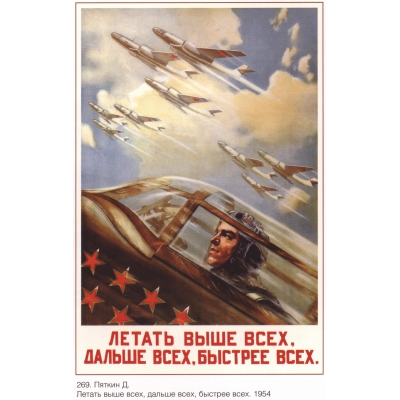
To fly above all, further than all, faster than all.

This poster, for example, from the days of the Soviet Union, propagates the image of the Red Air Force and, subsequently, the image of the Soviet Armed Forces in general, in a positive light. Dada Amir Haider Khan hailed from northern Punjab, near Rawalpindi. People from that area in the country constitute the bulk of the Pakistan Armed Forces. Dada’s influence on soldiers from his own village was profound and none of it was directed towards sabotage or treason towards the state.


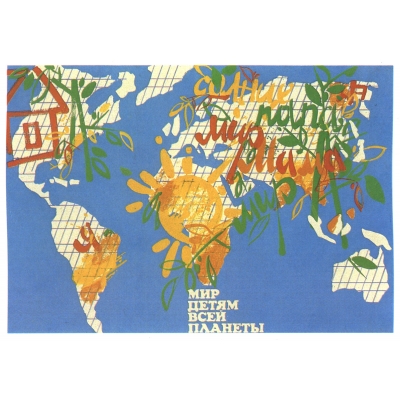
Peace to the children of the whole planet.

This poster on the other hand displays the focus placed on children. Dada Amir Haider Khan, among many other things, is known for the two schools he built in his village, one for boys and another for girls. Both fully equipped with every tool needed for learning at that level.

These posters, apart from furthering the interests of the state in the international arena during the Cold War, shed light upon certain aspects of communism that people tend to gloss over in the brilliant yet blinding light issuing from the bloc of ‘liberty’. Aspects, whose ‘absence’, further submerge the Reds in ‘wickedness’.

Cape of ‘Renewed’ Hope

The casting of the first lasso

Reflex. When one hears “South Africa”, mental images of lush green hills, vineyards and, most significantly, the voyage of Bartolomeu Dias passes through one’s mind. It is not the indigenous people of South Africa, or the fact that its inhabitation dates back many millennials. It is not the horrors of the Apartheid regime or the struggle of Nelson Mandela and his people. No. It is the scenery and the ‘magical’ story of its discovery without the implications that one thinks of. The state’s monopoly over historical narratives is one major reason for the glossing over of the true story of South Africa that transcends its significance in the pages of history as a British colony. This legacy from the colonial era is steeped deep into education and the arts in all forms. To Chumani Maxwele, South Africa had still a long way to go in terms of complete emancipation. To him, the statue of Cecil Rhodes in the University of Cape Town represented not just bigotry but a tragic and unjust history of the people of South Africa. The desecration was more than just a protest, it was a sign that South Africa was overdue from behind the Union Jack curtain.

            The statue right in the middle of an educational institution in South Africa meant more than it would have any other place. The epistemic takeover of the British in South Africa from their days as colonial masters crept into the present as well. If it had not been for the “born free” generation, these seemingly insignificant signs would have gone on unnoticed. The hush hush conducted by the preceding generation with regards to the horrors of the Apartheid rule meant well but implied a continued existence for the South African people under intellectual, if not physical, slavery which would amount to the same thing in the long run. So, when the born free’s broke free of one shackle, it was only natural for them to not only turn on the ‘immortalized’ Cecil Rhodes representing all white masters, but on their parents as well for the delay in this realization. The election of Nelson Mandela in 1994 after the countrywide enfranchisement of indigenous South Africans was merely the beginning and perhaps a means to an end which one would envision after lying crushed beneath the colonial jackboot for centuries.


Khoisan (indigenous to South Africa) men making fire

They have inhabited the region for more than a hundred thousand years

            The subsequent movement that took off after Maxwele’s desecration of the Cecil Rhodes statue at his college in Cape Town was prudent, to say the least. The presence of foreign domination influencing every act of his people, shaping their future and shaping their past had to stop in order to pave the way for the true representation of South Africans, in every sphere of life, for the entire world to see. It was meant to change aforementioned reflex musings regarding South Africa. To show the native South Africans, this time without the white influences in their lives, culture, historical narratives and intellectual forums.