N’Deye Touti

Colonialism is not satisfied merely with holding a people in its grip and emptying the native’s brain of all form and content. By a kind of perverted logic, it turns to the past of the people and distorts, disfigures, and destroys it. (Franz Fanon)


I am offering a close reading of a passage from Ousmane Sembene’s novel, God’s Bits of Wood, wherein I locate a prime example of the effects of a crisis of representation (as discussed in class) played out on an individual level. In the passage I have selected, the damage wrought to the minds and the hearts of colonial subjects is exemplified in its introduction to one of the works central characters – N’Deye Touti. She, like every other figure in the novel, depicts a certain vantage point through which differing experiences and responses to colonialism are explored. In N’Deye Touti’s case, the site of her engagement, her suffering, occurs within her mind, her self, her identity. 

A member of Ramatoulaye’s household, N’Deye is young, beautiful, and most importantly, educated – and that is her burden. Her education has opened up her mind as a space to be annexed by colonial modes of thought – modes that further their cause for effective domination of their colonial subjects. An epistemological conquest over local modes of thinking, as we discussed in class, is part and parcel of any colonial endeavor. The language and worldview of the colonizer’s has been fed into N’Deye, imprinted upon her by way of her education, and at this point in the novel, she has not learnt to resist or respond to it critically – she indiscriminately absorbs racist, discriminatory discourse through the western-centrism of her education. Being black herself, this manifests in enormous internalized racism and hatred towards herself, her people, and her world.

This damage is wrought, as seen in the passage, by her education emotionally and imaginatively distancing her from her world. The text cites how “N’Deye herself knew more about Europe than Africa” – and laments that  “she lived in a kind of separate world: the reading she did, the films she saw, made her part of a universe in which her own people had no place, and by the same token she no longer had a place in theirs”. Her education plies her with experiences she cannot and will not ever have access to as a black woman – she is in awe of western, eurocentric ideals she can never attain. An extensive reader of romance novels – she is taught what love is through the words, images and experiences that exist nowhere near her own lived experiences – “love was something that went with parties and costume balls, weekends in the country and trips in automobiles, yachting trips and vacations abroad, elegant anniversary presents and the fall showings at the great courtiers. Real life was there: not here, in this wretched corner, where she confronted beggars and cripples at every turning”. Her education, naturally, gives no explanations as to why she is surrounded with so much poverty, grief, and ugliness. All she knows is that an idealized, perfect world – the world of the colonizer – exists, and her world, her Senegal, her Africa, cannot ever come close to matching it. Africa’s polygamous marriages have nothing to do with love, and this confirms in her the “lack of civilization” of her own people – they who do not live by eurocentric ideals that she deems necessary for any kind civility. She has never been taught to appreciate the ideals of her own. This existence inspires internalized hatred and disdain for her way of life for – “she would be seized with a kind of nausea, a mixture of rage and shame” at the sight, the recognition of it.    

That N’Deye has the capacity to resist colonial modes of thought is hinted when the story tells of how, by accident, she watches a European documentary film on an African tribe of Pygmies. In watching it, “it was as if she were hurled backward, and down to the level of these dwarves, and had an insane desire to run out of the theatre, crying aloud, ‘No, no! These are not real Africans!’” It is the first real representation of Africa by the West she sees, and she innately recognizes it as a false, generalized depiction. And yet, she cannot accept that they, the West, could be wrong. The extent to which her mind accepts the West as the only veritable source of knowledge is clear in that she still shrinks, that she describes her desire to correct, to decry their false depiction as insane. Her response to the film is bodily, almost – the desire to scream, to run – she knows what her mind refuses to accept. And yet, the story shifts immediately to another film screening in the theatre, where she turns on some men speaking loudly in the audience with “avenging fury and cried in French, ‘Be quiet, you ignorant fools! If you don’t understand, get out!’” The experience of the documentary film inspired little resistant or critical thought – only further turmoil – its almost as if her “avenging fury” is meant to make up for these men’s inherent African fault – their ignorance, their lack of decorum. She does not wish to investigate the aberrance – indeed, “she had never read a book by an African author – she was sure it would teach her nothing”.

N’Deye benefits from this education only in that she becomes an unofficial scribe and translator for the people in her village of N’Diayene. They need people like her to get educated – to allow the ones who cannot read, write, or speak the colonial language access to communication in a world where the the colonizers demand it as a prerequisite. But she is otherwise ridiculed for her European ways and fashions. Accidentally caught wearing a brassiere, her Mame Sofi ridicules her, crying “There is a cow in the house, walking on two feet, and all dressed up!” Her ways are other to her own people – and she will always be other to the West. The damage wrought by colonial control of the colonized’s understanding of themselves, their promotion of their world as an inaccessible ideal, leaves its victims exiled and alienated on both fronts. After the ridicule subjected to her in her own home, “she considered herself a prisoner in the place that she should have been her home”.

Thus, Sembene paints the cognitive devastation of the colonized subjects mode of apprehending and appreciating the world. I am sure many of us can see ourselves in the struggles, the emotions, and the experiences described above.      
 

The Colonial Gaze

Colonization was an epistemological conquest. The settle colonizers didn’t just occupy the land and wealth of the natives. They completely decimated any kind of identity they had- through mass murder and by making sure that any and every account of history was articulated through their point of view. Power is intrinsically linked to queries of representation- which form or representation has hegemony and which do not. Hence, there was few if any accounts written by the native people that were accessible to the general public and thus the colonial accounts became the dominant way of thinking. As the world progressed, and the colonial academia remained the leading medium for intellectual discourse, the assumptions of the western world about the eastern or “Oriental” world spread and the way of thinking morphed into the way of being. The non-divergent representation and nuance were what Obeyesekere was mostly concerned about in his book. He didn’t understand in the account presented to him, why it was believed that Captain Cook was celebrated as a God by the natives when he first arrived in Hawaii. Obeyesekere’s beef with the European accounts was that they aren’t as objective and rational driven as they claim to be- that they too are driven by a myth model. Hence, their objective observations about the inferior natives are actually as rational and objective as they claim it to be. Obeyesekere was in fact ahead of his time. Gradually, in the wake of postcolonialism, there has been an intended effort to give platforms to non-western authors and local witnesses. Rigoberta Menchu’s testimony is an example of such a text.

In Rigoberta Menchu’s biography, you see her take back the control of the narrative through her story. She uses language as a tool to reclaim her power. Well aware of her position in Guatemala, she decides to learn Spanish and communicate with all the priests and the nuns. It allowed her to communicate with a wide range of people and help protect and protest for her father’s freedom during his imprisonment by the “Ladino police”. She is also used it help spur people to take arms against their oppressors. Mostly though, Rigoberta used language to show her side of the story in the chaotic guerilla war between the Indians and the Latin Americans. In fact, she herself divulged, that she selected what she will disclose about herself and her people to Elizabeth Burgos Debray, the writer of the biography. The biography was a reaffirmation of everything that the “Ladino” tried to deny about her and her people. It was a reaffirmation of their complexities, of their sadness and anger, and hope and courage. It was a reaffirmation of their humanity. She used the biography to tell stories, not just about the war efforts but about her family. Rigoberta communicated about the difficulties of her parent’s life, her losses and hardships, the deaths of her brothers at the hand of poverty and the Guatemala army respectively but she also illustrated the good times, the love they all shared. She mentions how she and the army fought with stones and machetes and sticks and managed to still paralyze the economy. The testimony mentions her community and customs in great details. All in all, she paints a picture of a complex people- far removed from the one dimensional almost beastly picture that is painted from accounts of the Latin Americans.

Rigoberta Menchu’s biography has been criticised regarding the authenticity of her claims, such as her lack of formal education. She also herself claimed that she revealed selective parts of her life and considers this book, not a biography but a testimony of her people. However, criticisms asides, one can not deny the importance of this biography. the book does not exist to give a blow by blow account of the war between the two people but to give voice to the plight of her people.


Yeh daagh daagh ujaalaa, yeh shab gazidaa seher

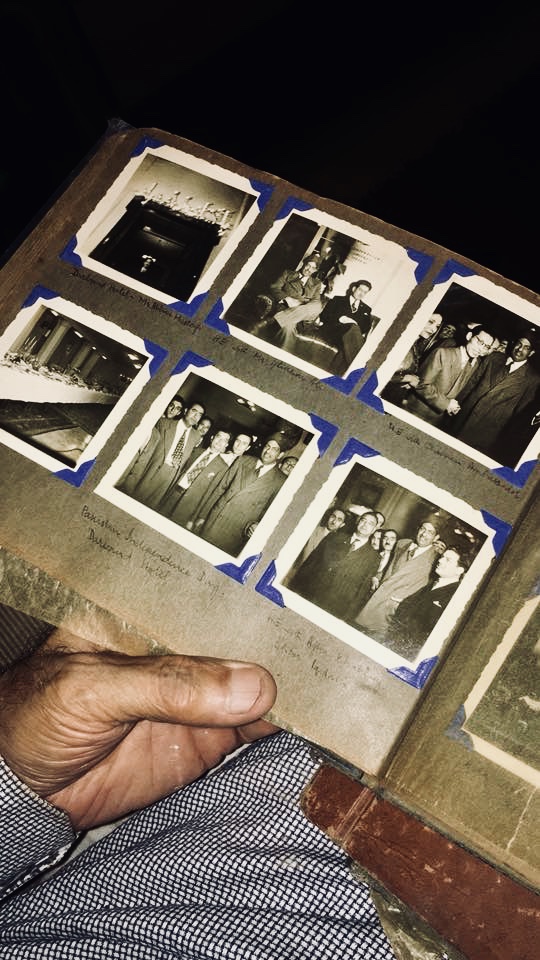
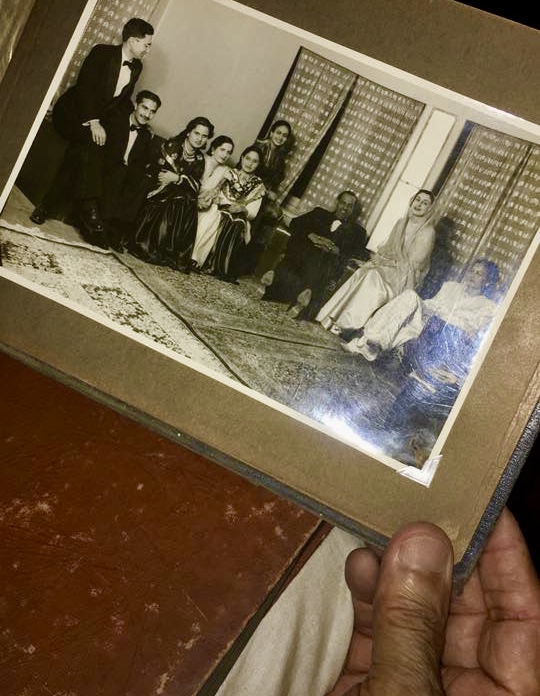
“Baybay jee (mother) was a simple woman. She did not know enough English to communicate with either Abba Jees friends or their wives, and so, she would just sit and smile or use her cooking as an excuse to stay away. Perhaps that is exactly why I was taught English even before learning my Urdu talafuz. Baybay (mother) naal tay punjabi wich hi gul hondi si fir, We would talk with Baybay in Punjabi only.” He then stops to look at the picture.

“Hun tay sab kuch hi baut farak hai, now times have changed. Back in the day, Hindu tay musalmanan di bari dosti hondi si, Hindus and muslims used to be very good friends. Ae tasweer, mera khyaal hai, is from the spring of 1947, this picture, I believe, is from the spring of 1947. Partition da bara charcha si, tay Abba aksar hi janday si Bathinda, milan apnay veeran noon, there was a lot of talk about the partition, and Abba used to go to Bathinda often, to meet his friends. ” 


Out of the many people who had no definitive answer for what the coming of August 1947 meant, Rai Hameed Ali Khan, was just one. His father, Rai Sardar Khan, belonged to the village of Rania, in Haryana, where they seemed to live comfortable lives. The rest of their family and friends lived in Bathinda- a place of regular meet ups, and the location for the picture above.


“Assi Sikhan naal baray close si, tay ais wastay, sanoon dar nahi si partition da, we were very close to the Sikhs, and so, the partition didn’t scare us. Meray phuppa, Raja Ghazanfar Ali Khan kehnday si k musalmanan da farak mulk hoye ga, magar sanu nahi si chayida farak mulk, my uncle used to say that muslims will finally have a separate nation, but we never needed one. Assi tay khush si Haryana wich, for we were happy in Haryana.” He looks up with a wrinkled forehead, followed by an elaborate answer on what August of 1947 felt like.

“Badi ajeeb hawa si, aur sanoon baut kuch tay samagh hi na aya, it was all so unsettling, that we did not even understand most of what was happening. Menu tay lagda si k assi agay pichay ho sakan gay, agar chalay wi gaye us paar, I thought that even we did move, commuting back and forth would be easy. Rania saada kaar si aakhir, Rania was our home after all. Sataaees (27th) Ramzan si jidon Pakistan alaida hoya, magar assi nahi hilay, On the 27th Ramadan, Pakistan was partitioned, but we didn’t move. Sanooo pata si k das (ten), pandra (fifteen) dinaan tou baad, sab da shauk poora ho jaway ga, tay bas fir- sab wapas, we knew that it was all just a mere facade of ten to fifteen days, and after that, everyone would be back to where they belonged.”


Like some other muslims, Rai Hameed Ali Khan, and his family stayed back in Haryana after the partition. For them, the idea of Pakistan wasn’t entirely representative of home- Hindustan was. That year, they celebrated Eid with Dil Muhammad, a friend, and some Sikhs who had come from Pakistan and taken over the homes of those, who had migrated. They celebrated, yes. But not the partition. They instead, celebrated the end of the British Raj. Because for them it was the time for Hindus and Muslims to reconcile- a reminder to what Gandhi thought of divisions in India:

“We were one nation, and so, they (British) were able to establish one kingdom. Subsequently they divides us.” 


“Magar fir kuch cheezan kismat wich nahi hondiyan, but maybe some things aren’t destined for us. Raja Jee September wich aye, tay saanu Abba naal wada kar k Lahore lay aye, my phuppa came to Rania in September, and brought us to Lahore. Halaat us wailay tak bigar chukay si, tay assi sochya k jawanan nu pehlay jana chahida hai, tay bazurg baad wich aa jawan gay, conditions in Haryana had worsened, so we thought that we should move first and let the situation get slightly calm for the elders to move.”

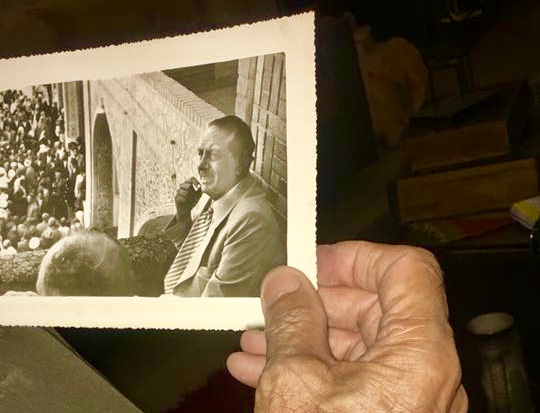
“Raja Ghazanfar Ali Khan, my phuppa”, he smiles, while holding up the picture.

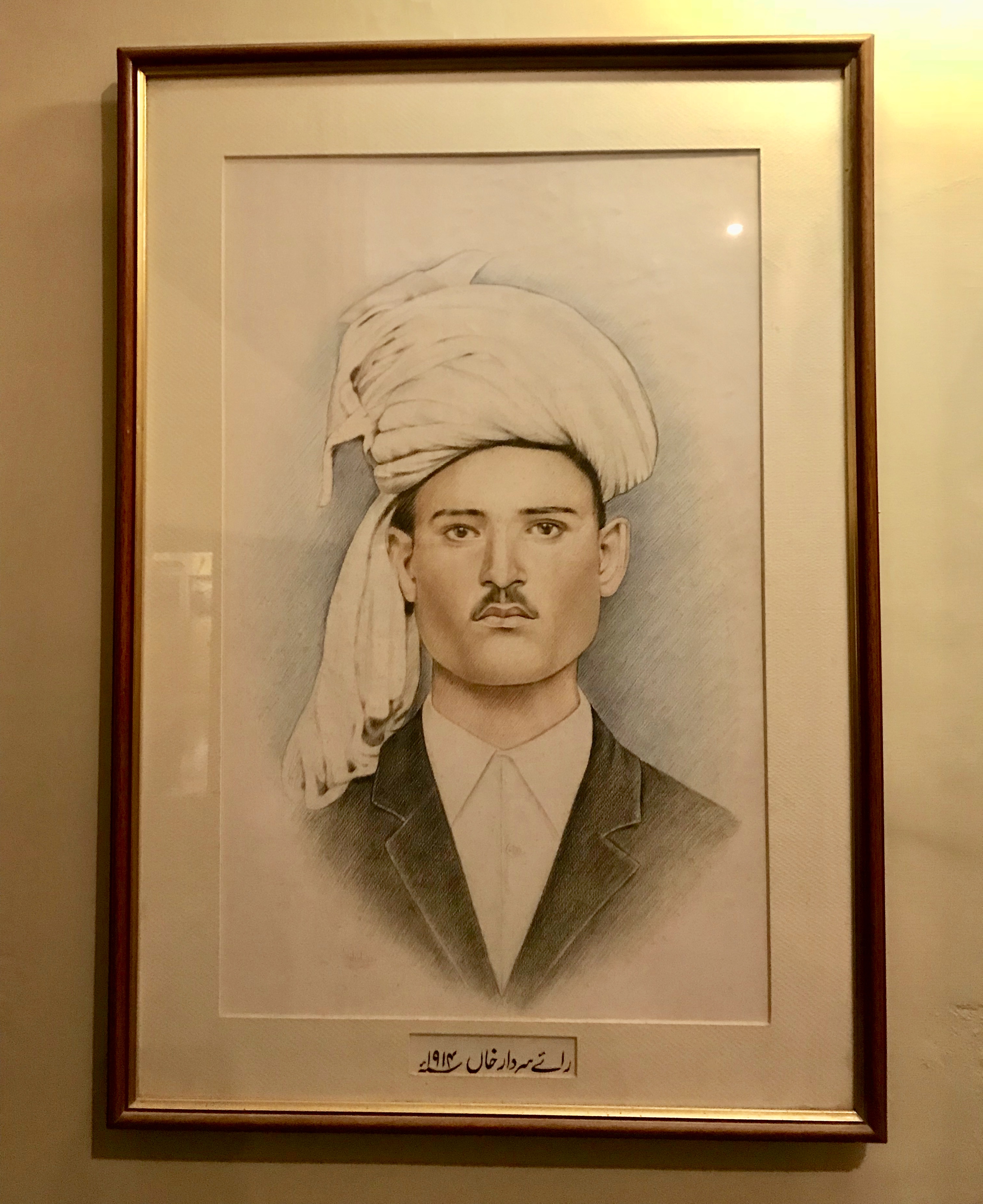
“And that”, he pauses, “that is Abba Jee”, pointing to a sketch he got made from the only torn photograph he had of his father.


Abba Jee namely, Rai Sardar Khan, could never make it to Pakistan. But his children found their way to the new country- perhaps, a new home. But he remained in Haryana as the political situation deteriorated alongside his health. He passed away later that year without ever making it to the new nation, and now, eternally rests in a land that knows little of either Muslims or Pakistan.

“Kadi kadi yaad tay aanda hai apne kaar, magar hun tay purani gal ho gai hai, sometimes I obviously miss Haryana, but it is old story now. Bari koshish keeti si k Abba Jee di qabar tay jawan, magar kadi halaat nahi changay si, tay kadi visa ni milya, I tried many times to go visit my fathers grave, but somehow, either the conditions weren’t good or either I didn’t get the visa. Magar chaddo un gallan nu, hun tay Lahore hi kaar hai, but forget about all that, now Lahore is home”, he looks up to smile at my 12-year old brother, his grandson, and goes back to sipping his tea.


Perhaps history in itself is just a mere story. And maybe all that matters is who the narrator is, and what an incident means to him or her.

For Nehru, August of 1947 represented rebirth.

For Bina Das, it represented an unclear war within and without.

For Gandhi, it represented a change that was still impending.

And for Rai Hameed Ali Khan, it simply meant partition- not the literal sense of the word we use to describe the two new countries, but instead, an uncanny parting of lives.


It has been 72 years to partition now, and the memory still lingers on- raw and real. The world certainly did sleep on the night of 15th August, but the question of India waking up to a new life still remains- the question of who this new life was for, who all was to be a beneficiary, and whether the new life necessarily represented a good life.

I sometimes wonder of what Bina Das would have thought is she was still alive. I wonder of all what she would have penned down if she had met Rai Sardar Khan in his last days at a land that signalled home, but also signalled solitude and abandonment, and not the new, independent life that was promised.

What if Gandhi Jee lived just a little longer? Would he have wanted to revoke his dreams of the United India? Would meanings of independence still be equal to partition, or, just like Sardar Khan thought, would Independence signal to the end of British Raj alongside just a temporary loss of home?

But most importantly, the question of individuality lingers. The question of who makes choices for nations? In fact, who even defines nations? Who decides that it is important to move to a new nation even when the older one smells of home?

But maybe, for now, Faiz should be enough in making peace with what awaits:

Abhi charaag-e-sar-e-raah ko kuch khabar hi nahin

Abhi garaani-e-shab mein kami nahin aayi

Najaat-e-deedaa-o-dil ki ghadi nahin aayi

Chale chalo ki woh manzil abhi nahin aayi

Swaraj for All

If one were seated in the Parliament House at New Dehli in 1947 and was able to detach from Jawaharlal Nehru’s stirring address for a moment, he would become aware of a glaring absence. One did not have to think twice when Nehru alluded to ‘the greatest man of our generation’, yet this man was nowhere to be seen during this golden hour. While India was ridding herself of the British imperialists who had governed her for over a hundred years, Mahatma Gandhi was trying to stop the communal riots that had erupted as a result of this expulsion. He was unaffected by the hoisting of a new flag, the achievement of ‘self-determination ‘and institutions and realization of nationalistic goals. His secret? He had achieved self-rule well before the British had departed from the subcontinent.
Although Gandhi has plenty to say regarding railways, doctors and modern civilization what really baffles the reader (the one reading Gandhi’s work and the one present before the editor) is how Gandhi does not view the presence of the British as problematic. In a post war age ‘self-determination’ and being on equal footing with other countries in the international arena was considered the highest form of freedom, yet to Gandhi the concept freedom does not end with the establishment of a nation. It extends to one’s spiritual life (especially as far as the ‘Indian’ citizen is concerned) and attempts at decolonizing one’s mind. To Gandhi, when one is able to call a spade a spade and accept himself for who he truly is, and not try to emulate any third party, one is able to start recovering from the cognitive devastation that accompanies colonization and is able to gain the power if representation. Such form of escape was attempted by the students of UCT during 2015 after Maxwele ruined Cecil Rhodes’ statue. Gandhi takes pride in the portrayal of the Orient because at the end of the day it is who he truly is. He seems to thank his lucky stars that he is not a westerner and has not been perverted by modernization. He is aware of the fact that the British do not have to leave for his independence to begin, an approach which the reader is initially unable to come to terms with. Gandhi’s work applies not only to India but also extends to the Senegal described by Sembene and the Indian’s residing in Guatemala, making him an icon for the decolonized world as a whole.
Gandhi’s claim that ‘those alone who have been affected by Western Civilization have been enslaved’ frightens me. As someone who has been taught in an English medium school and thinks in English, his views seem to indicate that my generation and the one after it is not only still affected by colonialism but is suffering the worst effects. It seems to take a lot of strength to think about a good, orderly world without institutions and laws created by western civilization. For now I try to find comfort in Gandhi’s saying that ‘Those who want to do good are not selfish, they are not in a hurry’ and hope to find courage to think differently one day at a time.

Representation in Soyinka’s Death and the King’s Horseman


“The night is not at peace, ghostly one. The world is not at peace. You have shattered the peace of the world forever. There is no sleep in the world tonight.”


Wole Soyinka’s Death and the King’s Horseman chronicles the damage that the British colonizers inflict on the native populations’ way of life in attempts to undermine a culture that is perceived by them to be backwards and irrational. What is incomprehensible to the white man is seen as insensible and is described as “savage”, “feudal”, “barbaric custom” and “callous”. The representation of natives as simple-minded and narratives of “white man’s burden” are used to impose European culture upon the colonised. Conversations between the District Officer, Simon Pilkings, and his wife Jane illustrate how the natives in Nigeria are characterised by Europeans. When the native administration policeman, Amusa, expresses his shock at the Pilkings wearing the egungun dresses, he is scorned by the Pilkings for his “big pagan heart”. Amusa’s shock and reaction is dismissed as him being overly sentimental as compared to the Pilkings who fail to see what is offensive about them appropriating a costume. The native is  guided by emotions and is therefore inferior while the coloniser is superior because he relies on logic alone. Amusa’s beliefs about the sacredness of the dresses are seen as incompatible with his Muslim identity. The use of the egungun dresses as “costumes” by the Pilkings for the ball shows how native rites exist only as props for Europeans. Pilkings is quick to poke fun at the sacredness of these rites and religion but has no qualms about appropriating objects associated with them to appear exotic.  The native population is described in very childlike ways by the couple- as people who need excuses to make noise, are prone to yapping about personal lives and exaggeration. The coloniser sees his work and restrictions as a favor to the colonised who cannot be trusted to do what is best for them which is why Pilkings and other colonial officials feel it their their duty to intervene in rites they deem cult-like. These notions about the natives are challenged later in the play in Jane Pilking’s conversations with Olunde.

When those subjected to colonial rule do oppose the colonial government’s policies and point out inconsistencies within the European cultures, it is perceived as a result of a European education because the colonized are seen as incapable of critical thinking and logical argumentation themselves. The colonized are seen as incapable of articulating their grievances without help from the Europeans themselves. This is exemplified when Olunde points out that Elesin’s self-sacrifice is not much different from that undertaken by thousands of young European men in wartime, Jane implies that Olunde has learnt a lot other than medicine during his time in England.

The denigration of the natives’ culture and their intelligence paves way for colonial intervention in the community’s rites and customs. The interventions are seen as a way of saving the native population from itself. The imposition of European values and culture by the colonial power disrupts a way of life as seen when the king’s horseman is not allowed to take his own life after the king dies. Interventions like these by the colonisers render all possibilities that were previously available to the Yoruba impossible. The honor that is associated with Elesin, as the king’s horseman, no longer holds any meaning as the rite is disrupted forever. The devastation extends far beyond Elesin, who no longer has a role to play in his society once he has been stopped from performing the duty that his rank and honor rested on. The loss extends to the other characters too- the women of the market who venerated the king’s horseman and the praise-singer whose art revolved around the feats of the king’s horseman and other figures who were now shunned to the past. Elesin, the praise-singer and Iyaloja point to the uncertainty that the Yoruba people face as they know not what to aspire for or fear as the colonizer’s presence and their interventions reconfigure the world for them in such a way that they no longer have a best case scenario to strive for a worst case scenario to avoid. This is best described by Soyinka when Elesin states:


“..white skin covered our future, preventing us from seeing the death our enemies had prepared for us.”


The colonial conquest was not just physical but also an epistemic one where the Yoruba way of thinking has been invalidated along with their way of life.

Representing yourself

Our experience in Guatemala has always been to be told: ‘Ah, poor Indians, they can’t speak.’ And many people have said, ‘I’ll speak for them.’ Rigoberta Menchu The idea of representational tyranny is the ability to produce authoritative knowledge of the Other. When Cook said that he was deified by the Polynesians it became objective fact, just as Cortez’s conviction that he had successfully bamboozled the Aztecs into considering horses immortal meant an acceptance that the Aztecs were fooled. Within this conception, the colonized subject, the non-European Other, becomes an object to study. Knowledge can be generated about them without their contribution. Their intelligence is measured, their ‘rituals’ studied and ‘understood’, their ‘superstition’ exploited. Their knowledge, their language, their traditions are evaluated on a weighted scale, one that defines European values as civilization itself. A people are understood, thus, through the eyes of their oppressors. It’s a fundamental disempowering – one that refuses a people the right to define even themselves. Instead they’re defined in negation – against the civilization of Europe. Consider the sheer defensiveness of ‘I, Rigoberta Menchu’ whenever it comes to anything that might be judged according to European standards. ‘That’s why they call us polytheistic. But we’re not polytheistic… or if we are, it’s good, because it’s our culture, our customs.’ She says, apprehending the idea that polytheism, on the European scale, veers close to the barbaric end. Rigoberta Menchu thus, speaks as a defense against this act of representation and evaluation on an unfair scale. In order to re-represent her people, Rigoberta must learn Spanish – her own language is invalid, ‘unworthy’ of an act of generating ‘legitimate’ knowledge. She describes – defends – her culture, her values, her traditions – her history. ‘It’s not true what the white people say,’ she says, paraphrasing the words of her elders, ‘that our ancestors didn’t defend themselves.’ She must explain that if her people are dirty, it is because they cannot afford soap, the time taken to wash their clothes or multiple pairs of clothing. That her people are not animals, they are merely driven to inhuman states by the exploitation of others. She must not only defend her people against dehumanizing stereotypes, she must describe a very different scale, one on which if she is polytheistic then it is good, because it is hers. Misrepresenting the Indian people and devaluing their knowledge is, within the text, not just a theoretical concept of abstract knowledge production on an academic, anthropological or historical level but an exceptionally immediate and political act. The ‘ignorance’ of the Indian people in the language of their oppressors, the language of administration, renders them effectively mute to the world and allows others to speak for them in all manners of damaging ways, such as allowing the government to manipulate them into signing away their rights to their land. The valuation of one language – one knowledge –  over another serves as the valuation of one people and one culture over another, forming a justification of tyranny, one that under girds all others – that the Indians did not resist  colonization – that they’re fundamentally lesser.

Representation and the Written Word

There seems to be some confusion regarding what does and does not constitute as “authentic” history. The history we read on paper, in published books is what we accept as the Truth. At the end of the day, avenues that we deem “official” are the ones that retain unequivocal authority and the right to establish what is truth and what is myth.

By quantifying history through the written word we assume that the events of the past have been left in the past. The plight of entire civilizations is acknowledged in a paragraph, or maybe two, then we move on to whatever came next. A nod to the past is all that is deemed necessary- why brood over something that no longer exists?

The content of History as penned down by The White Man caters to a perspective that effectively eradicates a cacophony of local voices- voices that survived the brutality perpetrated by the colonizer, voices that bore the brunt of  “civilizing” expeditions. The physical, human evidence of colonial brutality has long faded in many parts of the world- not many people remain who can testify against the White Man; the brutality He committed dies with the people He brutalized. But there is so much more to the violence than just human bodies.

 The damage that persists today exists in the perception of the colonized- the way they are represented in the modern world. Dadabhai Naoroji, a product of his time, referred to the “humane influence” that the British would have on what one would consequently assume, was an inhumane society. The effect of language on cognition is driven by the use of very specific words that paint a vivid picture of two societies: one being an “advanced humanitarian civilization” and the other, by default, being the exact opposite. This is Imperialism in its ability to infiltrate the minds of the people, making them believe that they are, in fact, inherently less than The White Man. 

 Gandhi’s take on the matter provides a radically different perspective; he sends the reader reeling out of the trance they have been coaxed into. It is by contextualizing history, done beautifully by Gandhi, that we begin to realize the deeply pervading impact of colonialism that extends far beyond the lifetime of the first colonized generation. It alienates one from their own culture, their own traditions and most importantly: their own history. By condemning civilization, one might automatically assume that Gandhi supports an ‘uncivil’ way of life; in doing so, the reader is imposing a binary on a society: European and the Other. It is in multiple ways that Gandhi exposes the artificial, arbitrary nature of these constructed realities, these myths that are paraded as accurate representations of an entire people.

Gandhi romanticizes spirituality, religiosity and celebrates the simplicity of his people- embracing a way of life that is no longer deemed acceptable. In doing so he is actively recognizing his way of life- the Indian way of life- as equally legitimate to the modern. It takes an exceptionally self-aware individual to acknowledge that one way of being, of existing, is not inherently superior to another. One of the most infuriating aspects of this fictitious representation is that it is completely one-sided; the people accused of being savages have no say, no way to argue otherwise, because their version of history dies with them, while The White Man’s word is revered as the only ‘accurate’ History.  

 How, then, does one seek representation and recognition for something that does not exist? It is in the perseverance of one, dominant perspective wherein lies the true victory of colonialism: intellectual subjugation of the (de)colonized. The White Man’s books, His written word, ensures that the entire world will perceive of an entire people the way He wills it. More important than that, however, are the future generations of the colonized that will be convinced of their ancestors’ “savagery”, perhaps even leading them to feel a debt of gratitude towards The White Man for His benevolence upon their people. The memory of brutalized ancestors fades, the word of the colonizer remains; “the word ‘gone’ is equivalent to ‘remained’.”

Machinations of the Mind

In the context of Hind Swaraj, representation refers to an untainted existence. Colonialism directly impacted the cognitive abilities of the colonized which meant that it became difficult to reconcile with the ideas of progress that modernity brought. Amidst this cognitive dissonance, to be represented is to perhaps believe with conviction that if the developmental trajectory of the colonized was not altered at the behest of the colonizer, this alternate reality would not have been inferior in any form. Gandhi’s critique of modern civilization revolves around the idea of progress being stimulated by avarice. He alluded to the innate ability human beings have to introspect that has been stripped by the machinations of modern civilization. A crisis of representation occurs with the enforcement of modernity which results in people losing their individuality. The disruption of organic progress separated those who were subjugated from their essence. A coping mechanism in response to this is clinging onto spirituality, as promulgated by Gandhi.

The epistemic framework which began to dominate our thinking subconsciously was that of the colonizer. We replaced those who subjugated us, but the subjugation still persists. With every passing generation, the possibility of being represented is becoming increasingly lost as it is difficult to regain our essence and coexist in a system which values modernity instead of highlighting the devastation it has caused. A lack of representation is highlighted by the kind of discourse we as students are exposed to. Certain paradigms of knowledge are valued more than others which do not originate from the perspective of the oppressed. Even history as a discipline is marred by all that has been lost and not been documented. With the passage of time, representation will continue to become obscured to an even greater extent. We now exist in a time in which it is difficult to fathom what could have been had we been allowed to exist.

Whose language?

A few months ago, as I was searching for potential courses to take in spring semester, I came across one named Explorations in Urdu Language and Literature. As someone who regrets the fact that they don’t have nearly as good a command on the Urdu language as they would like to have, this course seemed like a perfect fit for me. One thing about it particularly stood out – the fact that name of the instructor seemed European, not Pakistani.

Some further research revealed that said instructor was American and very well qualified, with a PhD in Linguistic Anthropology and advanced proficiency in multiple South Asian languages (including Urdu). There is no doubt in the fact that such a scholar has a much greater command over and expertise of Urdu language and literature than I (someone who hasn’t formally studied these disciplines past the eleventh grade) do. However, perhaps her prowess does not match that of native scholars of Urdu – those that have not only studied the language extensively from an academic perspective but have also been born and bred into it. 

Ever since the colonization of India by the British, we have privileged Western knowledge over our own. Dadabhai Naoroji, in his book titled Poverty and un-British rule in India, writes of English education’s “great, noble, elevating, and civilizing literature and advanced science”. Even when the discipline in question was intrinsically Indian, the idea of a white man teaching it has always seemed very intriguing. An example of this is Alfred Woolner, a professor of Sanskrit at Punjab University in the early 20th century. It is not an unreasonable assumption to make that there existed Indians scholars at the time who could have filled this role, but it was obviously the ‘white man’ and his knowledge that was given preference.

Statue of Alfred Woolner outside Punjab University, Old Campus, Mall Road, Lahore. Credit: Tahir Iqbal

The issue isn’t that someone from the West learns (and in turn, teaches) Urdu. In fact, doing so would lead to a spread of language and culture that most people would consider favourable. However, to be a non-native, regardless of your command over the language, and teach native speakers their own language speaks volumes about the intellectual superiority (hegemony even) we have given to the West. To put things into perspective, to me at least, the idea that a Pakistan or an Indian could teach undergraduate courses in English at Oxford or Princeton (or any university in the UK or the US, for that matter) seems unfathomable.

Issues pertaining to language are rightly considered one of the more important remnants of colonialism. An example would be the widely held idea that proficiency in English serves as a measure of intelligence and social standing in Pakistan. However, the fact that we still give our ‘colonial masters’ an influence even over our own languages proves that there is still much left to decolonize.

Note: This piece does not intend to criticize or disrespect the instructor in question, but instead aims to serve as a commentary on the agency over the languages, history, and cultures of states that are going through the process of decolonization.

El Dorado, the coloniser’s fantasy

The Road to El Dorado is a disney film written by two white men and was released in 2000. Film is a mode of representation and this film, like other forms of discourse constructs an image of the indigenous. This indigenous other is set apart from the rational, humane, scientific, white man, as opposed to an irrational, emotional, ritualistic, backward, animal like, savage. Accounts of explorers and missionaries that “discovered” the new world have portrayed indigenous people as exotic beings. These tropes are well alive and perpetuated further through various means. Anthropology as a discipline is guilty of contributing to them. Edward Said argues that these depictions of the Occident are exoticised and serve the interests of the Orient. Underlying these representations are racist ideals and an agenda that posits them as superior, and allows them to valorise themselves as saviours.

The film’s protagonists, Tulio and Miguel are from Spain and are mistaken for gods in El Dorado.Since they are the protagonists, El Dorado is depicted through their eyes. It is a magical, mysterious exotic land where there is endless wealth that they seem to be entitled to. They can go in and collect hoards of gold and escape, without being portrayed as being greedy or having misguided intentions. The inhabitants of El Dorado are indigenous population who welcome Tulio and Miguel as their gods by bowing down to them, therefore driving in the idea that the indigenous are ritualistic as opposed to rational white men. Tulio and Miguel also go on to fool the indigenous in numerous instances by pretending to prevent a volcanic eruption and by defeating the trained men at ball, as if the indigenous are gullible and foolish.

There is acknowledgement of Cortez as the villain but his wickedness is overshadowed by the native negative character, high priest Tzekel-Kan who possesses certain powers. He also advocates sacrificing other indigenous as a tribute to the “gods” and predictably, Tulio and Miguel step in to save the indigenous from committing the brutal act. This scene is supposed to reflect the ‘backwardness’ of the indigenous and their savagery and hence, establishes the moral superiority of the white man. Numerous eyewitness accounts of the colonisers claim the existence of cannibalism in indigenous societies such as the Aztecs, however there has been no evidence and the likelihood that the numbers are exaggerated is high. These moralistic humane representations of themselves and brutal representations of the other further their agenda. These representations are linked to power since they commit epistemic violence against the other. Who the indigenous are, their culture, the values they espouse and their voices are all thus silenced through these representations. They also do not acknowledge the violence, the histories of exploitation, the extraction of wealth that colonialism brought with it. The long lasting damages of these representations are such that also seep into the minds of those who are colonised, the intergenerational trauma that the indigenous people carry forward goes unaddressed.

This tyranny of representation also normalises violence and racism against indigenous people to this day. In January 2019, at an Indigenous people’s march, a number of high school students harassed an indigenous man by chanting “build that wall” amongst other insulting remarks. These representations  allow people like Donald Trump to get away with calling Elizabeth Warren Pocahontas and mocking the Wounded Knee massacre.

The idea that that it is the white man’s burden to save humanity  is further driven in by scene where the indigenous are chasing Chel, a native woman with spears. It is emblematic of this white man’s saviour complex that he, the white man must save the native woman from native men. The native man is portrayed as being cruel as opposed to the good hearted white man. A common trope in films such as Pocahontas where the native woman falls in love with the white man was also present in The Road to El Dorado.

There are a few scenes where there seems to be an erasure of difference where Miguel and Tulio collaborate with the indigenous to defeat Cortes and when Miguel plays ball with the natives but these representations do not undo the harm caused by the non divergent representations that are predicated on this very difference. The problem of the indigenous being represented as a mass without much difference is what allows myths regarding the indigenous to persist. These dominant representations that portray the other as a depersonalised static person do not allow changing or challenging the way the past is conceived.

Other implications of these representations are that they allowed the evolutionary theory to have a strong hold over academia, and apart from justification of colonisation and the extraction of wealth, there was other kinds of violence inflicted on people based on these ideas such as sterilisation of black people. Ideas of social darwinism were used to deny people rights for not being as civilised as the white man. These representations normalised a discourse where what constitutes the other remains unchallenged and the white man has the authority to comment on the other.

An alternate representation such as Obseyesekere’s or Rigoberta’s is crucial because it challenges the stereotypes associated with a group of people, but also one that recognises their history, their voices, and deconstructs this other. It overturns the frameworks that have shaped reality for people and thus is necessary.