“The blues is an impulse to keep the painful details and episodes of a brutal experience alive in one’s aching consciousness, to finger its jagged grain, and to transcend it, not by the consolation of philosophy but by squeezing from it a near-tragic, near-comic lyricism. As a form, the blues is an autobiographical chronicle of personal catastrophe expressed lyrically.” -Ralph Elison
For my final project, I will be tracing the history and development of blues music as an art form in conjunction with the African American fight for civil rights, while also highlighting how it has been turned on its head and used by the colonizer against those that produced it.
It’s important to study the blues for two reasons. Firstly, for a large part of the century, blues music was the only mode of expression for most African Americans. With political representation non-existent and their social standing too low to go into disciplines such as academia and journalism, a large number of black Americans conveyed their feelings and emotions through the blues. This was extremely influential in the eventual enactment of the Civil Rights Act of 1964, and with artists like Gary Clark Jr. and Shemekia Copeland still rocking, continues to be influential as the African American community continues its journey through the process of decolonization. Secondly, ironically enough, in the cultural appropriation of the blues, we see the colonization of an art form largely founded for the purposes of decolonization. Don’t get me wrong, it is completely normal to be influenced by other artists – that’s literally what inspires most new ones to make music. However, plagiarising (and sometimes, even completely stealing) older black musicians’ songs and passing them off as your own to make millions in profit without acknowledging or paying them a royalty (case in point: Elvis Presley), is not. In this way, in addition to being a very significant decolonial aesthetic, it wouldn’t be inaccurate to say that the blues has been a colonial aesthetic as well.
You can’t fully appreciate a project on any art form without experiencing it firsthand, so I will be adding audio files of some iconic blues songs (and whatever lyrical analysis I can offer on them) to support my claims, strengthen my arguments, and to preserve the emotion with which they were produced (which is impossible to match in writing about them). Moreover, if I am able to find any that is worth adding, I will also include interview footage of notable blues artists. My final project will take the form of a paper with these multimedia resources. However, if I do find that to be too difficult to manage, I might make a documentary of sorts in addition to what I have written.
One afternoon in 1935, a young boy by the
name of Riley B. King wanders into the village square of Lexington, a small
town in the Mississippi Delta, to witness a great commotion around the
courthouse. Curious, he struggles to obtain a clearer view.
“I see them carrying a black body, a man’s body, to the front of the
courthouse. A half-dozen white guys are hoisting the body up on a rope hanging
from a makeshift platform. The black body is a dead body.”
It is difficult, for us even, to imagine a helpless ten-year-old black boy bear
witness to such an event; the aftermath of a lynching that, by design,
threatens everything that he is about. Such an account evokes the lovelessness
of the blues South; of post-emancipation racialized violence- of the color line
that is as dividing and present as ever.
Thirty-four years later, at the Filmore West auditorium in San Francisco, the
same boy now going by the name ‘B.B. King’ finds himself, guitar in hand,
standing in front of a largely white audience- a sellout crowd of flower-children.
He recounts:
“For the first time in my career I got a standing ovation before I played. Couldn’t help but cry. With tears streaming down,
I thought to myself, These kids love me
before I’ve hit a note. How can I repay them for this love?”
In these two contrasting accounts, we are invited to consider the way in which
music, it appears, has contributed to healing. Traumatic, debilitating and impoverishing
pasts; how can one imagine reconciliation after such a history? The answer, as
Bell Hooks puts it, is ‘mindful remembrance.’ Mindfully remembering feelings
and experiences manifesting in the form of the blues, can begin the process of
healing. As Adam Gussow beautifully put it, ‘King asks his imagined blues
community- we who listen to his music- to participate in his unburdening.’
Ma Rainey, ‘Mother of the Blues’
For my project, I will be writing a paper on
the emergence of the blues in Southern USA, or as some have termed it ‘the
soundtrack of segregation.’ Blues is a genre of music that emerged as part of
the aftermath of the end of slavery: a post-emancipation phenomenon, one could
call it. It is therefore not a ‘slave music’ per se, but it finds its roots in
plantation songs and African-American work songs. It is a genre of music unique
to the African-American experience, evident of why it did not spring up in Afro-Caribbean
societies or any other African community. I will attempt to follow the
progression of the genre from its origins in work-songs and the early ‘country-blues’
of Robert Johnson, to the appearance of the female-dominated ‘classic blues’ in
minstrel shows and tours where now renowned blues figures such as Bessie Smith
made their debuts. In the 1940s, an ethnomusicologist by the name of Alan Lomax
toured the Southern states of the USA in search of a Black music that was
untainted and untouched by whites. For this, he visited several Negro prisons
and state penitentiaries where he made field-recordings of the songs sung by
the Black prisoners, and it is through the publication of these recordings that
the Blues legend Huddie Ledbetter, who we now know as “Lead Belly” was first discovered.
These recordings are readily accessible on YouTube and I will be incorporating the
lyrical content and various analyses of these in my paper. These
field-recordings are what spawned the third, and perhaps the most familiar, manifestation
of blues music in the form of ‘urban blues,’ which include the likes of Muddy
Waters, Howlin’ Wolf and later B.B. King.
Blues is a music that was founded on the sorrows
of black men and women. I will be dedicating a large portion of my paper to the
African-American work song and to African-American folk music. With origins
that are difficult to trace, some of these folk songs have been adopted by
blues musicians; one of which that holds particular significance to me is Lead
Belly’s ‘Where Did You Sleep Last Night?,’
a rendition of a folk song which tells the story of a young black girl who
is lynched by white men.
Woody Guthrie (left) and Lead Belly (right)
The blues carries with it a great burden: a
vast history of racialized oppression preserved in the words that are sung and
the feeling they are sung with. It is, at times, an expression of grief, but it
is also a form of healing- a way of getting by. Early blues and work songs share
a common theme: a yearning for freedom and for going home. This is a reference
to the ‘new slavery’ that the practice of sharecropping had subjected black men
and women to following the end of slavery. Later, following the advent of
farming machines, a migration of black folk is spawned and a new era of blues,
known as Chicago Blues came into being. For my paper, I will be looking at the
music of Robert Johnson, Charlie Patton, Blind Lemon Jefferson, Bessie Smith,
Ma Raimey, Lead Belly, and Muddy Waters to name a few, and will attempt to draw
comparisons between the lyrical content of these works and the Black American
experience of the post-emancipation era. In other words, I will attempt to contextualize
the music and will examine the stories behind the music.
If the length of my paper allows me, I
would like to also talk about the blues revival of the 1960s and the Newport
Jazz Festival of 1960 wherein Muddy Waters recorded one of the greatest live
albums of his career, and arguably of all time, playing to an audience of black
and white listeners alike. Videos of this performance are on YouTube, for those
who might be interested. In discussing this revival of blues in the 60s, I
would also like to talk about the whites who adopted the blues, such as the Rolling
Stones, and their role in reintroducing blues music and Black blues musicians,
such as Howlin’ Wolf, to white American audiences. I will also attempt to cover
the changing nature of the music throughout the decades, from acoustic
folk-sounding blues to the amplified electric blues we are all now familiar
with.
Nkrumah had an economic theory not cultural. So those of us who wanted to create something, belonging to and reflecting just us, had little to inspire us but Negritude…What interested me in finding a kind of authenticity was NOT to create pure decoration but to create a language of visual forms which defined my for myself– Papa Ibra Tall
When words failed to do justice to the cultural and
the spirit of Africa, Senghor gave rise to Negritude, which he defined as the “sum
of the cultural values of the Black world.” Negritude then gave rise to a new
school of arts namely the Ecole De Dakar which celebrated these cultural values
through the medium of Arts.
Black painters poured out their feelings on a
canvas. Through these works of arts, the
black souls were at complete liberty to express themselves fully. And thus
painters like Papa Ibra Tall and Iba N’Diaye began to pursue an aesthetic form
that was inspired by the spirit of Negritude. Through their work, they forged
their identity in the face of the white men.
My project, will primarily focus on the paintings of
the aforementioned painters who are the founding fathers of Ecole De Dakar. By
looking at their specific series, I will aim to understand their world view and
how they represent Black culture to the outside world. And most importantly how
they coalesce their identity.
Through this, I will learn to appreciate how some of
the silences that are difficult to articulate can be so beautifully depicted in
an art form. These painting not only appeal to the eye but to the heart and
mind, which allows it to open doors of imagination, letting the viewer enter
the world of the painter. Most importantly, this project will allow me, and
hopefully others, to witness the beauty
of the African culture that has remained untouched through all these painful years
of oppression and injustices.
My endeavor will most likely take the form of a
pictorial essay or a scrap book. In either case, I will try to present these painting
in a form a story line shedding light on the life of the black man.
The television series Queen Sugar is produced and often directed, by Ava DuVernay: a black female filmmaker who, in 2018, became the first woman of colour to direct a film with a budget exceeding $100 million. Ava’s work focuses, consciously and unapologetically, on the lives and plight of African Americans- in the context of history as well as the present-day. More often than not, history and the present are intertwined in her work.
Queen Sugar is particularly important to me because it does not feign sophistication. For a show that revolves around a black family in present-day Louisiana, the focus on racism is not made apparent immediately; the creators have made sure to depict the characters as members of an ordinary albeit dysfunctional family. The plot is straightforward, the characters are flawed, sometimes problematic and therefore relatable, human beings. Yet in all its simplicity, there is a depth to the show that demands acknowledgement. Acknowledgment of a history that has moulded the world one way and not another; acknowledgement of a history that often proves to be a soul-crushing weight; a history that prevents individuals from simply existing as individuals, no matter how hard they may try.
This is where Queen Sugar, in my opinion, strikes an exquisite balance: it presents characters that are so flawed in their humanity and so caught up in their day to day lives, that one often forgets the external factors at play: institutionalized racism, social injustice, sexism and so on. Through what will probably be an essay, I hope to convey how structural constraints ensure that, at the end of the day, no matter how much these characters try to escape this history, or to simply not have it at the forefront of everything they do, it keeps catching up with their reality.
The era of colonization and
slavery created a world where even human beings became objects- to be
classified, to be subjected ruthlessly to scientific knowledge and suffocating
calculations, all of which would create an order to be administered and ruled
by the European colonizer. Yet, parallel to this world of restriction and
enslavement was another world- of enchantment, of a powerful imagination that
possessed a force just as real as the physical world order. This project aims
to explore and discover the place where the colonizer and the master could
never reach- the mind of the enslaved. These minds were never heard or seen
because they survived under the merciless weight of the colonial world and the
white European master. And yet, what seems like mere survival was a thriving
world in itself, like weeds that find their way out of a strong, space less
wall, and grow slowly and silently. In essence, the Master may have enslaved
bodies and lands, but failed to conquer minds, the place where the reality of
the conquered thrived. This was the place where the enslaved hid and protected
their real thoughts and dreams- an imagination just as powerful and real as the
outside world. Therefore, this work attempts to understand the dreams of the
enslaved, and explore their ability to keep on dreaming. For it was in dreams
that they could break free from physical restrictions, where they could run and
fly and be liberated. This project aims to show the reality and beauty of the
world of slave dreams- a world of freedom situated right within the world of
slavery, unnoticed and unstoppable. This is where its ultimate significance
lies- for all that the White master professed, freedom had always been growing
right under his nose, and grew and grew until it burst out right through his
own world. It is the reality of dreams
then, that showed that slavery, racism and colonialism had never won at all.
In essence, the importance of this
work lies in the depiction of how the terrorized and enslaved mind can add an
invincible beauty to a cruel and ugly world. This invincibility is that of
dreams, which are above reality and yet just as real as the world outside. That
the ability to dream was not lost or conquered is the soul of a hope that still
lingers in the world today- a world that still faces challenges left by
slavery. This ability was a way of self-healing while the enslaved suffered,
and will therefore always keep healing the marks left by cruelty. It was an
immortal force that could not be caught, caged, killed or broken- and will
always be so. Dreams are a hope that there is still a way to begin healing.
The most powerful place that
protected these dreams within enslaved minds could be the poetic imagination.
This project, thus, aims to explore slave songs and spirituals in order to seek
where and how this power thrived and what it meant to the enslaved. These songs
and spirituals are significant in their imaginative quality and reality at the
same time- the only words that encapsulate the surreal thoughts of the enslaved
and their secret freedom. These words depict their freedom on a daily basis-
while laboring on plantations and while prostrating right in front of the
master.
With this power, these songs and
spirituals showed how an existing freedom intertwined with hope of freedom and
created tunes, images and emotions that were an entire experience on their own.
The project chooses to focus on slavery specifically because it brought forth
intense physical hardship along with an emotional one and made the ability to
dream even stronger. Even while chained, the slaves then could still dance to
their own tune. This research will tentatively take the form of an illustrative
collection of songs and spirituals, crafted along these themes- with a detailed
introduction of an analysis and thoughts on the chosen songs and the experience
that they endeavor to convey. It is impossible to recreate that experience or
ever understand it fully- but it is imperative to cherish, protect and further
immortalize this ability to dream, heal and hope. This is why the songs themselves
will only be accompanied by illustrations and no more words than what the
enslaved uttered. The invincible beauty of the terrorized mind lies in a world
of music, chants, dance, images and tangled, chaotic thoughts. This collection
aims to create itself for those who choose to see the powerful reality of
disorder and freedom in a perfectly ordered world.
For my project, I want to focus on how popular post-colonial films/poetry can be thought of in terms of the aesthetics of decolonization. I still have to think about the list of films I want to specifically focus on but for now I am thinking of “rang de basanti” and how I can make an argument on de colonial aesthetics using that film and also relate it to ideas we have been discussing throughout the course of laying claim to the past and in this case a very revolutionary past and tracing it very much within the present. For the poetry, again I need to think of the list that I want to finally work with but for now to convey the idea, I was thinking of trying to understand Amrita Pritam’s poem “aj akha waris shah nu” and Faiz’s “hum k thehre ajnabi” within the aesthetic of decolonization with the foremost question being that of home and where is that home? Also, I want to see how when these poems adapt the musical form, can there be a difference in terms of the aesthetic, that will be interesting to look at. I don’t really want my project to take a paper form, I think I will make a blog, or an Instagram account dedicated to investigating this aesthetic further. To define what decolonization means and what framework I should use when analyzing these artistic expressions, I want to return to the texts we have been studying in class and explore further texts as well like Biko’s “I write what I like” to have well founded theoretical background. The idea is still half baked but I think it will be interesting to see how some these artistic expressions can resonate with the question of these aesthetics.
In discussing activists and thinkers like Fanon, Césaire and Memmi, the focus of our course has primarily been upon colonized intellectuals. Our understanding of their particular cultural contexts has consequently been informed through their relations and positions vis-à-vis these resources. I intend to move away from colonized intellectuals as a primary reference to the lives and experiences of the colonized masses and their reliance upon culture and religion as a means to resist their physical and psychic domination.
The aim of this project will thereby be to study how the very sites of colonial domination, for instance cultural/social institutions, also become the means of resistance. In employing religion and tradition as tools of defiance, the enslaved deny the accusations of calcification and stagnancy and instead reveal these institutions to be dynamic and adaptive in nature.
The aforementioned analysis will be traced through the study of Obeah practices. Obeah, as a religious practice had its roots in West African religions and was a synthesis of one’s natural, supernatural and social realms. Practitioners derived legitimacy through their access to and contact with spirits and an intricate knowledge of herbs and medicines that could cure or poison its recipients. Its reliance upon spirituality and nature as means of authority to heal, protect, and often condemn people redeemed a sense of authority in the enslaved populations and thus challenged the domination of the colonizers over them. Moreover, men and women of authority also had a pivotal role in organizing rebellions and garnering support through the proclamation of invincibility as a result of taking the oath.
In discussing direct physical combat, such as the Tacky Rebellion of 1760 fought under the command of an Obeah woman, Queen Nanny, as well as everyday resistances enabled through Obeah beliefs, like reproductive control and social capital for Obeah-women otherwise denied under patriarchal arrangements, I will highlight the adaptive nature of enslaved communities to negotiate power relations with their salve-masters. This stance will further be supported through the ability of enslaved communities to manipulate legislations that criminalize their religious practices.
Finally, my project is intended to take the shape of photomontages accompanied by a write-up. Photomontage was first employed as a tool of expressing political dissent under Dadaism (1915) and later Surrealism. Since I aim to highlight the resistances posed by enslaved groups to their domination, I believe montages to be a relevant art form that may complement the nature of my project.
‘It is better to die for an idea that will live than to live for an idea that will die’
– Steve Biko
One of my favorite memories in LUMS was participating in the student protest march last year. A spur of the moment decision, it impacted me quite a lot. It made me deliberate on their necessity and impact.
In particular, I loved the
balance between the universal and the particular that they capture. Student
protests are a global phenomenon and encapsulate people of all religions, race
ethnicities and class etc. However, for the project I want to focus on the
students protests in the wake of decolonization and their demands for a new
system of education.
Just as the #RhodesMustFall movement
symbolized the South African students demand for a decolonization of their education;
similarly there were other movements and protests throughout time that had
similar demands. In 2015, the black students in the University of Cape Town, demanded
the institution to remove the statue of Cecil Rhodes, as a symbol of decolonizing
their curriculum. And while the statue was removed, the students are still
struggling to have their voices heard. Recently, a statue of Gandhi was removed
from the campus of University of Ghanna amid student’s protests about Gandhi’s
racist attitude towards black Africans. According to Obadele Kambom, the head of
language, literature and drama at the Institute of African Studies, the removal
was an issue of “self-respect”.
However, the idea of decolonization
of education goes far beyond the removal of statues. In Africa, the remnants of
colonialism are prominent in different ways, one of them being Rhodes’s legacy
in education sphere. This commemoration goes beyond statues in the form scholarships
awarded in his name and the “colonially patented Rhodes University in
Grahamstown, South Africa”. These are all reminders of a colonial past but they
also symbolize the subjugation of black people which exists to this day. Student
protests have been an important method in fighting this subjugation and
protesting against such educational systems. More so than anything, these student
protests, symbolize attempts of the students who wish to take back their narrative,
tell their history and shape the world as they see fit. It isn’t about the
statues. The overarching theme is the urgent need for economic and social
reforms. They got a debate going; about the kind of history that is taught, what
constitutes our understanding of knowledge and the way they are transmitted and
mostly how we can fight these ideas. Many of the debates that students initiated
on campus were articulated on the political stage through the former students
themselves.
I intend to make a visual timeline
of these different protests in Africa through pictures taken at the protests or
inspired by them in one way or the other and try to engage with them to see a
pattern of emerging black consciousness in Africa and the importance of an African
identity. I will also try to see how the
demands of the students changed as times changed.
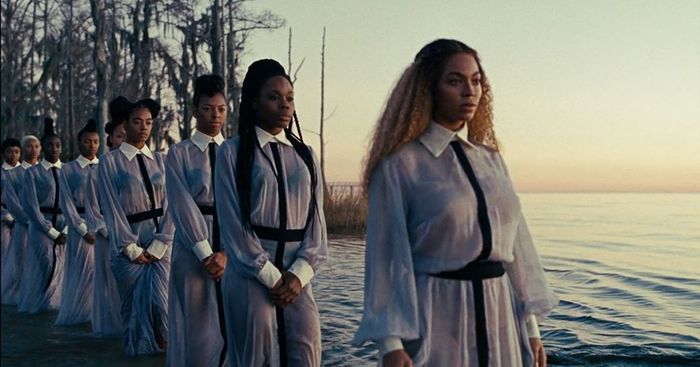
When Beyoncé dropped Lemonade in 2016, pop culture had to take a moment to grapple with her new image as a proud black woman. This is different from her earlier personas because after years of avoiding the controversies associated with talking about race, she finally acknowledged the importance of her race on her art. This came at a time when African Americans began to assert their identity in the face of racial profiling and police brutality. While Beyoncé holds an unparalleled position as a powerful and fascinating artist, it is equally important to hold her accountable to the causes which she incorporated into her album. My essay will be a critical analysis on how successfully Lemonade mainstreamed and connected to the Black Female experience. Although I intend to write an essay for this topic, I am open to making a visual essay, since most of the content will focus on the audio and the visuals.
Firstly, one has to attempt to decipher Beyoncé’s appeal as a black artist. As non-black people, some context is needed in order to understand and appreciate the dominance of a proud black woman within pop culture (which extends beyond just her music). For that, I wish to anchor my essay in the some of the readings we have done in class, mainly the work of Du Bois and Christina Sharpe. Du Bois’ investigation into the black experience in Souls of Black Folks is not just helpful in understanding the motifs in Lemonade. His double conscious echoes in Lemonade as Beyoncé comes to terms with her identity as an African-American woman. She, much like Du Bois, attempts to overcome being a problem (to her black husband as opposed to the white man) through introspection and a hope for the future.
Similarly, Beyoncé’s ability to connect personal trauma with historical legacies matches Sharpe’s efforts to be in wake by incorporating the intimate with the global. Through lyrics and the lingering camera shots on her face, Beyoncé shows a range of complex emotions that forces the viewer to see her as more than a one-dimensional figure. Her complexity and attempt to move past her pain allows people to connect with her on a personal level. Throughout Lemonade, Beyoncé stands alongside unknown women, and merges their faces with stories of her mother, her grandmother. They are connected across space and time by their trauma of racism and sexism, and efforts to redeem their minds and bodies. This connection is further reiterated by her decision to release her album on HBO, so that it may be available to the public.
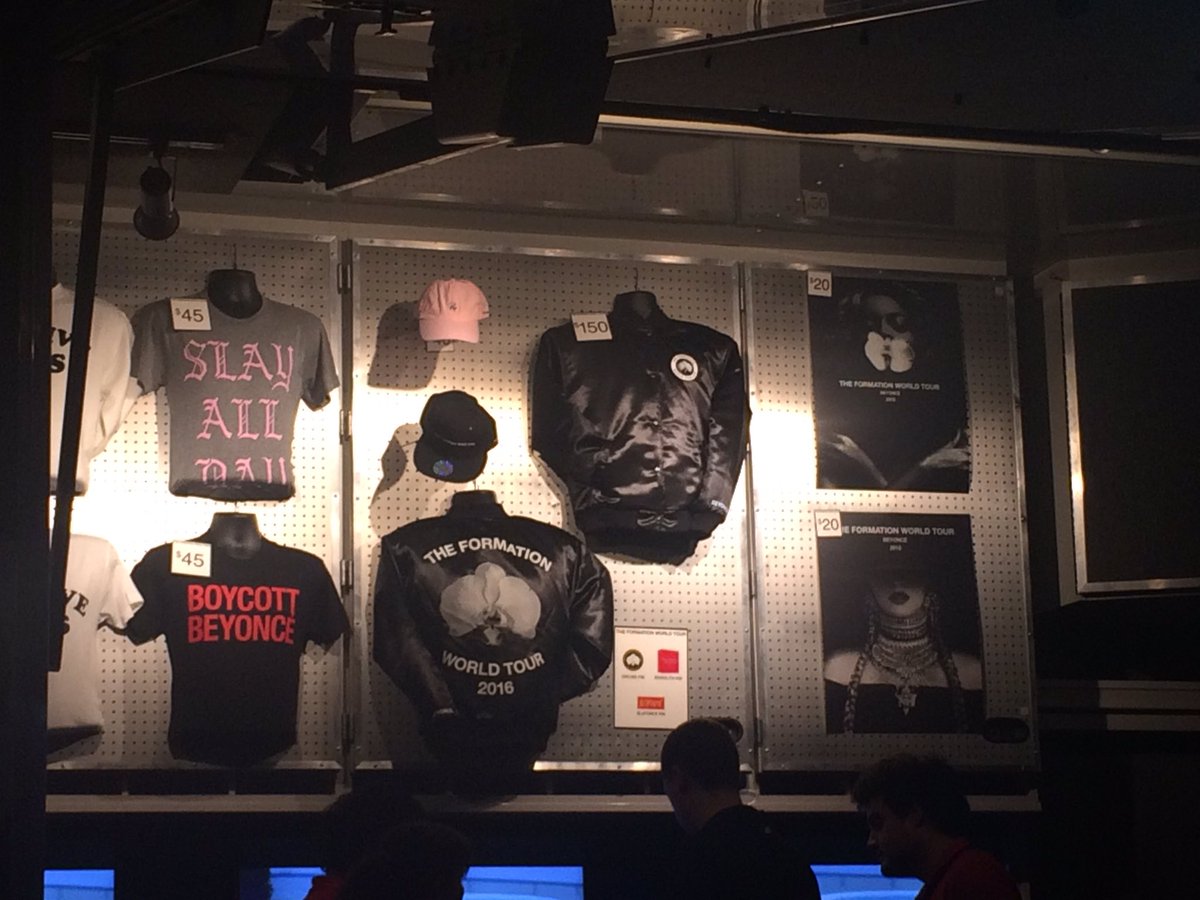
But critics have rightfully pointed shortcomings in this narrative, namely the validity of Beyoncé’s experience as a radical black feminist experience. Some even go as far as accusing her of sterilizing the pain of black women by bringing it down to personal struggle. She is heavily criticized for ignoring the nuances, such as the way black women internalize racism (bringing to attention Beyoncé’s own efforts to look whiter). Black radical feminists like bell hooks accuse Beyoncé of presenting an over-sexualized or violent image image of self-emancipation. This re-affirms harmful stereotypes which are perpetuated by white and black men alike, and then used against black women’s. Critics have questioned Beyoncé’s sincerity in involving herself with everyday struggles of black women. Many believe that Beyoncé’s “performative” sympathy has to do with capitalizing on fetishizing black experiences in order to make it palpable and consumable to a broader audience.
Source: USA Today. Notice how the Boycott Beyonce shirt is also being sold as merchandise.
As more black female artists like Solange, Cardi B, Janelle Monae incorporate into popular culture, it is necessary to think of the the issue of representation versus fetishization of the Other in popular culture. In particular, the idea of mainstreaming black radical expression while simultaneously allowing it to remain true to its values and history. By acknowledging a lineage and connection, Beyoncé recognizes that the black woman’s pain is never-ending. Even if we doubt Beyoncé’s sincerity towards these causes, we have to acknowledge the significance of a powerful and charismatic black woman in a largely white male space. What is problematic is her position as a messiah who will “slay” away the years of discrimination. If the artist is to reflect the times, we as viewers and consumers of popular culture must look beyond the art and hold artists accountable for their sincerity in the cause.
Art is means through which ones understanding of reality may be projected. However, reality is not as objective as it may seem and through the writings and works of (Afro)surrealists we find that the world beyond the visible and rational world also needs to be explored and expressed. This essay will attempt to understand how this mystical, invisible world, which lies beyond the rational, visible world is accessed through the works of Afro-surrealist artists and how they have found self-expression there. Further it will use the writings of theorists like Cesaire and Senghor to establish a framework within which to generally approach these works and will look at specific works of artists like Herbert Cogollo and Jessi Jumanji from the twentieth and twenty-first centuries.



 Decoloniality and Decolonization