Of Obeah Histories and Resistances

In discussing activists and thinkers like Fanon, Césaire and Memmi, the focus of our course has primarily been upon colonized intellectuals. Our understanding of their particular cultural contexts has consequently been informed through their relations and positions vis-à-vis these resources. I intend to move away from colonized intellectuals as a primary reference to the lives and experiences of the colonized masses and their reliance upon culture and religion as a means to resist their physical and psychic domination. 

The aim of this project will thereby be to study how the very sites of colonial domination, for instance cultural/social institutions, also become the means of resistance. In employing religion and tradition as tools of defiance, the enslaved deny the accusations of calcification and stagnancy and instead reveal these institutions to be dynamic and adaptive in nature.

The aforementioned analysis will be traced through the study of Obeah practices. Obeah, as a religious practice had its roots in West African religions and was a synthesis of one’s natural, supernatural and social realms. Practitioners derived legitimacy through their access to and contact with spirits and an intricate knowledge of herbs and medicines that could cure or poison its recipients. Its reliance upon spirituality and nature as means of authority to heal, protect, and often condemn people redeemed a sense of authority in the enslaved populations and thus challenged the domination of the colonizers over them. Moreover, men and women of authority also had a pivotal role in organizing rebellions and garnering support through the proclamation of invincibility as a result of taking the oath.

In discussing direct physical combat, such as the Tacky Rebellion of 1760 fought under the command of an Obeah woman, Queen Nanny, as well as everyday resistances enabled through Obeah beliefs, like reproductive control and social capital for Obeah-women otherwise denied under patriarchal arrangements, I will highlight the adaptive nature of enslaved communities to negotiate power relations with their salve-masters. This stance will further be supported through the ability of enslaved communities to manipulate legislations that criminalize their religious practices. 

Finally, my project is intended to take the shape of photomontages accompanied by a write-up. Photomontage was first employed as a tool of expressing political dissent under Dadaism (1915) and later Surrealism. Since I aim to highlight the resistances posed by enslaved groups to their domination, I believe montages to be a relevant art form that may complement the nature of my project. 

Student Activism and the Decolonization of Education

 ‘It is better to die for an idea that will live than to live for an idea that will die’

Steve Biko

One of my favorite memories in LUMS was participating in the student protest march last year. A spur of the moment decision, it impacted me quite a lot. It made me deliberate on their necessity and impact.

In particular, I loved the balance between the universal and the particular that they capture. Student protests are a global phenomenon and encapsulate people of all religions, race ethnicities and class etc. However, for the project I want to focus on the students protests in the wake of decolonization and their demands for a new system of education.

Just as the #RhodesMustFall movement symbolized the South African students demand for a decolonization of their education; similarly there were other movements and protests throughout time that had similar demands. In 2015, the black students in the University of Cape Town, demanded the institution to remove the statue of Cecil Rhodes, as a symbol of decolonizing their curriculum. And while the statue was removed, the students are still struggling to have their voices heard. Recently, a statue of Gandhi was removed from the campus of University of Ghanna amid student’s protests about Gandhi’s racist attitude towards black Africans.  According to Obadele Kambom, the head of language, literature and drama at the Institute of African Studies, the removal was an issue of “self-respect”.

However, the idea of decolonization of education goes far beyond the removal of statues. In Africa, the remnants of colonialism are prominent in different ways, one of them being Rhodes’s legacy in education sphere. This commemoration goes beyond statues in the form scholarships awarded in his name and the “colonially patented Rhodes University in Grahamstown, South Africa”. These are all reminders of a colonial past but they also symbolize the subjugation of black people which exists to this day. Student protests have been an important method in fighting this subjugation and protesting against such educational systems. More so than anything, these student protests, symbolize attempts of the students who wish to take back their narrative, tell their history and shape the world as they see fit. It isn’t about the statues. The overarching theme is the urgent need for economic and social reforms. They got a debate going; about the kind of history that is taught, what constitutes our understanding of knowledge and the way they are transmitted and mostly how we can fight these ideas. Many of the debates that students initiated on campus were articulated on the political stage through the former students themselves.

I intend to make a visual timeline of these different protests in Africa through pictures taken at the protests or inspired by them in one way or the other and try to engage with them to see a pattern of emerging black consciousness in Africa and the importance of an African identity.  I will also try to see how the demands of the students changed as times changed.

Mainstreaming Lemonade: An Analysis

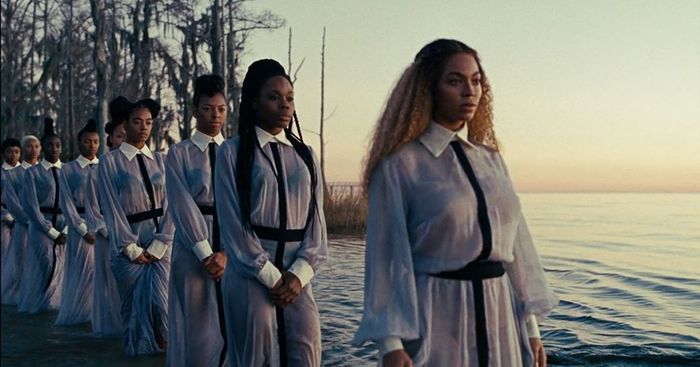
When Beyoncé dropped Lemonade in 2016, pop culture had to take a moment to grapple with her new image as a proud black woman. This is different from her earlier personas because after years of avoiding the controversies associated with talking about race, she finally acknowledged the importance of her race on her art. This came at a time when African Americans began to assert their identity in the face of racial profiling and police brutality. While Beyoncé holds an unparalleled position as a powerful and fascinating artist, it is equally important to hold her accountable to the causes which she incorporated into her album. My essay will be a critical analysis on how successfully Lemonade mainstreamed and connected to the Black Female experience. Although I intend to write an essay for this topic, I am open to making a visual essay, since most of the content will focus on the audio and the visuals.

Firstly, one has to attempt to decipher Beyoncé’s appeal as a black artist. As non-black people, some context is needed in order to understand and appreciate the dominance of a proud black woman within pop culture (which extends beyond just her music). For that, I wish to anchor my essay in the some of the readings we have done in class, mainly the work of Du Bois and Christina Sharpe. Du Bois’ investigation into the black experience in Souls of Black Folks is not just helpful in understanding the motifs in Lemonade. His double conscious echoes in Lemonade as Beyoncé comes to terms with her identity as an African-American woman. She, much like Du Bois, attempts to overcome being a problem (to her black husband as opposed to the white man) through introspection and a hope for the future.

Similarly, Beyoncé’s ability to connect personal trauma with historical legacies matches Sharpe’s efforts to be in wake by incorporating the intimate with the global. Through lyrics and the lingering camera shots on her face, Beyoncé shows a range of complex emotions that forces the viewer to see her as more than a one-dimensional figure. Her complexity and attempt to move past her pain allows people to connect with her on a personal level. Throughout Lemonade, Beyoncé stands alongside unknown women, and merges their faces with stories of her mother, her grandmother. They are connected across space and time by their trauma of racism and sexism, and efforts to redeem their minds and bodies. This connection is further reiterated by her decision to release her album on HBO, so that it may be available to the public.

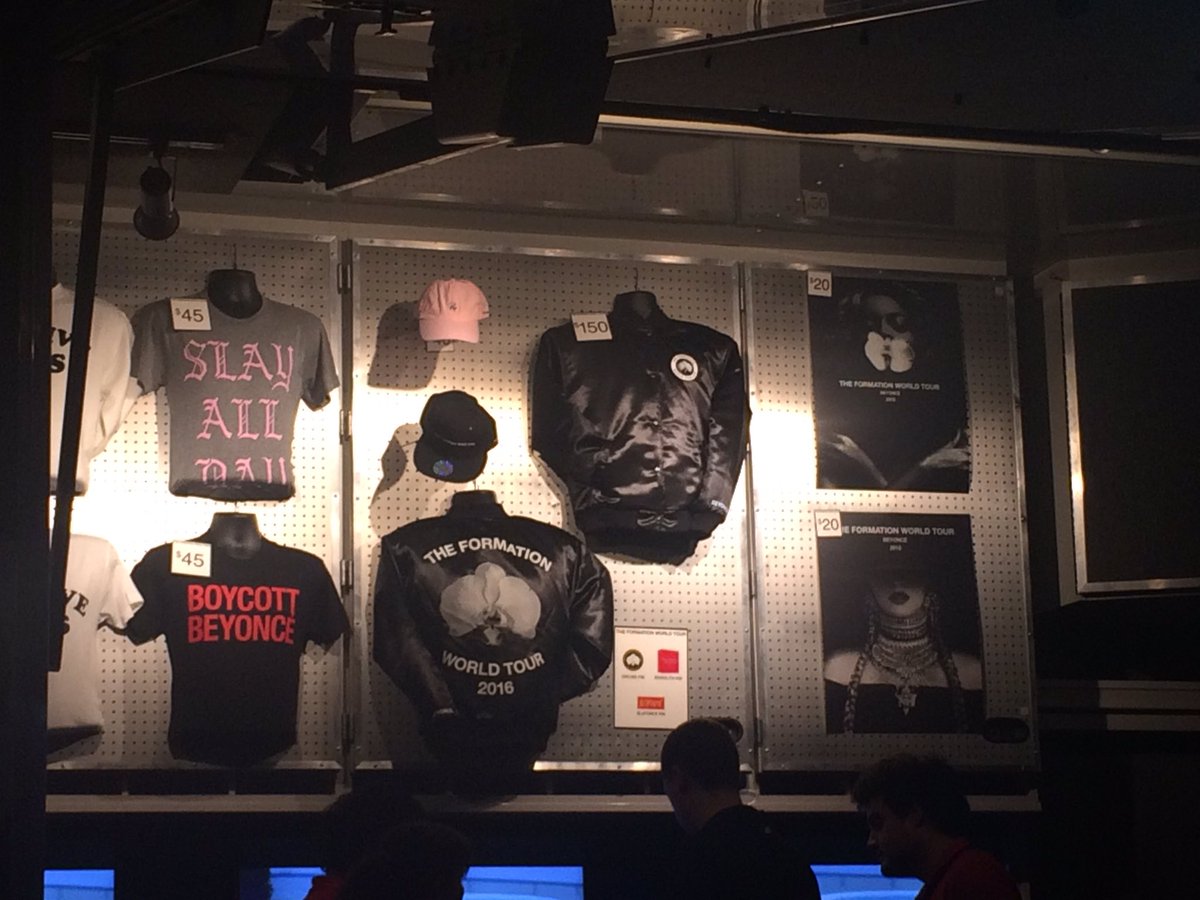
But critics have rightfully pointed shortcomings in this narrative, namely the validity of Beyoncé’s experience as a radical black feminist experience. Some even go as far as accusing her of sterilizing the pain of black women by bringing it down to personal struggle. She is heavily criticized for ignoring the nuances, such as the way black women internalize racism (bringing to attention Beyoncé’s own efforts to look whiter). Black radical feminists like bell hooks accuse Beyoncé of presenting an over-sexualized or violent image image of self-emancipation. This re-affirms harmful stereotypes which are perpetuated by white and black men alike, and then used against black women’s. Critics have questioned Beyoncé’s sincerity in involving herself with everyday struggles of black women. Many believe that Beyoncé’s “performative” sympathy has to do with capitalizing on fetishizing black experiences in order to make it palpable and consumable to a broader audience.

Source: USA Today. Notice how the Boycott Beyonce shirt is also being sold as merchandise.

As more black female artists like Solange, Cardi B, Janelle Monae incorporate into popular culture, it is necessary to think of the the issue of representation versus fetishization of the Other in popular culture. In particular, the idea of mainstreaming black radical expression while simultaneously allowing it to remain true to its values and history. By acknowledging a lineage and connection, Beyoncé recognizes that the black woman’s pain is never-ending. Even if we doubt Beyoncé’s sincerity towards these causes, we have to acknowledge the significance of a powerful and charismatic black woman in a largely white male space. What is problematic is her position as a messiah who will “slay” away the years of discrimination. If the artist is to reflect the times, we as viewers and consumers of popular culture must look beyond the art and hold artists accountable for their sincerity in the cause.

Spirit in Art

Art is means through which ones understanding of reality may be projected. However, reality is not as objective as it may seem and through the writings and works of (Afro)surrealists we find that the world beyond the visible and rational world also needs to be explored and expressed. This essay will attempt to understand how this mystical, invisible world, which lies beyond the rational, visible world is accessed through the works of Afro-surrealist artists and how they have found self-expression there. Further it will use the writings of theorists like Cesaire and Senghor to establish a framework within which to generally approach these works and will look at specific works of artists like Herbert Cogollo and Jessi Jumanji from the twentieth and twenty-first centuries.


The People could Fly

I’m working on African American folklore. Originally oral traditions that range from animal stories – probably familiar in the form of Enid Blyton’s ‘Brer Rabbit’ tales – to stories of conjure people who could put ‘goophers’ on people, classic creation myths to ‘freedom tales’.

What becomes obvious is that these tales are essentially formed through slavery. The recurring hero-type is the trickster who goes up against the powerful figures of the Big Bad Animal, The Master, The Devil and even God with only his wit and will and tricks his way to success – or freedom. Magic provides one form of an equalizing force – you can lay powerful curses on all and sundry. It provides a certain vocabulary of hope – escaped slaves might have disappeared into thin air – been turned into birds, or grown wings and ‘flown’ away. Tragedy and powerlessness are tempered with hope, with a rationalization of life, a thread of possible vengeance – and these stories emerge from the fertility of these emotions, in a place where only the imagination might be free to fly.

The folktales provided a way of subverting the authority of the slave-owner, of envisioning a way out through individual cleverness, or a way to avenge themselves. The world in its creation was populated by tricksters as well – tricksters responsible in their tricks for the sun, the moon and the stars. In some sense, the folktales provided a way for the slaves and former slaves to situate themselves in a new world, spinning the unfamiliar around them with the familiar, and seeking ways to establish a little control in their lives.

They weren’t considered history per se – they were an art. A way of looking at the world as it was, and from that grounding, what it had been and could be. This is why they struck me as important – tales of slaves running away, jumping together into a waterfall rather than be sold apart – but their bodies are never found and two birds fly above the water. Stories of the clever slave tricking the Master into giving him his freedom. And conversely, not so bitterly-triumphant, of the slave who turned into a tree to find some – any – roots – and was cut down to make his master a kitchen.

There’s nothing clear about these stories – they’re often written with humor but shadowed with deep, abiding injustice. A straight-forward ‘white’ morality is nowhere to be found. There’s death, and it is freedom – and a house is built on the body of a slave. The most innocuous of the tales – tales of animals, no less, told in something of the humor of Aesops Fables, have everything to do with the powerlessness of the slaves, and are an injunction to cleverness, to taking every ounce of advantage you could squeeze from those who would control you.

The tales provide an odd insight into humanity, perhaps – or if that’s too large a claim, a very specific humanity, under very specific historical conditions. There’s a deep tragedy, a deep resentment and an equally deep hope engaged in their conception. That makes them worth examining, empathizing with, achieving an understanding for.

I intend to write a paper examining this tradition, its subversiveness and its fluidity of use. To specify the whole – tradition, I suppose – enough to write a paper seems a shame, to pin down something that seems to glory in its elusiveness and its ability to serve many causes seems counter intuitive. But there’s plenty to write about.

Still Got The Blues

Music speaks to us all, in one way or the other. You might even consider it as something ‘universal’. In the latter half of the 19th century during the ‘rock n’ roll’ revolution numerous artists were brought to the forefront of the world stage who now have been immortalized in our memory for eons. The Beatles, The Rolling Stones, The Unholy Trinity of Britain (Led Zeppelin, Deep Purple and Black Sabbath), Pink Floyd etc.

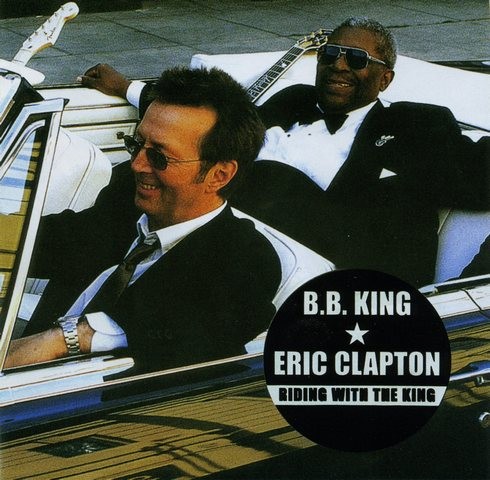
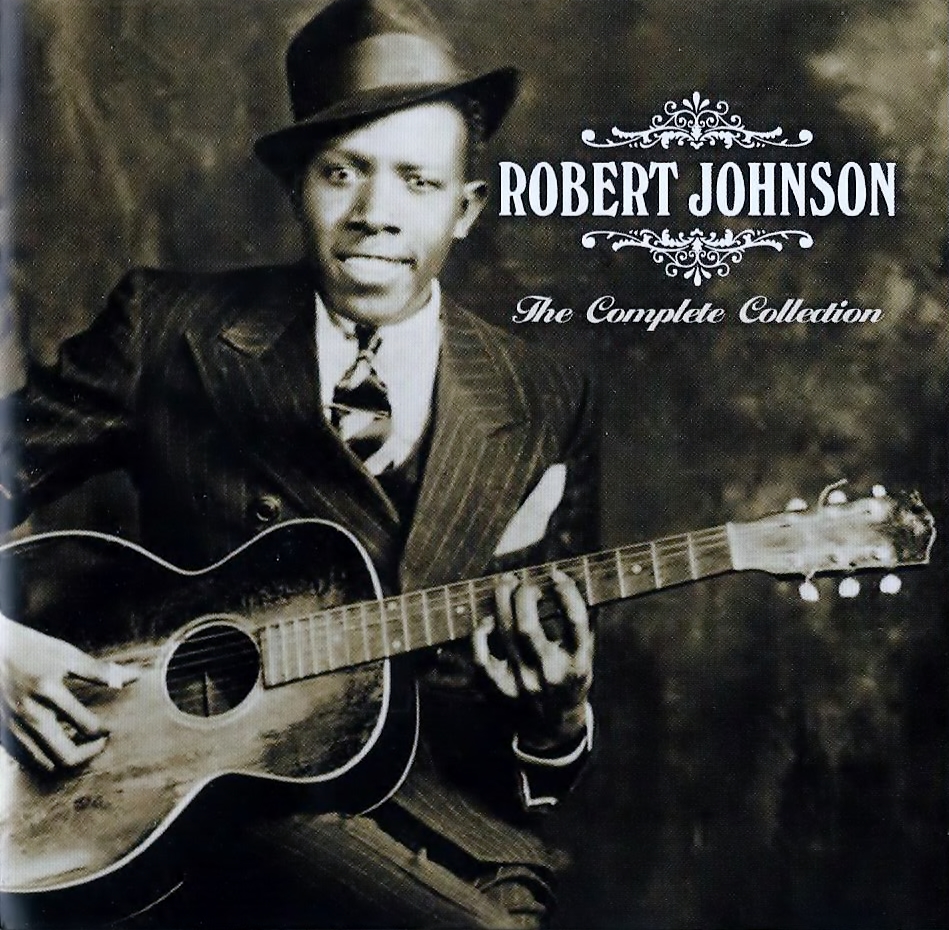
A superficial glance into the past will reveal these well-known names (not to take the spotlight away from these legendary groups) but not their forerunners, their inspiration. The jazz and blues artists of the former half of the 19th century. Robert Johnson of the crossroads who influenced Zeppelin to no end, Elmore James whose style with his slide guitar was something carried onwards by men like Stevie Ray Vaughan, B.B. King who was approached by Eric Clapton to produce Riding with the King (an album whose name alone stands as testimony to the magnanimity of these people who performed in racially segregated joints in southern United States throughout the 1920’s and 1930’s). These people brought joy to not only their people, but their beautiful sounds were heard all over the world.

I am toying with the idea of making a short documentary because to understand the aesthetics related to music, it must be heard first. The reason for delving into this particular topic is not just because it is prudent to the prompt of the final project but also because these artists have helped me through particularly difficult times. The latter has helped me better understand the context of their work back then and to better grasp the essence of the influence they have had on future artists. When I think about the ‘aesthetics of decolonization’, my mind jumps, instinctively, to a mental image of Robert Johnson sitting on a stool with his guitar in a juke joint in Mississippi. My project will also be a sifting of the range of emotions the music brings about in me and uncovering the links to the context of the course. At the end of it all however, the project would aim for and ultimately find the true beauty of their music and where it comes from. Sources will range from studio albums and lyrics of songs to old interviews of particular artists, covers by future bands, their interviews and references in their music to these earlier artists.

Between the gaps

I will be attempting to write myself into this project, seeing it more as a form of self reflection and exploration with regards to the theme of home and belonging. Being both from here and not, my relationship with the idea of ‘home’ has always been fragmented, feeling that I do not have the complete right to call either place my own. This is a question that has recently become more recurring to myself, and since I have never fully allowed myself to explore its depths, I feel this is an appropriate point to begin from.

Most of the kinds of writing that I have been inspired by are non-fiction, autobiographical pieces, especially Saidiya Hartman’s Lose Your Mother and this is deliberate. I find this form/method to be the base of the stories itself. They allow the author to directly speak to the reader, so there is in a sense, a greater moral obligation to appreciate these experiences. I see the difficulty in articulating, let alone narrating one’s life and would like to explore this as a means through which I can find redemption in our past, through the banal instances of the everyday.

I am unsure to call it a privilege or a burden, but I have had the experience of living in another country and therefore imagining a life in another country from a very young age. It has been built into me, this double sight of the world, always relating one to the other and finding myself in between. And so it is exactly this ‘in-between’ that I want to divulge as a decolonial aesthetic, finding a way to reconcile my experience as the ‘other’, in both my ‘home'(s).

My project will most likely culminate into a paper; providing vignettes of my own life upon which I will draw an analysis. I will also be employing poetry and music into my work, since I feel these are two outlets that beautifully capture the rawness of emotion, and can also be accessed in different ways, attaching our own interpretations to them and finding a way to voice our own pains.

The Glass Between Us

My grandfather married my grandmother in England. Both were far away from their homes and families. Their wedding was a small affair— my grandmother’s sister was the only representative from both their families combined. They were both warned about the folly of marrying a person who was ultimately the other. But for the most part they proved their naysayers wrong. My final project is about all the times they couldn’t.

Interracial love is born from a contradiction. Both possible and impossible, it exists as an antithesis to itself. And what better way is there to address contradiction than through fiction? My project will take the form of a short story through which I will aim to address the interplay between history and the individual.

The story will attempt to construct a decolonial aesthetic through the lens of a marriage between two people of different races. Fiction gives me the space to not only tell the story of my own history but to take liberties with it that I wouldn’t be able to do in a non-fictional piece. I am greatly inspired by James Baldwin’s If Beale Street Could Talk while working on this project. In particular, it is this sentence upon which the crux of my story rests: “I hope that nobody has ever had to look at anybody they love through glass”. My grandparents spent much of their life together doing just this. If nothing else, my project is an attempt to pay homage to their struggle.

Exploring the origins of the Zombie and Vodou

One of the first images the came up when I googled the word ‘Zombie’ to put up here was this:

A few rows down, this one popped up:

These images are not out of ordinary for someone who has seen similar movies and seasons depicting zombies as a fearful half-being who is stuck in a state of constant nothingness. The zombie is shown as a grotesque body: with its insides on the outside, its mouth hanging open, its eyes up in its sockets, and its hunger for the human flesh. Or it is made into a comic figure that is evil but laughable at the same time.

Similar portrayals of vodou are also prominent in the Western media. A standard image of the ‘Voodoo Doll’ I remember from cartoons in my childhood is of a doll with pins pushed inside it that is used for black magic.

Both these images are presented in the movies, seasons, games and other media as ahistorical figures. And to me, this was the image that was familiar till I was introduced to their origins in this class. This is why this project is important for me to explore. Because to those unaware of their origins, they represent nothing more than a figure of fantasy or horror. However, zombies and vodou are both grounded in a specific history and social context. The concept of the zombie originated in the plantations of colonial Saint Domingue. It represented the fear in the slaves of always being stuck in the state of working on the plantations, so much so that they thought they would have to continue even after death. Vodou was grounded in religion and had political and social significance in Haiti as it continues to do so today.

In my project, I will be exploring how Haitian artists show both the image of the zombie and the ritual of vodou in their paintings. I am interested in looking at the contrast that exists between how these images are historicized in the paintings versus how they are appropriated in the Western media. Therefore, such paintings become a means of decolonizing the idea of the zombie and vodou propagated by the West. The form of my project will tentatively be a pictorial essay in which I will be analysing certain paintings and see how they become a means of remembering the experience of slavery. I will also be looking at how, in contrast, the depiction of these ideas and rituals that have their roots in the slave plantation, the Western media tries to remove it from popular narrative and uses the same images to validate the otherness of the blacks.

Defiance through slam poetry

When I first read the excerpt from Bina Das’ memoirs I was struck by the longing in her voice as she neared the end of her memoir. She writes: “I find a sense of incompleteness in my words. I have failed to give expression to my innermost pain and unfulfilled dreams and hopes.” This inability to articulate her feelings, put them into neat descriptions with a beginning, middle and an end is prevalent throughout her written narrative. The inner turmoil and struggle seems to be sidelined when it comes in the way of a “greater” cause. And they never truly show in the memoirs or accounts penned down later on by these women who gave up so much for the social causes they were affiliated with.

That is where I believe slam poetry might be able to fill these gaps. It is an art form that is quite inclusive, fluid and has existed under different names ever since man discovered the healing powers the spoken word contains. On numerous occasions when I felt I couldn’t fully express myself through the written word or when I felt trapped in my own consciousness, slam poetry has served as a wonderful outlet that can echo the frustration, pent up aggression, silence that is simmering inside of me. Instead of being a structured form of poetry with a set meter or rhyme scheme it is liberating with its absence of any rules.

The longing, the passion and the anger tied up with the rhythm, the musicality and the poetic dexterity in the writings of these female activists and freedom fighters that are slowly being erased from history do have the potential to be translated through the slam poetry medium.

Therefore, through my final project I aim to map the stories of Bina Das, Vimla Dang and Kalpana Datt on a different terrain. A terrain that allows their stories to be less constrained and diluted and unidirectional. I hope to do justice to their stories and to this art form.