When talking about Negritude, Senghor calls it a confirmation of one’s being, the black personality or, the African personality. A being/personality characterized by an ‘African’ way of life, an ‘African’ sense of relating to the world and, by ‘African’ art and aesthetics.
Initially, this idea of negritude may seem to be firmly rooted in the particular as it only refers to the African identity and approach to life. According to Senghor, the African sees the world as a network of integrated life forces. A world devoid of strict binaries, where Man embodies the spirit and matter, body and soul, the masculine and the feminine. A world characterized by a network of seemingly opposing elements/forces all beautifully brought together to compose the painting of Man’s being and the universe. Art too is central to the African identity for Senghor. Art for the African is not divorced from his being. It is not an extra activity but an expression of humanity and human value. It is a social activity and a way of being, woven into the social fabric and fundamentally a part of human experience and existence. African art is rhythmical, ‘for it is rhythm-the main virtue of negritude-in fact, that gives the work of art its beauty’. This sense of rhythm is what balances the life forces (by which the African recognizes and relates to the world) and keeps them running in perfect harmony. Hence, art is the way by which the African, and his world’s, opposing elements come together to form an integrated network of life and of the universe.
However, despite the fact that Senghor seems to solely be interested in the African and his idea of negritude and African aesthetics only seem to accommodate the African world view, to say that he is limited to the particular or unconcerned with the universal would be a rather narrow reading of Senghor’s idea. His theory of negritude and African philosophy of being, that are completely opposite to western notions, are to be seen as a response to modern western humanism. An alternate way of being in a world violently dominated by the concept of western humanism and its superiority. Simply put, it opens up the possibility of having space in the world for a non-western identity. His negritude is not reserved for black Africa, rather, it is what he calls ‘Africa’s contribution to the universal’, a contribution to ‘international cooperation’. Again, the possibility of different, seemingly opposing and contradictory elements/life forces/identities/ideologies coming beautifully together to form a harmonious and balanced whole. Even when talking about African art and aesthetics, which he explains as rhythmic, it can be understood more largely as the idea of an aesthetic which seeks to find harmony and balance in differing forces. That is to say, proposing a universal aesthetic which finds beauty in the complete and harmonious accommodation, coming together and integration of various ways of being.
Hence, Senghor’s negritude or idea of African being can be seen as a way of relating to the world. A way characterized by reciprocity, rhythm, harmony, space for alterity and the integration of various different identities to the formation of a more beautiful, accommodating and holistic universal.
Senghor’s Universal Negritude
Senghor’s depiction of Negritude shows how the phenomenon operates as notions of universalism would, and intends to make itself a part of a larger universe, but refuses to detach itself from black exclusivity. Negritude then exists outside a universe, and functions on its principles- but refuses to be one.
Senghor shows how Negritude is a phenomenon that aims to become a part of the universal, depicting that the “universal” is an external entity, a space outside Negritude. In essence, Negritude seems to seek a connection with, and an “active presence in the world, or better, in the universe.” This shows how “the sum of the cultural values of the black world” seek to co-exist “in the world” where values external to it reside. The black world is depicted as isolated, endeavoring to make its way into the universal. Not only does it then acknowledge the existence of the external universe, but also understands it to possess a “living, throbbing unity”. It understands the significance of the meaning attached to this life of the universe, of the thriving of one energy and network of forces- it seeks to become a force that would allow the black world to establish essential “contact” and “participation” with others. Negritude would then seek to open the world to itself, rather than open itself to the world, which already seems to give space to the whites. In effect, Negritude yearns to become part of the universal, but refuses to give space to it within itself.
However, Senghor shows how the “Rhythm”, the “main virtue” of Negritude imitates a universal reality in its working. Consequently, a notion of universality lies in Negritude’s functioning and experience- of the complex and yet simple unity of life forces that form intricate connections and ties to create a complete reality. In essence, the notion of this kind of universality is rooted in a sense of mobility and interconnectivity. Several small and large life forces and all such existing essences, find their way back to each other, form countless paths without any disjunction, and create an entire experience which transforms “existence” into “being”. The spiritual and the material, the “tangential” and the “radial” both form a single energy- where the core and periphery, the small and the large are placed and interdependent in such ways that produce one complete understanding. In effect, it forms a complete and intact experience that “emanates from God and ends in God” and allows the universe to be “infinitely small” and “infinitely large” at the same time. The universality then, lies in the “complementarity” of these forces, in that one sense of completion.
This complementarity produces “pure harmony”, a feature of the universe and the way it functions- where oneness becomes inevitable and indestructible, where all life forces are magnetic and respond to each other’s “call of complementarity”. There is no other reality than harmony, and that too a continuous one, like the continuity of the universe’s workings. Notions of separation and reunion both result in harmony- like a separated couple, or “two lovers”. This rhythm of Negritude is what is omnipresent and functions just like a universal force.
Yet, although Negritude functions in ways similar to a universe, it remains a universe for the black. The rhythm is only an African rhythm, understood only by the black African, wherever he or she might be in the world. Only the black can hear the calling and feel the mobility that will allow them to transcend towards “being”- similar to European racism, the Black will truly live by virtue of being black. The “black personality” that was first isolated becomes exclusive, existing outside the universe, on its own. However, one must not ignore an understanding of Negritude as a response to European racism. The response to whiteness is blackness and therefore cannot include everyone in the universe. It is because whiteness was thrust first upon the world, with its supposed superiority, that blackness cannot be universal, but rather must counter it to challenge its superiority. Instead, both whiteness and blackness must contribute to universalism. Negritude chooses to defeat the monster, by becoming one itself. Both the monsters then, are universes in themselves, but one fights only for the whites while the other fights only for the black. In essence, Negritude has space for the universal black, which may not be universal after all. In fact, if there are separate universals for the black and the white, one may question the existence of a pure universal itself. If there is no universalism, how could Negritude as a response, ever make space for it?
Senghor shows how Negritude is a “response to modern humanism” and a “humanism of the twentieth century” at the same time. Negritude in itself functions like a universe would, but produces a harmonious experience that would only manifest itself for the “black personality”. It seeks to make itself a part of the larger framework of the universal by truly remaining an exclusive part, a black part. The lack of diffusion of the black and white parts could mean that the “universal” could never truly exist in the first place, completing this cycle of exclusive response and counter-response, a never-ending phenomenon. Consequently, it is not just Senghor’s Negritude that does not have space for universalism- universalism itself might never have space for anything at all.
The Spirituality of Senghor
In “Negritude”, Senghor attempts to surpass traditional notions of Negritude that simply view it as black expressionism. What is more interesting is his understanding of Negritude within a wider conversation with the other ontologies of his time. He sees it as a movement which would not just empower black people, but would ultimately benefit all mankind. Senghor conceptualizes Negritude as a universal spiritual reawakening of the world but the gaps within his argument prevent his interpretation from fully realizing its potential. He does so by deducing the idea of spirituality from within scientific discovery, outlining what this rediscovered spirituality means for humanity but also ignoring some inherent contradictions within his analysis.
In the first half of the text, Senghor uses science to rationalize the existence of an overarching spirit of the world. European modernity failed to explain new scientific phenomena of the 1880s such as relativity and the wave-particle because it saw the world as “static, objective, dichotomic”. Senghor then uses those very same European scientific discoveries of Heisnberg and Bergson to suggest “…that there is not matter and energy, not even matter and spirit, but spirit-matter, just as there is space-time” (479). He sees spirit-matter manifest as a series of networks around a centripetal spirit of the world. These spiritual centres exist in every living and non-living thing; they can be felt and understood indirectly through material sensations like sight, taste and touch. For Senghor, mastery and transcendence of the material world –which is the hope of all scientific breakthrough – requires acute knowledge of the internal, psychic and qualitative world.
Senghor’s Negritude, then, is universal because it seeks to re-enchant world by re-introducing man to the spirit of the world. He seeks to undo divisions between man and nature created by Western Humanism by bringing together contradictory aspects of material and psychic reality. By re-presenting, re-creating and re-storing the harmony of man and nature, heaven and earth, humanity will ultimately find God (the Force that Creates all things) and by virtue of finding God, will find self-confirmation. Senghor believes that Africans hold the key which unravels this path; to him, they have historically been in tune with the external world and its contradictions. What Europeans perceived as passivity is instead seen as a deep respect for nature and all the things which inhabit it. Senghor sees Africans as sensitive to qualities such as touch, sight, taste etc. because these are qualities help mankind find the spirit, and effectively, a profound meaning of life (479). He already saw its effect during his time in art movements like cubism, expressionism etc. These movements, which originated from black art, inspired the likes of Picasso and Braque to depict “the interplay of life forces” in order to showcase a knowledge of Man (not just Man’s knowledge), and to find a human value to artistic expression which was lacking before (481).
But the way in which Senghor conceives the African as exclusively connected to the spirit of the universe creates a self-righteous moral high ground for the African which closely resembles that of the European. He entirely misses the importance of struggle and rebirth to achieve harmony with God and oneself. This is especially problematic when contemporaries like Cesaire and Fanon discuss the importance of struggle and trauma within the black experience (if there is a homogenous black experience). To believe that the African is aware of and moved by the unseen networks a priori would allow them authority to enforce a set of ideals onto non-Africans, but does not give room for diversity. This rigidity prevents the evolution of the Negritude movement itself because it does not allow room for a two-way exchange of ideas and interpretations between Africa and non-Africa. Negritude would then no longer be as universal but just as restrictive as Western Humanism was for Africans.
Senghor offers a unique take on the Negritude movement not just as an expression of the black experience but as a pathway to the spiritual connections of the universe. His harmonious symbioses of the manifest world and latent energy offers a way back to spirituality which otherwise cannot be conceived by Western humanism. It requires an intimate understanding of the relationship and exchange between the living and the non-living. Perhaps he so fervently wants to situate the movement next to scientific discoveries and artistic movements of the time because he wants Negritude to be taken seriously as an original but equally insightful ontology. But if one seriously wishes to consider Senghor’s understanding of Negritude as a way to for humanity to be re-enchanted and reacquainted to the mysteries of the world, it is important to add room for historical change, diversity and exchange between the African and non-African world.
But those without whom the earth would not be the earth
Senghor’s arguments about an African “rhythm” and African “conceptualization” are problematic because they are somewhat a-historical and seem more a product of romanticization than a product of genuine historical inquiry. However, considering that Negritude is in effect a product of its time and is essentially a very humane philosophy for the African people to restore themselves to themselves and of course the philosophy was in response to the Enlightenment ideals of a dichotomy of the world and can be understood in performative terms as well which Fanon describes in a lot of detail, but if we are to be sympathetic to something that is essentially a product of its time, it is vital to keep in mind that in a world dominated by white “reason”, negritude promised another way of inhabiting the world.
Senghor goes in quite some detail when he talks about the union of life forms which contribute to a particular rhythm of the world which can be understood as God Himself and of course he’s speaking in the abstract and doesn’t have empirical evidence to back his claims but that was essentially his point or the point of negritude at large, at least in terms of how Senghor explains it. To be one with the world or as Senghor describes it “a call for harmony to the harmony of union” and to not create binaries between material and spirit or man and nature and by such an approach negritude essentially rips apart the Enlightenment philosophy which is centered around dominating nature and conquering the world. In that sense Negritude is similar to many Sufi traditions as well which are also centered around understanding yourself in union with your world; where man is understood as part of nature and if one thinks about it that is exactly what Fanon was saying, “man is a yes that vibrates to cosmic harmonies”.
Senghor claims that this is essentially the African spirit, and, in that sense, there is a difference between the European and African spirit and of course such a claim is more passionate than sociological but at the same time it is understandable. I think when reading about these people, it is an ethical obligation to keep reminding ourselves of the horror that colonization brought about the colored people. In the colonial world, the very body of a colored individual was a reminder of how they are and always will be inferior for that is how the world works; in other words, that is natural.
In such a world, we can’t even begin to appreciate what the philosophy of negritude meant and how liberating it must have been to read Cesaire when he says, “but those without whom the earth would not be the earth”. I don’t think I can even begin to understand the magnitude of what this verse meant for the colonized people, let alone critically analyze it. Fanon also talks about the “liberation of the colored man from himself” which again ties with the fundamentals of what negritude was trying to do and in the broader scheme of things these ideas do really come together, and it is possible to envision a universalism through this particularism, as mentioned earlier, it promises another way of inhabiting the world, and that can be understood as a wonderful starting point for the “rhythmic” world that Senghor envisioned.
Senghor’s Exclusionary Negritude
To Senghor, Negritude is, as he puts it, ‘nothing more or less than […] the African personality.’ He’s willing to stretch this to include the African diaspora, making it a ‘racial’ thing – the ‘black personality’.
All of which makes the exclusive innateness of this conception of negritude undeniable. To him, Negritude is a ‘certain way of conceiving life and of living it’, the ‘sum of the cultural values of the black world’ – assuming a certain uniqueness in ‘black’ ways of conceiving the world – of innate cultural values that stem, somehow, from an African-ness, a unity that exists within black-ness as an essential quality, such that the black diaspora too belongs within this universal conception of African Unity.
This quality of Negritude is explicitly contrasted and opposed to European ‘static, objective and dichotomic’ philosophy. It lives in harmony with the movement of the world, in rhythm with its life-force and in understanding of its reality beyond the material. Through this depiction of a reality beyond the dispassionate, scientific, and factual, Senghor reclaims a world of mystery as essentially, naturally and organically African – as Negritude.
Senghor’s Negritude is essentially reactionary – reacting to Europe’s creation of the African in his homogeneity, in his other-ness, and, implicitly, in his lesser-ness, Senghor embraces the barrier between black and white as an innate difference in culture, in ‘ ways of relating to the world’, and overturns the implications by declaring the true understanding of the world to be in African mysticism and socialism, which is not backwards, as previously conceived, but profound, moral, and alive in a way that European conceptions of the world could never hope to achieve. A claim to a richer and better history and ontology is made – one that is essentially African and incomprehensible to the upstart, naive European who only sees cursorily into the world, and fails to comprehend the sheer mystical meaning of the world, of life itself.
In the traditional conception of Universal, Senghor’s Negritude definitely isn’t. This privileged view of and connection to the world is one constrained by nature, by history to belong to the Africans, to the black people of the world. They way of being and relating to the rest of the world is one a black person is born into, it is part of black nature and the defining feature of his society and culture.
And yet, Senghor has an image of the universal of which Negritude is a part. He refers to a ‘Civilization of the Universal’, the ‘humanism of the twentieth century’ – to which Negritude contributes.
The world Senghor envisions is both divided and interdependent. Multiple ways of relating to or conceptualizing the world exist within it – a world enrichened by diversity. These ways, like Negritude, are not universal (presumably they’re racial, or ‘organically’ cultural), but are in coexistence without jockeying for one true claim to universalism. They create a civilization of the universal, of diversity without hierarchy. An innate African way of being does not mean the negation of a European way of being, but can co-exist in a world of multiple humanisms, perhaps.
This, of course, is the ideal world. Negritude is an attempt at creating the possibility of multiple, if still exclusionary, humanisms on the same pedestal – a pedestal long occupied solely by western (european) humanism.It is a claim to equality in difference – a claim to a worth long denied by colonial rhetoric.
There are problems in this – yes. Problems that haunt Fanon with the possibility of falling into the trap of colonial thought – of embracing a humanity of negation, of embracing the limited possibilities imposed by European humanism. Fanon sees this as a weak attempt at decolonization – to him there is no decolonization until the definitions created through colonization, the ideas that supported it and the barriers that delineated it are entirely obsolete and all possibility of being is opened up.
And yet – isn’t Senghor’s conceptualization understandable. Negritude – a reclamation of the slur Negre, an affirmation of self, a declaration of worth of a people long denied it. It’s a standard of pride, a reassertion of nominal superiority, one that allows the African – a theoretical being at best – to look down on their previous masters, their supposed ‘betters’, and pity them for their ignorance.
Fanon’s theory – the new man born beyond colonization is bewildering in its sheer vision. It seeks to break the circle of colonization so thoroughly it will never define relations between people again. It is an abstract conception to a people who have been defined by colonization in the there and then. In that moment, Senghor’s claim of a racial pride makes sense. It’s exclusionary nature – if retaliatory – makes sense. The conceptualization of a world that can allow different but equal ways of being is also radical, if not sufficiently so.
It’s importance, it’s truth-value shouldn’t be disregarded by academic scorn that deigns it as creating an imagined past, addressing an imagined people and conceptualizing an imagined community.
Universalism in Senghor’s negritude
For us to explore whether there is space for universalism in Senghor’s world of negritude it is important for us to define the concept of universalism itself and the different ways it manifests itself in this context. So in a way, we can unpack this question by unpacking the term “universalism” itself.
Does universalism imply an inclusionary space that invites everyone and anyone to participate in it? If so, then I believe Senghor does leave room for it when he defines negritude as “an opening to the world, contact and participation with others”. Senghor envisions a world that is captivated by negritude that finds a place alongside terms like “socialism” and “humanism” that have enjoyed their status in the intellectual world for years. Although Senghor exhibits the merits of negritude through examples of “African culture” he reiterates the transformative qualities of negritude that the whole world can experience. He presents it as an ethic that evolves and harmonizes itself with the rhythm of everyday life. Therefore, an ethic that is not just restricted to one race but can inevitably save it from the rigidity of the modern world.
However the origin of that ethic, is primarily an “African” one as Senghor repeatedly reminds the reader. It is the “African” that recognized the “interplay of life forces” or rather possesses them. Senghor inevitably places the duty on the “African” to pass this inherent ability to the Western world. Who that “African” is, Senghor never clearly demarcates. The “African” simply becomes a character that carries Senghor’s narrative forward. This leads to the question of whether universalism is an erasure of the particular or the individual. Although Senghor, through negritude, highlights a “network of life forces” that consists of family, tribes, nations and various other realities of one’s life he still in his vagueness, encases all “Africans” in one neat little category.
Though to isolate negritude and remove it from the time and
place it emerged from, would be a severe injustice done to it. It is not simply
a stylistic choice that Senghor takes great pains to define “negritude”
multiple times in his article. His attempts to carefully point out the nuances
that negritude is created out of show what’s facing him on the other side. And
that is more categorization imposed onto him by the Western world. To merely
call this conception of negritude reactionary would be unfair. It is more an
act of retaliation that is relayed in a manner that the white race would understand
or perhaps begin to. Through negritude and its aim of “revitalizing ourselves
through art” Senghor presents one path we can follow to uncover more paths of
living. Therefore if universalism is seen to emerge out of the particular, it definitely
has a space in Senghor’s idea of negritude.
Universalism or Particularism? Senghor’s Negritude as the Humanism of the Twentieth Century
Senghor claims that Negritude is the “Humanism of the Twentieth Century”. He proposes it as a way of being that stands in opposition to the European way of being that was based on dichotomies and reason and objectivity. By claiming this, however, he raises questions of whether the humanism that he is proposing is grounded too deeply into ideas and values that lose their meaning as they isolate the African from the rest of the world. In other words, it is too remote. Moreover, it glosses over differences that exist within Africa as well and falls into the trap of pan-Africanism in the face of establishing a distinct identity from Europe. Lastly, in imposing this difference, he defines this identity in relation to the white man.
Senghor presents the African way of being as closely knit with Nature and as surpassing the distinctions between mind and body. The individual seems to have a relationship with Nature and the ultimate connection ends in God. He also emphasizes the use of Rhythm and momentum which negates the objective, straightforward view of the world. It is as if he finds all that goes beyond the one dimensional, realistic view of looking at the world and attributes it to the African. He celebrates the ‘human value’ that African art and literature can provide to Europe. He traces back how African art was “a joy for the soul because a joy for the eyes and ears”. This idea of humanism lacks universalism in how he presupposes one identity throughout Africa. The fact that the poem “I hate Negritude” was recited in Ghana meant that there was realization of the difference that existed within the continent as well. This point is articulated by Fanon when he says: “Negro experience is not a whole, for there is not merely one Negro, there are Negroes”.
This conception of an African identity is, therefore, too particularistic. It charts an entirely different way of existence that stands in opposition to the European way. It is a suffocating phenomenon that essentializes and reduces the black individual to one identity, that of the Negro. It negates the fact that post-decolonization, African countries had their own space on the map and while it was important to affirm a distinct identity, it was also important to be part of the present world. Senghor falls into a similar trap that others of his time such as Nkrumah fell into as well. They propose highlighting an identity that seems untainted by European influence. Senghor goes one step further as well, however. Because he looks at the integration of African influences in European art and and the celebration of African art as an innocent phenomenon which provided the Europeans with their lost human value. The irony in this relationship is, however, that the black individual again exists only to serve a purpose to the white. He humours him, provides him with entertainment, and ceases to exist after that.
It is an ever raging dilemma of how does the African define her or his self. It is a suffocating reality but the definition of the black man is coloured by his relation to the white. One cannot, therefore, be too harsh on Senghor to have proposed a way of being that is “diametrically opposed” to the white’s way of living. Because there is difference. If he is limited to highlighting an identity that stands in opposition to European identity it is because colonialism as a phenomenon has limited the options of the colonized. The black individuals reality has been coloured with this dilemma of either emphasising his distinctiveness or be never truly be absorbed in the white identity. While the ultimate aim would be to recognized as a human before anything else, too many shackles exist before that goal can be achieved.
Senghor’s contribution, therefore, cannot be rendered insufficient based on his incessant emphasis on the African way of being, notwithstanding the problems that come with it. I would argue that, if anything, it still marks the first step which goes above the need to assimilate oneself into the colonized culture to no avail. However, if the question ends up to whether there is space for universalism in Senghor, I would say that this could be looked at as the step to the realization of how this difference could be developed into the need to be recognized not only as African but as Human, as done by Fanon in Black Skin, White Masks.
Situating universalism in Senghor
The question of whether there is space for universalism in Senghor’s understanding is a complex one, that needs to be dissected while staying careful and conscious of the details he is hinting at. For Senghor, the idea of universalism appears to be incomplete without the affirmation and recognition of the “African” or “Black personality”, as he calls it. That warrants a few questions immediately. Is he inclined towards separating ‘blackness’ from the world or is he placing it within a larger universal framework?
While quoting the American Negro poet, Langston Hughes, he explicitly signals towards giving an independent expression to the ‘black’ personality, not bound by fear or shame. Again, this gives rise to questions. In terms of the universal, is the prefix to personality ‘human’, or is it specifically blackness? For Senghor, that is. His ideas unveil and delayer as we proceed. He views Negritude, “a sum of the cultural values of the black world” as a contribution to humanism. The recognition of it being a ‘contribution’ and not a whole, overarching theme suggests the existence of diversity and differences in the universal realm. Be it in ideas or languages, philosophies or religions, customs or literature, as he himself enlists.
Also, art.
Senghor places a great emphasis on art and its location in humanism, and perhaps universalism too. Since he repeatedly addresses the various ways of conceiving life itself, it suggests that he is possibly not getting towards one form of existence, rather he is speaking in celebration and recognition of diversity. It is this recognition that gives Africa its place in the universal debate and discourse, otherwise, according to him, no one would speak of Africa.
Africa matters.
Africa must always be a part of discussion. One can break down his focus on the distinctness of the African identity into two strands. He might have believed that Negritude and the African identity would be lost in universalism. Secondly, it seems he was inclined towards the ‘particular’ more, just like Casaire. This particular-ness would not be possible without locating the ‘identity’ of his people in a universal framework, as opposed to letting it diffuse or even fuse perhaps. This is not to say that he views his identity or Negritude in isolation. On the contrary, he sees Negritude as a way of relating and engaging with the world, of contact and participation, where the black identity makes itself ‘known’. If here what is meant is a relative, instead of an independent existence, where then is the space of universalism?
In addition, a clear pattern is Senghor’s words is the discussion on ‘race’. It is important for Senghor and he does not ignore it to a greater, universal identity. He says, with reference to the world wars, that all the world powers were proud of their race. Therefore, his discussion on universalism does not quite look possible without situating the factor of race in it. Similarly, he clearly speaks of the contrasting offerings to the world, by Africa and Europe. While the traditional European philosophy tends to be static and objective, Africans understand the world to be a unique, “mobile reality”. This is not to say that the African is oblivious to the material aspects of being and things. They do recognize the tangible qualities of things which facilitate in understanding the reality of the human being. However, if a universalism is European (static, tangible) in its basic philosophy, then that leaves little room for Senghor’s, and Africans’, conception of a mobile reality comprised of various life forces. Interestingly though, at this point, Senghor does take into account how the Europeans and the Africans use the same expression for the ultimate reality of the universe. This is where he momentarily blurs the boundaries between the two, possibly creating space for a universal commonality.
However, soon after, Senghor moves on to the basics of morals and ethics, and here the African attitude again becomes separate. According to him, the African moral law is inseparably tied to nature itself, and every life force in the universe translates to a network of natural forces, which are ‘complementary’, or harmonious. Nature, consequently, brings with itself a certain human order. One that imagines man into a close knit society, based on various circles such as that of the family, village, nation or humanity itself. The African civilization values both the community and the individual. The notion of the particular again becomes apparent here. While group solidarity is important, the individual is not crushed or undermined. The closely knit society is the human society, made up of both contradictory and complementary life forces.
Negritude understands and also celebrates the ‘interplay of life forces’. Through these life forces, man journeys towards God and reinforces himself. This, for Senghor, is a journey from ‘existence’ to ‘being’.
Negritude lays the foundation for this journey, and enables itself to create space in the contemporary humanism, thus allowing Africa to make its ‘contribution’ to the “Civilization of the Universe”. In its contribution to the universal, it plays a part in international politics as well as in the fields of art and literature. For him, art is an expression of a certain conception of the world, of life, and of philosophy. Art is where Senghor, as well as the early explorers of African art, sought the human value, of a way of living, existing, being.
While it is difficult to ‘absolutely’ conclude whether there is space for universalism with reference to Senghor, yet one can deduce certain possible explanations. At some points, he refers to the universal forces, and the common expressions used for them, but does not hint at ‘universalism’ explicitly. He also discusses how the various forms of art integrate to create the universe, and perhaps his idea of universalism lies in this integration. He is possibly trying to show that universalism can come only via art, and within art stands out the ‘Black’ art, black humor, and black aesthetic. This again ties to the fact that perhaps Senghor does not want the African contribution, or the African art, to be lost or overshadowed in the cause of one universalism. In his negritude, universalism can not exist at the expense of what is ‘black’. He wants it to exist and stand out in the form of a harmonious, rhythmic song which expresses fundamentally the life of cosmic forces. These cosmic forces then trace back to the Being of the Universe; God.
Here it seems that his idea of universalism then, additionally, lies in the ‘origin’ of it, that is, going back to the one Source and Being of the universe. Or he probably believes in a universalism that is based on complementary cosmic forces forming a beautiful rhythm of harmony and union.
One thing, however, is clear. Universalism cannot exist without Africa’s contribution, and the space for a discourse on universalism can only come through the idea of Black African art primarily. Therefore, if a space of universalism does exist for Senghor, it will be of ‘blackness’ as one of the fundamental values. It has to come through keeping blackness as one of the ‘particulars’.
In other words, Universalism needs to be a function and expression of the black identity and black distinctness, to qualify for Senghor.
Is there room for universalism in Senghor’s Negritude?
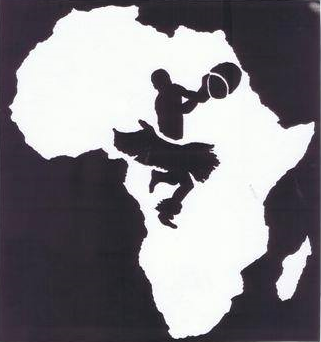
Negritude as a concept was formulated by the Afro-French intelligentsia during the 1930’s particularly by Aime Cesaire and Leopold Senghor. It seeks to highlight certain essences of being an African which include art, rhythm, poetry and superstition. Starting off as a defense against European modernity it was further developed to
reaffirm a collective African identity and simultaneously inculcate a sense of pride. Initially the idea existed only in poetry e.g: Cesaire’s “Journal of a Homecoming” and was formally theorized upon in Leopold Senghor’s essay “Negritude: A Humanism of the Twentieth Century”. The essay seeks to present a variety of “inherent” values among the African people in contrast to rationality driven Europe. The themes that stands out in particular is its appeal to African Universalism.
“What is Negritude? Who would deny that Africans too have a certain way of conceiving life and of living it? A certain way of speaking, singing and dancing; of painting and sculpturing and even of laughing and crying?” – Senghor (Negritude)
“Well then what is Negritude? The sum of the cultural values of the black world.” – Senghor (Negritude)
Senghor’s definitions of Negritude form the crux of the rest of his elaboration. They exercise communal lumping at a continental level hence the values he presents throughout are in his opinion uniform across the African people

Senghor talks about the African Spirit (Xel, Sagi or Degal) from a collective perspective. An inherent conscience among all Africans that exists independently of historical and Western scientific progress.
“His attitude is fundamentally ethical.” – Senghor (Negritude)
This spirit enables the African to be sensually sensitive and on the basis of this conscience, the African classifies and distinguishes the world around them. He goes on to combine art with this collective spirit claiming that it is not an external activity and is rather a “technique of living”. Aesthetic expression for Senghor is universal for all Africans and exist within them in its purest state, through shape, color, sound and movement. It pulsates within them and finally culminates through a sense of Rhythm which is for Senghor, one of the main driving force of African being. Lastly, Senghor views the contribution of Negritude to the “Civilization of the Universal” as necessary. He claims the sense of the collective acts as a defense mechanism in the extremely divided yet interdependent world system.
In conclusion, by creating a universal dichotomy between order and rhythm, rationality and impulse, Senghor not only universalizes certain values which vary within the African context themselves but he reduces African identity to an essence. This concept of universal essence is a-historical and consequently freezes the African in time, leaving no room for change.
Negritude and Universalism
“The call is not the simple reproduction of the cry of the Other; it is a call of complementarity”
Upon first reading Senghor’s “Negritude” back in freshman year, I must admit I thought he was presenting a theory that had no room for diversity. I found this text very reactionary, an extreme response to an extreme state of world affairs. I couldn’t fault him with this response, but I most certainly wasn’t able to see a future in which this theory of negritude could be implemented for the common good of all. Upon reading this text again my opinion of it has softened, although I would be lying if I said that I wholeheartedly agree with Senghor’s vision of things. Perhaps I am still under the influence of Fanon’s parting words in Black Skins, White Masks to give Senghor and negritude a fighting chance.
But the two texts may not be as different as they may at first seem. Which is just another way of saying that there may be room for universalism in Senghor after all.
Negritude is about potential. It is a way of paying homage to the simple yet complex act of being. And so, while it is a literal celebration of blackness, negritude is also an idea. And it is this idea which houses the universal. To Senghor, it is evident, that understanding the meaning of negritude cannot be separated from understanding the meaning of meanings in general. So, while negritude is the very specific celebration of “African personality”, it is also “a network of life forces… a network of elements that are contradictory in appearance but really complementary”.
Negritude as a way of being paints its image of man as a “composition of mobile life forces”. It contains movement. How can binaries exist in a philosophy which believes in the flowing nature of the world? At times it seems like Senghor is overtly praising black culture as inherently superior. But it must also be remembered that, negritude is first and foremost a way of seeing the world— a way which, to quote Fanon, allows the individual to “touch the other, to feel the other” and perhaps, most importantly “to explain the other to” their self.
To ask if Senghor’s version of negritude has space for universalism, is another way of asking if the particular can contain the universal. Cesaire answers this more succinctly than I ever could:
“There are two ways to lose oneself: walled segregation in the particular or dilution in the ‘universal.’ My conception of the universal is that of a universal enriched by all that is particular, a universal enriched by every particular: the deepening and coexistence of all particulars.”
 Decoloniality and Decolonization