
This piece is an imaginative one. It shall aim to look at Dada Amir Haider Khan’s journey to the USSR, juxtaposed to Soviet propaganda posters of that time, and try to imagine how Dada might have seen each one, and how they would have contributed as a pull factor in Dada’s decision to sail to Moscow.
The wake of 1900’s brought forth a world that was a cauldron of oppression and exploitation. The First World War was about to be triggered, United States was at the brink of becoming the next world power, Britain was ruling 25% of the world’s land surface and India had been deeply chained by colonial rule.
In the midst of this, the century also gave birth to Amir Haider Khan, a revolutionary, a communist activist and an unsung hero of the Indian Independence Movement – one who’s words and ideas can be seen physically in Soviet posters.
In 1914, when the First World War broke out, India was naturally a British ally, with most of the Indian army being sent to fight against Germany in different parts of the world. Dada was then overseeing Anglo-Indian trade as a part of the British merchant navy, possibly laying close scrutiny on how exploitative and extractive the relationship of the two countries was.
In 1917, when Dadabhai Naoroji died, he left behind a detailed insight into Britain as a brutal exploiter and the famous drain theory that put Britain at a questionable position within the colonised country. That same year, while Indian exploitation was being measured for its magnanimity, on the other side of the world, women were marching out of their houses, in the Russian capital, Petrograd, protesting over bread shortages and demanding an end to Tsarist autocracy- an action that eventually gave way to the Russian Revolution. If one looks from the side of Dada, this revolution was probably not only an alien idea, but also a seemingly impossible one, especially for India of that time.

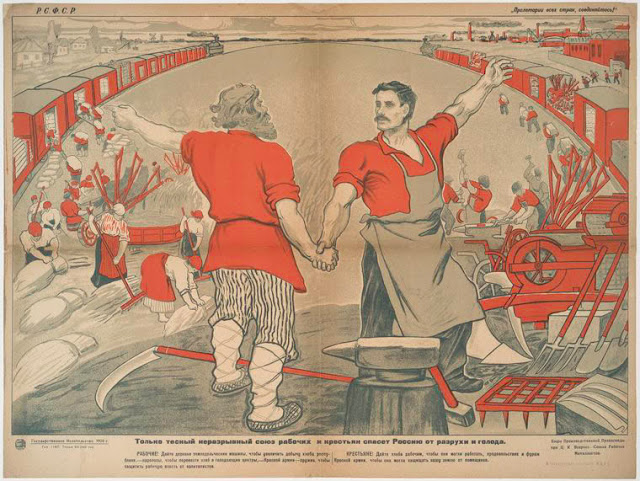
To Dada, these posters could have possibly been a utopia of what an ideal revolution and freedom smelled like- one that was far from India. So far Dada had not seen similar Indian women or peasantry at the forefront of any art, let alone a nation altogether.
In 1918, Dada was posted to the United States Merchant Marine, where he travelled most of the world and met people that eventually could be seen as pertinent in shaping his anti-British and communist ideas. He first met Joseph Mulkane, an Irish nationalist who introduced him to anti-British political ideas, and then some Indian nationalists and Ghadar party members who then also travelled with him to Moscow.
In 1919, while India was suffering from the trauma of the cold-blooded genocide of Jalianwala Bagh, Dada was distributing ‘Ghadar ki Goonj’ to Indians in sea ports around the world. The following image is what the compilation of ‘Ghadar ki Goonj’ looked like:

While Dada was distributing these across the world, and sending out instigative messages for Indians to unchain themselves from colonial rule, Soviet propaganda posters were no different. They were too, sending out similar messages- messages of breaking free from the systematic oppression that dictated that time period.
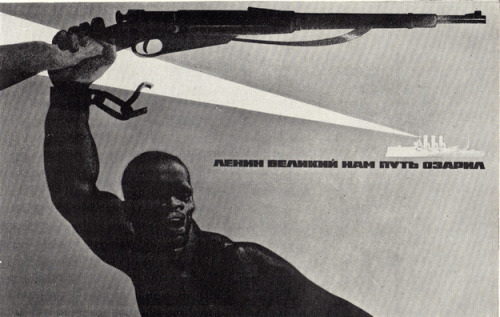
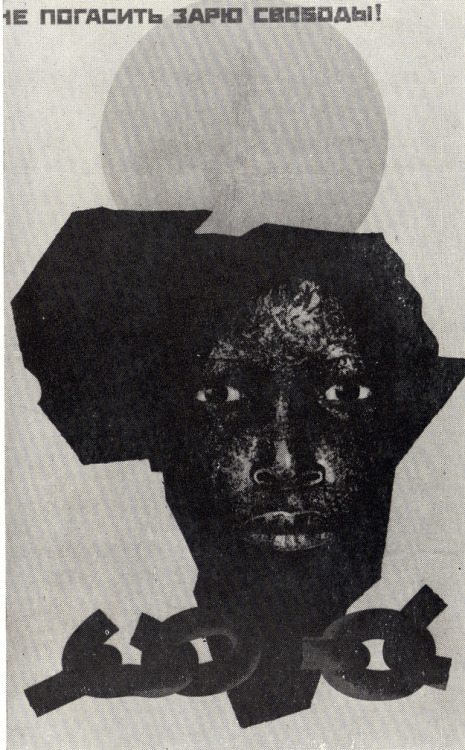
And hence, it can only be imagined that Dada gained inspiration from the Soviet posters for his own anti-colonial movement.
By this time, Dada had become deeply entrenched in pro-communist and anti-imperialist ideas, and by 1920, he was off to Moscow along with the Workers (Communist) Party of USA. Below are some of the posters that Dada could have possibly seen- posters that signalled all what Dadas idea of Soviet Union was, and posters that sync with Dada’s memoirs and what was so special about Moscow in that tumultuous period.

This poster is closely symbolic of what Dada envisioned Moscow as: the capital of the world. It seemed to be a place that welcomed everyone in their raw skin colours and job descriptions, without waging any discrimination whatsoever. The poster is particularly important in understanding why, after travelling a large part of the world, Dada decided to head to Moscow, and how many others, like Dada, were doing the same.
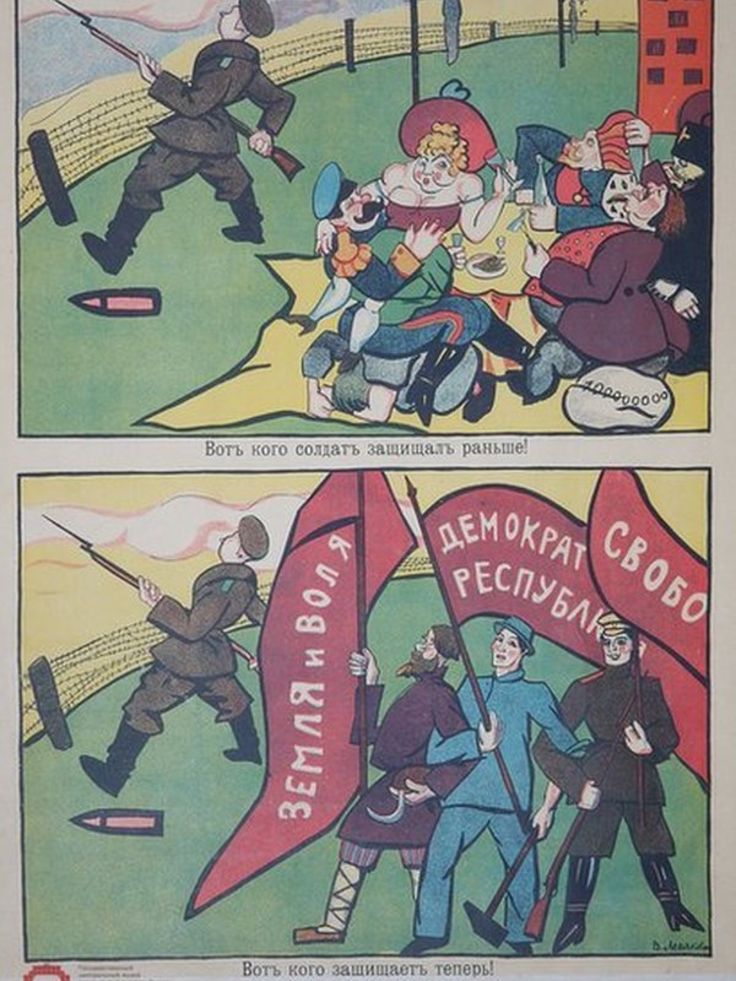
The name of this poster is most important for the wind was quite literally changing while taking most people with it, to the Soviet Union. The top image shows a soldier defending the bourgeoisie with the caption “This is who the soldier used to defend”. The second, post-revolutionary, image features banners bearing the slogans, “Land and freedom!”, “Democracy and the Republic!” and “Liberty!” The caption reads: “That’s who he defends today”. This stands particularly in sync with Dada’s ideology for his main aim was to fight the status quo and overthrow the polarised class system in India. When Dada returned to Bombay in 1928, he was seen bringing this poster to life till his last breath.

This image can be edited out to morph Dada’s face into Lenins, and the impact it holds might almost still remain the same. Dada, like Lenin, envisioned a free future and one that did not dictate the idea of Indians having to occupy the broiler rooms in ships for they could “bear the heat” or for black workers to be the most exploited and underpaid for the simple reason that they were “black”.

It can be wondered if Dada would choose the entire Indian population or the working class of the entire world. His memoirs suggest that he would choose the latter, for the steering principle of his life was communism and clearly, not anti-colonialism. And hence, the poster above stands very relevant for its calls for the protection of not a single nation, but instead, the working classes of all nations.
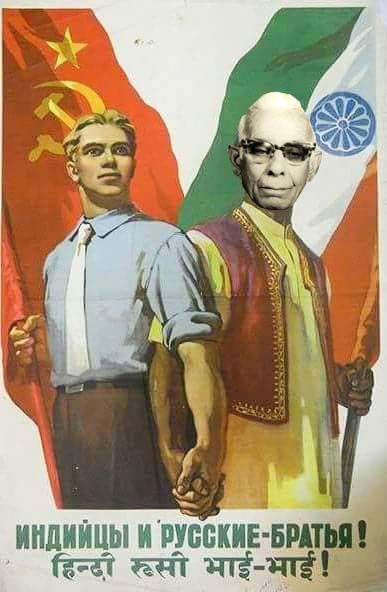
Lastly, here is an edited version of a Soviet poster in an assumption of how Dada might have viewed it. He spent most of his life brining communism to India and bridging the gap between Moscows cohesive diversity and Lahores polarised class system. However, till the eve of December, 1989, he was adamant on believing that the brotherhood he saw in Moscow, with his fellow Soviets, could one day become a reality.

 Decoloniality and Decolonization