Of Propaganda Posters & the Soviet Union

Thunderously the band struck the International and the Russians proudly sang in their own language, “Arise the children of starvation; Arise the wretched of the world…” I too for the first time, felt in the red flag a symbol of victory over the exploiting system.

Dada Amir Haider Khan finds himself in a strange land, with its strange ideas and is confronted by the strange ways with which the people around him go about their strange lives. A complete inversion has taken place. The very same pigment that is so threatening to the “Old World” is celebrated in a land that has, in a way, formed an alternative World Government.

In an even stranger university, that is set to export the revolution beyond this newly initiated center, groundbreaking work is being done. A thorough revamping of any conception of a curriculum is observed. The Eastern Soviet students’ main task is to consolidate power and to build Socialism within their own space but the group that Dada is a member of, one that is as wide in scope as the multiple peoples it represents, has a far more complex task at hand. The group must assist in the national liberation movements for their brethren back home and organize a communist party in their own country and with this bring back the strangeness that Dada finds fascinating and one that he falls in love with.

University Curriculum designed to reach this end gives Dada a spatial imagination. For centuries the only geography that mattered was the link between the colony and metropole but for the first time there is displacement and a new center has emerged that individuals like Dada, and the people he mentions in his memoir, gravitate to. The new center reels people in from corners of the world, ones so disconnected from one another geographically yet connected by the same exploitative system that has been imposed on them. There is, for once, a shred of optimism and it is this optimism that is at the very foundation of Soviet Propaganda posters so characteristic of the time.

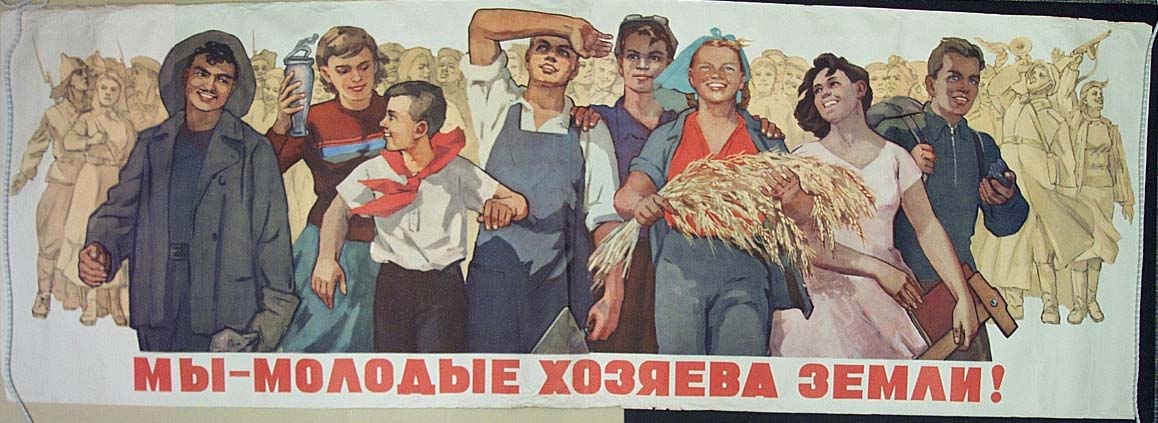
The posters are surreal, the thought of colored men hand in hand with their white comrades with wide smiles on their faces and life in their eyes lit by a shared purpose of improving the well-being of all they know is a complete inversion of what Dada has known, has seen and has experienced.

For the first time, he has been granted recognition, self-worth, pride and, most importantly, a sense of dignity. The very essence of his humanness that had been denied to him all his life is returned to its rightful place and this is the promise that ties all Soviet Propaganda posters together.

Dada experiences this triumphant feeling for the first time when the red flag is hoisted on the Russian Captains command, replacing the old one. For the red flag to be hoisted up the old Italian flag must be brought down, and Dada vividly recounts the former, now replaced, Italian Captain’s reaction.

One could see in the face of the Italian Captain that he, after witnessing the lowering of the Italian flag, felt as though he had lost his little kingdom, he looked depressed.

In the same way that the Soviet propaganda posters are able to communicate the optimism and the promise of triumph that Dada holds so dear, anti-Soviet propaganda is able to reach into the depths of the “loss” that the Italian Captain has felt.

This “loss” can often translate into fear of the bizarre, and strange changes that may unfold if the Soviet dream is realized, and it is this very fear that needs to be understood to make sense of the, perhaps, equally sophisticated techniques with which anti-Soviet propaganda became so effective.

part of a collection at the Afghanistan Centre at Kabul University, 

Artwork produced to counter Soviet Propaganda leading up to the Afghan-Soviet War of 1979 is able to communicate this sense of “loss” and is subsequently channeled into feelings of fear and hatred. The strangeness that Dada feels an unwavering optimism toward is translated to a threat to the very way of life of the Mujahedeen.

It is in these subtle ways that propaganda is able to reach its ends and is able to stir emotions strong enough for people to risk their lives to reach Moscow and for the Mujahideen to be mobilized in the name of God’s work.

The Fatherland of the World’s Proletariat

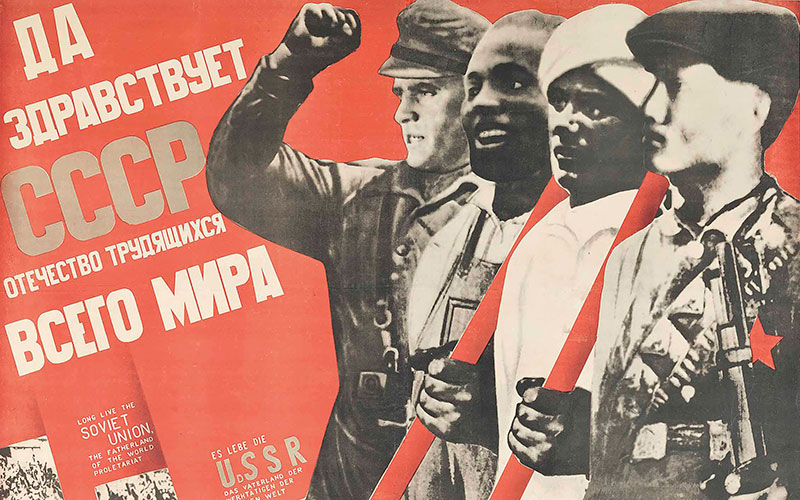
“Long live the Soviet Union, the fatherland of the world’s proletariat”, 1921

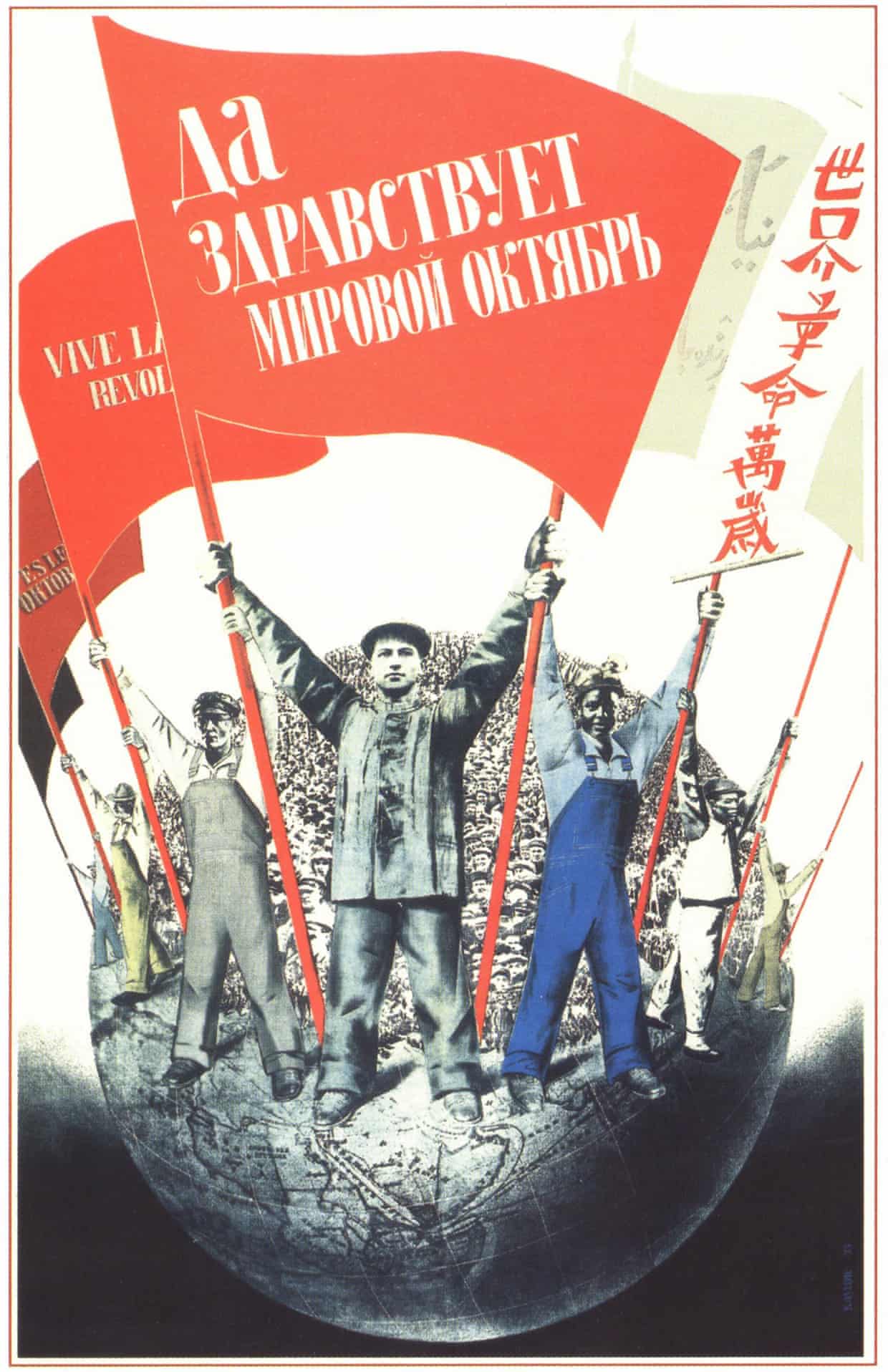
Perhaps the most important feature of the colonized world was a sense of division – the notion of the superior colonizer and the inferior ‘other’. In both posters published during the Soviet era and the memoirs of Dada Amir Haider Khan, this categorization seems to be absent in the Soviet union. Ideas of egalitarianism seem to transcend those of nationality, race, and language.

“All hail the world October revolution!”, 1933

The posters never depict communist revolution as being something that is being imposed on a group of people. Instead, they show the local proletariat overthrowing their colonial masters and revolutionising on their own terms. To assist this, the medium of instruction in the the University of the Peoples of the East was not the same for all students. Instead, they were taught in their local languages, so that they could understand (and perhaps, when they went back to their home countries, teach) important histories and concepts better. In this way, no one language was put on a pedestal and thought of as superior to the rest (which was the case in European colonialism). The main point of focus on communist ideals, and not Soviet culture or language.

The diversity in nationality and race that Soviet posters represent is talked about in Dada’s memoirs as well. Having travelled around the entire world twice, he had not encountered levels of diversity quite as high as he did in Moscow. In addition to the multitude of nationalities and races he came into contact with, Dada also mentions the intellectual diversity present in the Soviet Union. People from all parts of the world, with different levels of education and lived experiences found themselves studying together in what can be called a ‘melting-pot’ of different cultures. This goes to show that the Communist Party was not only indiscriminate in terms to nationality and race but was also not elitist and did not privilege students that were more educated than others, another example of the egalitarianism that the posters imply.

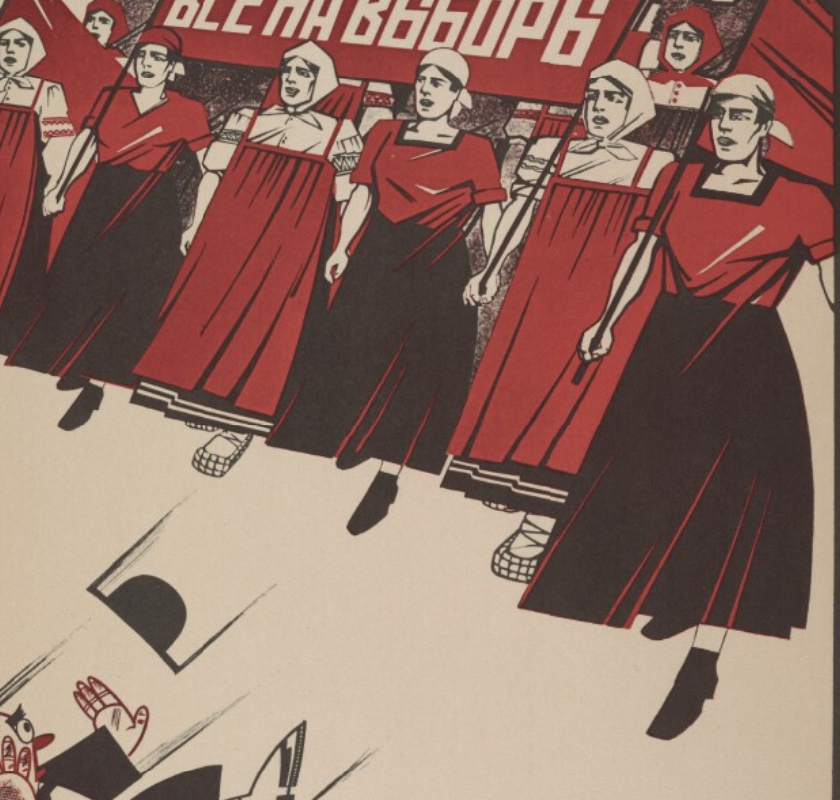
“For the solidarity of women of the world!”, 1973

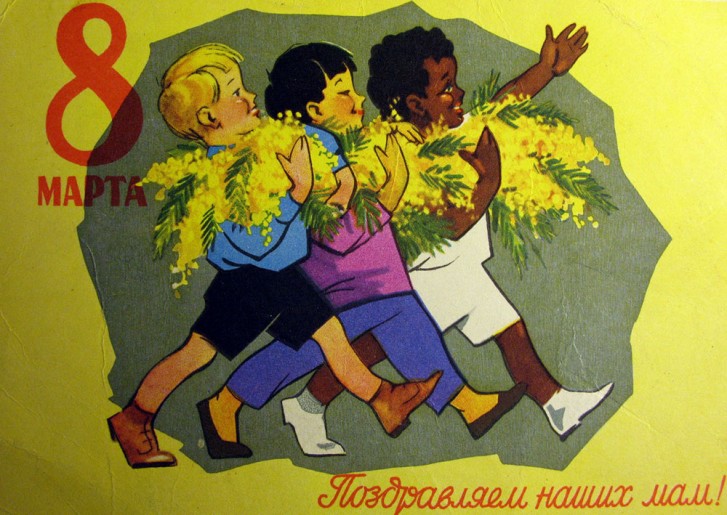
Another instance of equality shown in the Soivet Union that is not present in most other parts of the world is the absence of sexual hierarchies. A number of Soviet posters depict women as being very important contributors to any revolution rather than as just spectators to men’s struggles. Dada also talks about how the female students at the university were virtually indistinguishable from the male ones and were only focused on purposeful activities instead of wasting time on “frivolous” pursuits like other women did at the time.

It is reasonable to consider the ideas put forth by Social Realism and Dada in his memoirs with spoonfuls of salt, given the former’s role as an art form dedicated to propagating pro-Soviet beliefs and the latter’s affinity for and linkage to the communist ideology. Moreover, given the fact that Dada spent almost all his time in Moscow, and mostly under the watch of some sort of Communist Party officials, perhaps the image he paints of the country as being extremely egalitarian and non-prejudiced is not representative of the internal inequality and persecution that exists amongst its territories.

In summary, the lessons he took away from his approximately 2 year stay in Soviet Russia were critical to Dada’s contributions to the Indian national liberation movement. While it did not exactly end up the way the Soviet Union envisioned it would, India’s escape from the ‘waiting room of history’ was the realization of anti-colonial Soviet posters published decades before.

New Order

A striking characteristic of colonialism was conflict and division based on differences. These referred to variation and diversity among the colonised and the colonisers. The huge disparity between the powerless and powerful essentially did stem from differences such as those in their origins, cultures and even skin colours. But these conflicts were not confined only to this power dynamic but extended to the conflicts among the great powers of the world at the time. As Sukarno points out in his speech, up until that time difference was only seen as a threat. Europe had always used difference in any shape or form as a reason for conflict. But he firmly believed the opposite. He felt this was an idea entrenched in colonialism which had to be left in the past for the global south to be able to progress. He wanted to use the diversity among the Afro-Asian world to their advantage, to use it as a means of solidarity. He saw only strength in solidarity as long as there was unity in desire. What he wanted to offer to the world was a new form of humanism, very different from the European humanism of the day. He wanted to smash the outdated ideas of colonialism and set new standards of equality. This idea we see resonating even in Dada’s travelogue.

When Dada Amir Haider travelled to the Soviet Union he was a young man, disillusioned by the system in the United States and ready to change the world. One can notice from his travelogue that the thing he finds most profound is how the university he is attending has students enrolled from across the globe. He is taken aback by the diversity of the students as well as the instructors and brings attention to it time and time again. Living previously in either colonial or capitalist states the normalcy of several different races working together, residing together and helping each other out is a completely new phenomenon to the young revolutionary. It is clear that the double standards of equality within colonialism have been thrown out of this new system which is based on real equality.

This real equality, he observes, can only be achieved through education. The communist state embraced Lenin’s ideas regarding education as the only way forward:

Our task is to learn, learn and learn.

Dada internalised these words and took a deep interest in all that he was taught at the university. This idea was inculcated by the state in its citizens. It was made an essential part of their world view. The state, and all who were part of it, saw education as the only path to progress and as the building block to establishing a new world order. This can clearly be seen through the Soviet posters of the time as well. Several examples can be found praising teachers, mentors and in general the pursuit of education.

Attached above are two posters around the time Dada was living in the Soviet Union and could be some of the Soviet propaganda he came across. One depicts Lenin teaching a child while the other glorifies the educators of the country. Seeing Lenin, who was hailed as a hero of the time, involving himself in a child’s education puts the pursuit as a priority in the lives of the people of the USSR. Through other posters education was clearly shown as the path to take or the ride to hop onto for a brighter future, the best route to take in order to leave the old world order behind.

This intense focus on education also ties into the ideas of equality discussed earlier. Dada describes the Soviet educational institutes as accessible to all kinds of people. But this was not the case in the previous order. Education was only for the privileged and places like the university were never open to the general public. These changing state ideologies and values complemented each other transforming the face of the USSR entirely in contrast to its colonial counterparts across the globe.

3

This number seems to haunt us.

In our initial journey to the Soviet Union amidst the S.S. Patoria were a group of 3rd class passengers. At the grumbling of a young Bulgarian boy I felt compelled to complain of the tasteless food that was being served to us. The steward’s response was heartless, infuriating but most of all expected- indicative of the problem.

His thoughtless response, that “we were, after all, third class passengers”, prickled all “third class” ears.

In this moment I felt two opposite forces raging inside me; two clashing instincts, fighting to take charge.

The first was submissive; it rationalized the steward’s words. It played on my expectations, this is as it is. This is how it was, and for a long time this is how it will be. One day perhaps things may change, but today is not the time. The sun sets and rises, one has to wait till it appears again. This voice was familiar but I could not tell where it came from; it felt safe, like the voice of a teacher, an elder, a master.

The other voice was red hot and trembling with rage. It was powerful and emotional; it could not accept what was said. It spread out in all corners of my mind, ringing bells and sticking knives. I could not help but feel its urgency; it wanted the steward to make amends now. Instant relegation to a patient silent third can no longer be the fate that the world holds for us.It was tired of the third class, third world and a perpetual third place.

I saw the myriad of pamphlets, posters and images of my red destination. They circled the recess of my mind then an image emerged to elevate the second voice. The image contained an Indian and a Russian, hand In hand, with their flags, looking across each other entirely in sync; two sides of the same coin. They were different but completely alike. The Indian was not third, the Russian was not first, it was no longer a math equation. They were friends- comrades- with the potential to build lasting friendships with all people, tearing the numbers that were tagged over their faces. This poster was symbolic of a third way. The Indian man in the poster was confident in his own brown skin; he did not expect nor accept third class anymore, just as I could not in this instant.

 “Are we third class passengers, not human beings?”

The silence encouraged me to push further, to be more forceful.

“After all we are third class, as if we were not human beings?”

These words broke the shackles my Indian companions still suffered from, the expectation and acceptance of third place. We were materially, psychologically and politically always relegated to bronze, urged to quicken the pace to catch up, so that eventually we too would win gold in this race against time. We had to emphatically reject this notion, even if it was simply telling the steward off for assuming third class passengers cannot have genuine grievances, just because they are third class.

 My Indian compatriots chose not to support my decision, and herein lies our greatest hurdle; our passivity in our everyday. The intertwined Indian and the Soviet stand defiant with their nations behind them, looking to change their tomorrow, today. It is when we abandon the expectations of our third class treatment, attack the very idea that it is acceptable, will we find our third way.

Unity in Diversity.

In the 1920s, Dada Amir is struck by the diversity in Moscow’s universities where the new generation of global communists is being trained. Prominently described are people from the ‘colonial and semi-colonial east’, but it seems the whole world could be there.

All are there to be trained and inculcated in a new way of life. The attractions of this life include, prominently, a pride of place. There’s a new world to be created, and in this one, these previously subjugated ‘backwards’ people are the first of this new breed of human and indeed, they shall be the ones to shape it. The Second world seems to offer Dada Amir and those he sees around him a way out of the humiliating circumstances of the first, with its iron-clad hierarchies.

‘What harm is in diversity,’ Sukarno says in 1955, ‘when there is unity in desire?’ While he is using this to describe the gradually decolonizing world, it rings equally true for Dada Amir’s account of the globally ambitious nucleus of the Second World. Desire is what unites the diverse students of Moscow’s University of the Peoples of the East, a nebulous desire for this new world, and the promise of dignity implicit within it.

A geographical shift in importance is evident in both these texts. Amir sees all the world come to gather in Moscow, and Sukarno celebrates holding Third world conferences in their own countries. Each is, in some way, evidence of the convention of a new world – perhaps evidence of a continuous search for an identity to own to be proud of on the part of the colonized – those systematically denied any dignity as an essential part of their exploitation.

Amir sees this dignity in being a proletariat of the Communist International, where his class, his oppression are seen as symbols of pride. Sukarno sees the same in a form of self-emancipation – of creating a defiantly separate identity.

In his speech, he draws an image of diversity in coexistence and cooperation, different ethnicity, cultures and religions, united by their pasts as the disregarded of the world, their recent history of a fight for freedom, and by a vision for the future undefined either by, or in opposition to their previous masters.

He envisions, thus, a third world – defined by this diversity and this pride,
this defiant dignity – in this definition of themselves, by themselves. There’s a
search for worth, a need to reset the terms of engagement. After all, the diverse nations he’s addressing cannot claim preeminence in the ‘modernity’ of Europe. Instead there must be a worth found in what is intrinsic to the Asio-African nations. 

Sukarno finds this worth in a morality lingering within the third world,
otherwise abandoned by a world driven to ever newer and, to him, madder, heights by cold-war polarization.

It is possible to see Sukarno’s words as the next generation of Dada’s vision of hope. Where the Second World essentially offered an alternative to the First, an alternative geography, an alternative scale of value, an alternative opinion of the otherwise epistemic empire, the Third offers a still greater break from what was, eventually, still a European conception of the world. In short, it offers a still greater reclamation of self-identity, if with less hope of a Utopian future attached to it.

In a sense, both texts offer the same thing – a new world in which a new dignity, a new worth, awaits those who previously had none. Their explanations are different – Communism sees the meek (or rather the workers – easily equated to the colonized and oppressed) as the celebrated heirs of the earth, and Sukarno sees Afro-Asia as offering a third way of humanity – a new hope for a grim world. Unity of desire, in both cases, is considered above the conflict-inducing diversity of the first world.

The difference is in the details. Both inter-war Moscow and Sukarno celebrate diversity within the unity of purpose. Moscow, however, treats it as the exporting of the second world, perhaps, where unity of purpose is emphasized over incidental diversity, while Sukarno seeks to make diversity an essential component of his third world – and unity a virtue.

Still, both together represent the evolution in counter-colonial thought, as well as trends in self-reclamation of the identity of the colonial world, first by allying with the diversity-tolerant second world, and then by owning their own diversity within their own identity. Perhaps, if there is one thing that shines through, it is the importance of reclaiming self-esteem, self-worth. Both of them represent a break from traditional first world limitations. Both of them represent hope in a new way – a new world.

“Bhinneka Tunggal Ika”- Unity in Diversity

Colonial discourse has a temporality encoded within it. It is in the accusation the colonized people were primitive and savage but mostly, that they were backwards with respect to time. They were regarded as the past. In short, one of the crimes that colonialism committed was stealing the colonized of their present. They were seen the past of the colonizers. Then and even now, the colonizers are the benchmark by which the decolonized countries measure their success; a measurement that has always found them lacking.  This assessment enabled the British and the rest of the European nations to dictate their own narrow brand of humanism which proclaimed that theirs was only one way to be civilized, to be modern; the only way to be human.

Where Europeans saw diversity as a threat to their dominance, to Sukarno, and Dada Amir Haider Khan, it was a source of mutual affirmation. In the Bandung Conference, there were representatives from all over the Asia-African continent, all different and yet of one mind in their pursuit of a new form of humanity. For Sukarno, this new form of humanity meant the rupture of colonial time in favour of a new era, one where the colonized countries would stand in accordance against the immorality of the colonizers.  In his speech, we can perceive a sense of palpable fear of the modern world which had fallen into decay at the hands of capitalism and colonialism but there was also hope they as the newly decolonized could “mobilize the Moral Violence of Nations in favour of peace.”

Similarly, in Dada’s account, we feel the same hope and the beginning of a new epoch of history, one that is governed by communist beliefs. Though Dada’s time was before that of Sukarno’s, their belief and strive for a new reality was similar. For Dada, his experience in Moscow was an inversion of the reality that he had experienced his whole life. In Moscow, he and his fellow colleagues were seen as equals. Whereas In India, European prostitutes were not allowed near Indian camps for fear of them despoiling “white virtue or womanhood” and in America, blacks and Indians were dealt as inferior. In Moscow, they were admired, even revered, They had the freedom to speak their concerns and issues without fear of rebuttal. The Russian women walked and flirted with black men. They were all permitted and encouraged to learn and to enlighten through their own experiences; all these banal activities which had otherwise been impossible epitomized the essence of communism for them. In Moscow, Dada had the opportunity to be proud of his origins, of his brownness. Hence both pieces, though written in different time, have similar themes. Fighting against a common enemy, the colonizers, the capitalists, both Sukarno and Dada’s account mention and celebrate the virtue of diversity. In a way, Dada Amir Haider Khan’s experience in Moscow was the physical manifestation of the ambitions that Sukarno articulated in his speech.

In both cases, there is also a shift of the political geography axis the world. For too long, the world was divided and seen in the context of the relationship European nations particularly Britain had with its colonies While Europe was once seen as the centre of the civilized world, during Dada’s time, Moscow had suddenly become the revolutionary capital of the world. Poets, writers, revolutionaries etc. from all over the world came to Moscow for training. Likewise, the Bandung Conference also marked the first intercontinental conference of coloured peoples in the history. It took place in Indonesia, a previously colonized country. The location of the conference itself speaks to the inversion of the shifting political geography. This is not saying that the power had completely been vested from the hands of the British. That was neither the case in Dada’s time in Moscow during the Anti War Period nor during the Post-colonial period when the Bandung Conference took place. However, it certified a different actuality, one that was inconceivable before.

Though Dada Amir Haider’s account and Sukarno speech take place at different times in history, they are easily alignable due to the nature of their struggles. Both revolutionaries were simply advocating for an alternative reality; a new way forward. While neither were wholly victorious in their endeavours, one can not diminish the importance of either Dada’s experience in Moscow nor the existence of the conference itself and the gravity of Sukarno’s speech, either of which would have at one point, been mere wishful thinking. It was a new reality that was constructed- however messy and bloody it ended up being.

Dada’s world

The most striking part of Dada’s memoirs for me was when he was bidding farewell to the Soviet Union on the eve of his return to India. When Dada compares his last night in the USA with his last night in the Soviet Union, he remarks that “this parting was in a different context entirely.” Dada goes on to explain that despite some material comforts of life in the US, he had never felt like a part of that society because of how he was treated as a second-class citizen and constantly taunted because he was a “foreigner”. In the Soviet Union on the contrary, he had never felt like an outsider or inferior in any way.

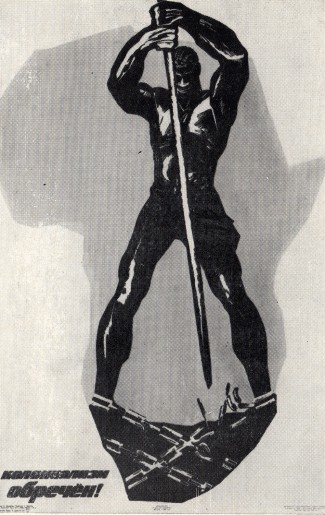
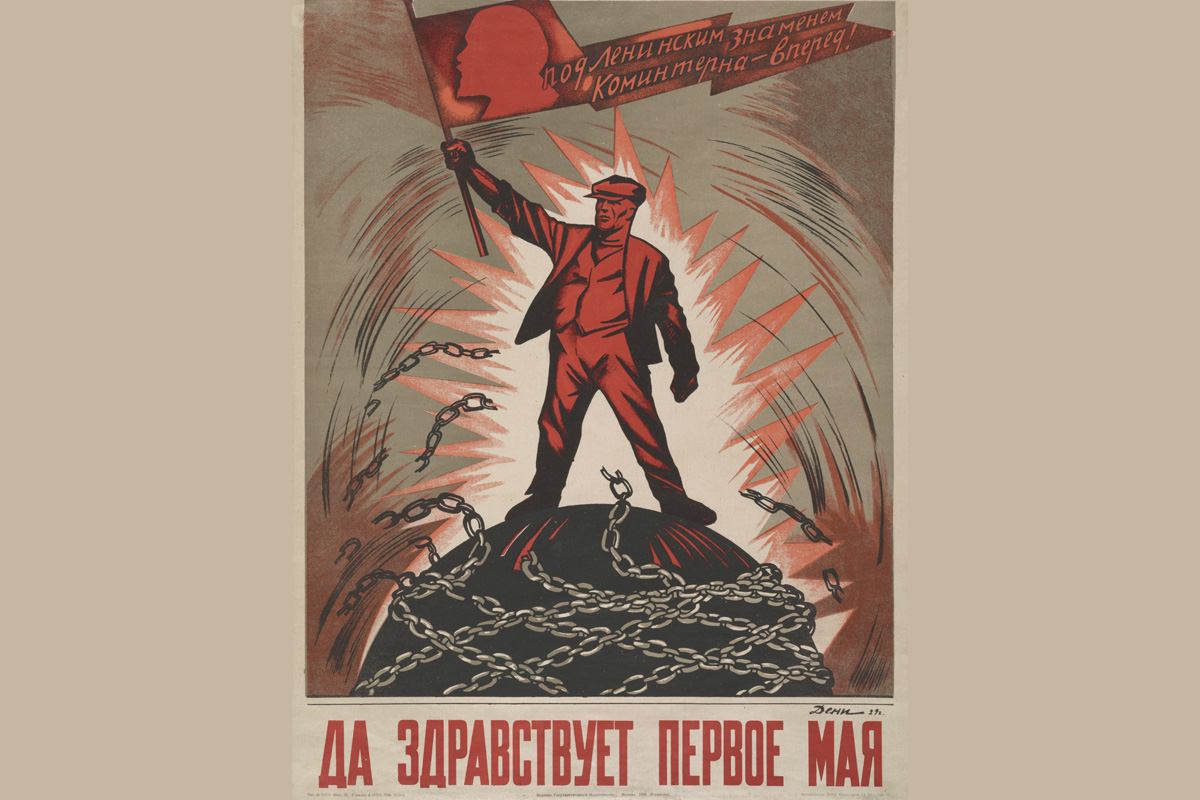
 No one had ever told him to “go back” or judged him on account of his race or class. The recognition of his humanity in the Soviet Union made him fall in love with that world and urged him to create a mirror image of that world in his own “politically slave nation”. When he begins reflecting as to how his brief stay in the Soviet Union completely transformed him as a person, he realizes that he has become “socially aware” which is accompanied by the understanding of his role in creating the classless society that the Soviet Union promised. A world that includes all, and where no one is made to feel small, unwanted or burdensome. I think these two posters do speak to the sentiments that Dada was trying to convey.

The first poster essentially feels like a global comradely struggle for a world that is no longer confined within the realm of imagination and the most important part, which was inconceivable at the time is how there are no racial barriers in this struggle. There was no superiority or inferiority for they were all comrades and I suppose that’s just the beauty of comradeship and the struggle is not a solitary one and maybe that’s why Dada felt so at home in the Soviet Union.

The struggle for a classless society, for a world where there are no hierarchies was more than anything a struggle for reclaiming one’s humanity and therefore the revolution could never be contained or reduced to certain geographical localities because it spoke to the human spirit. Dada also mentions in his memoirs that in the US “individual motive had dominated every aspect of American social life” which again was in direct contrast with the Soviet Union where you were identified with the collective and in Dada’s case his Indo-American group. The revolution again was all about uniting people across the world and making people not only fight for themselves, but for each other.

This was a completely different ethical outlook of inhabiting the world which was based on love for each other and perhaps that is why Dada felt the responsibility of carrying the revolution to his birth country which had certainly not given him anything except his birthright. He chose to carry that burden and sacrifice his life in pursuit of a better world, a world he could call his own. I chose the second poster because it reminds me of Dada himself and all he stood for. By freeing himself from the chains of oppression, he reclaimed ownership to his world as well; he was no longer an object to be acted upon by historical forces but a very conscious subject and as cliched as it sounds a maker of his own fate. He was truly, incredibly remarkable.

Dada Amir Haider Khan ko lal salam

A Journey to the “centre” of the World

There is much to see in Dada Amir’s account of his transformative experience as a young student in Moscow. His account has all the essential elements of a bildungsroman (a coming of age novel) as his successes and hardships, interactions with many influential people and newfound friendships all lead to his self-realization. Yet it is the journey, the literal journey of two and half months, to Moscow that is crucial to Dada’s eventual self-realization and remaps the world that he and all of us were accustomed to.

This remapping of the world, as he knew it, was a process that perhaps would be impossible without the travelling that preceded it. Along his travels from the US to Moscow we get to see Dada caught in the social hierarchies and his attempts to escape them when he rallies all the third class passengers with him to be treated with respect, we also get to see the confinements placed on him and his fellow Indian passengers and their mobility as they were headed to the “forbidden land” of USSR. But most importantly we see how that “forbidden land” turns into the promised land for Dada and many others like him as the journey progresses.

In many ways, Dada’s journey can be encapsulated in the poster above. Moscow transforms into a place where these borders drawn up by the imperial powers would dissipate and cease to matter and it becomes the hub of a mass movement, a grand revolution, a center of the Earth where the oppressed groups gravitate towards. Therefore, this journey that Dada starts upon draws up a new kind of a world, much like the world depicted in the poster above, where the lines of division slowly disappear and people belonging to different countries but carrying the same history of oppression with them are marching towards a grand task. The grand task in the form of a Kraken like creature with tentacles clasping the world looms over the people marching towards a single destination. Similarly, in Dada’s account there is a hovering sense of urgency as he nears Moscow and his presence in this narrative is made significant.  

It is through the act of traveling how we mostly map our world and where we belong in it. As Dada made his journey from the US to Moscow, the maps that he had consulted all his life became outdated and a new map started to emerge. A map that finally led him to the end of his journey.

The Power of One

Dada and Sukarna, albeit separated by time and geography, are together in their fight against colonialism. Their march towards a world free from colonial traces is marked by acknowledging the power of one. Dada, through his experiences in Soviet, realized the strength of an individual person and Sukarna pledged to bring these people together to raise their voices as a united front. This unity paved way for a brighter future- a future not tainted by silence, rejection and suppression.

In a time where voices of the coloured race were largely silenced, Dada took the courage to tread on a path that directed him to opening unprecedented doors. This unique experiment exposed him to acknowledge his self worth. Upon his induction in the university, Dada’s supposed weaknesses became his strengths. The very colour of his skin which has always been the cause of his rejection became the reason for his appreciation. Dada was just an insignificant person back at home. However, at the Soviet Union, he was the very person who could bring about change.

Through Dada’s travelogue, it becomes apparent that the university in Moscow not just educated its students but prompted a ‘new’ person to emerge from within. The focus of the rigorous curriculum was then to bring the best out of them that would inform each learner of what stands ahead and prepare them to be sent away to export these notions to other areas. While the university focused on equipping students with the necessary skills to become a new well informed individual, Sukarna emphasized on these new characters to come together as an African Asian nation, leaving behind superficial differences of language, ethnicity and religion behind.  The university aimed to craft new individuals. Sukarna aimed to build a new lost unity among them.

Since each one possesses the ability to make revolution, Sukarna recognized the magnitude of the change that can be brought about by uniting these passionate people. He thus invited them to come together and become part of this struggle. They were all united by a common abhorrence of colonialism, regardless in whatever form it appeared. Through his speech, he drew upon examples from the past for instance settling the fight in IndoChina by unanimously doing their part and instilled confidence in his fellows that together they can save each other from the claws of colonial powers. And they can impact the world affairs, for when standing shoulder to shoulder they become a majority, ready to fight the minority that has silenced them for centuries.

The struggle of both Dada and Sukarna is based on the power of one.  Dada embarked on a journey to break away from the shackles of capitalism. This one individual was driven by hope and determination to fight the injustices. Sukarna also worked along the same lines and invited people to unite for a common desire- a desire to shun away the evil of colonialism. For together if they will speak, the world is bound to listen.

The promise of liberation

Dada Amir Haider Khan’s travelogue presents a break with the old world. It paints a different universe, where diversity is celebrated and people of different ethnicities, different levels of education, nationalities and religion coexist as can also be seen in the posters. Difference is not the basis of leaving people out but rather allowing solidarity to exist. As Dada Amir put it, USSR was about the survival of all. The groups of people that have historically been presumed inferior are given that self worth and respect that they were rid of in a colony or under capitalism. There is no need for amassing or erasing difference and there is room for other modes of being other than whiteness.

The posters above resonate with Dada’s travelogue as they depict the international solidarity that is there when people who have been other-ised in different contexts have joined hands to fight against colonialism, imperialism, and capitalism. ComIntern allows for this solidarity to exist and extend to to all parts of the world where there is a struggle for liberation. Dada Amir mentioned the British working class going on a strike and how people from USSR contributed money to keep the strike going. This solidarity is the means through which ComIntern is anti colonial and thus trains people from the colonised world through education and military training they are well equipped for the struggle. The students at the university are of different educational backgrounds and are given an introduction to different subjects, there was increased emphasis on learning. Within the learning too, there is acceptance of difference where people are allowed to retain their languages.

The Indo-American group would get attention and people would want to meet them. Dada contrasted Moscow with USA and differentiated it in terms of discrimination and prejudice. Blackness also had a different meaning in the USSR, it was a marker of pride as McKay also put it. Here, when black men interacted with Russian women, it wasn’t seen as threatening nor were they lynched as opposed to the United States. 

downloadsp19ussr0099

Alexandra Kollontai argues for the rise of a new woman, a heroine, who is different from women in the past, she is single, no longer the subordinate or the reflex of a man. The women that Dada did mention in his travelogue were a part of the struggle such as comrade Suhashini and enrolled as colleagues with him, although he does not delve much into their lives. He briefly mentioned a young black woman, Jenny would carry a gun on her shoulder. On another instance, he mentioned women protesting when it came to decision making. He also added that women of the communist league were busy in contributing to the struggle.

The posters above represent this new woman who is free from the shackles of the home, is as much a part of the struggle as men. A prominent theme of the soviet posters were women who were represented in different roles, holding children, working, marching alongside men or together. This reflected how women were as much a part of the struggle as men. It is interesting to note that some of the posters represented women as mothers even though it was the time of the “new woman.” The posters also depict the working class women who were aligned with peasants to overthrow the bourgeoisie. Dada narrated an incident where a woman who was a sweeper argues about who will perform childcare.  It reflected how class and patriarchy intersect to oppress women and their rising up against both.