
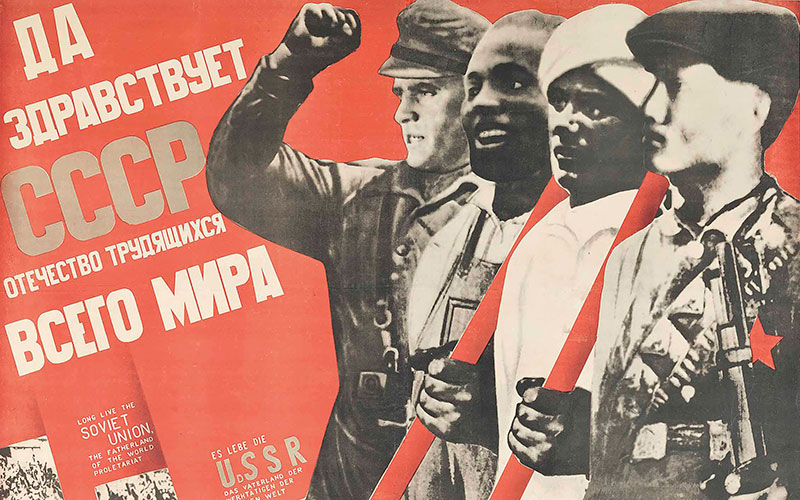
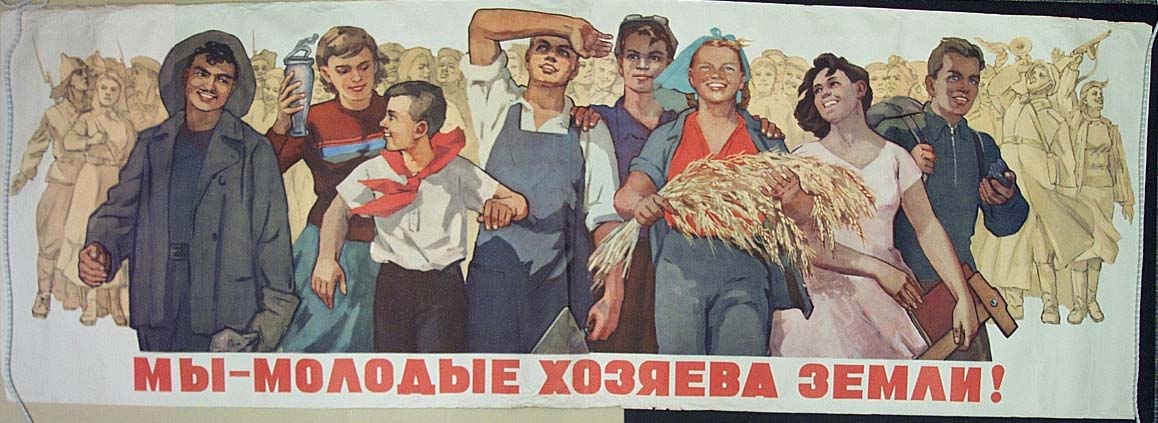
Perhaps the most important feature of the colonized world was a sense of division – the notion of the superior colonizer and the inferior ‘other’. In both posters published during the Soviet era and the memoirs of Dada Amir Haider Khan, this categorization seems to be absent in the Soviet union. Ideas of egalitarianism seem to transcend those of nationality, race, and language.
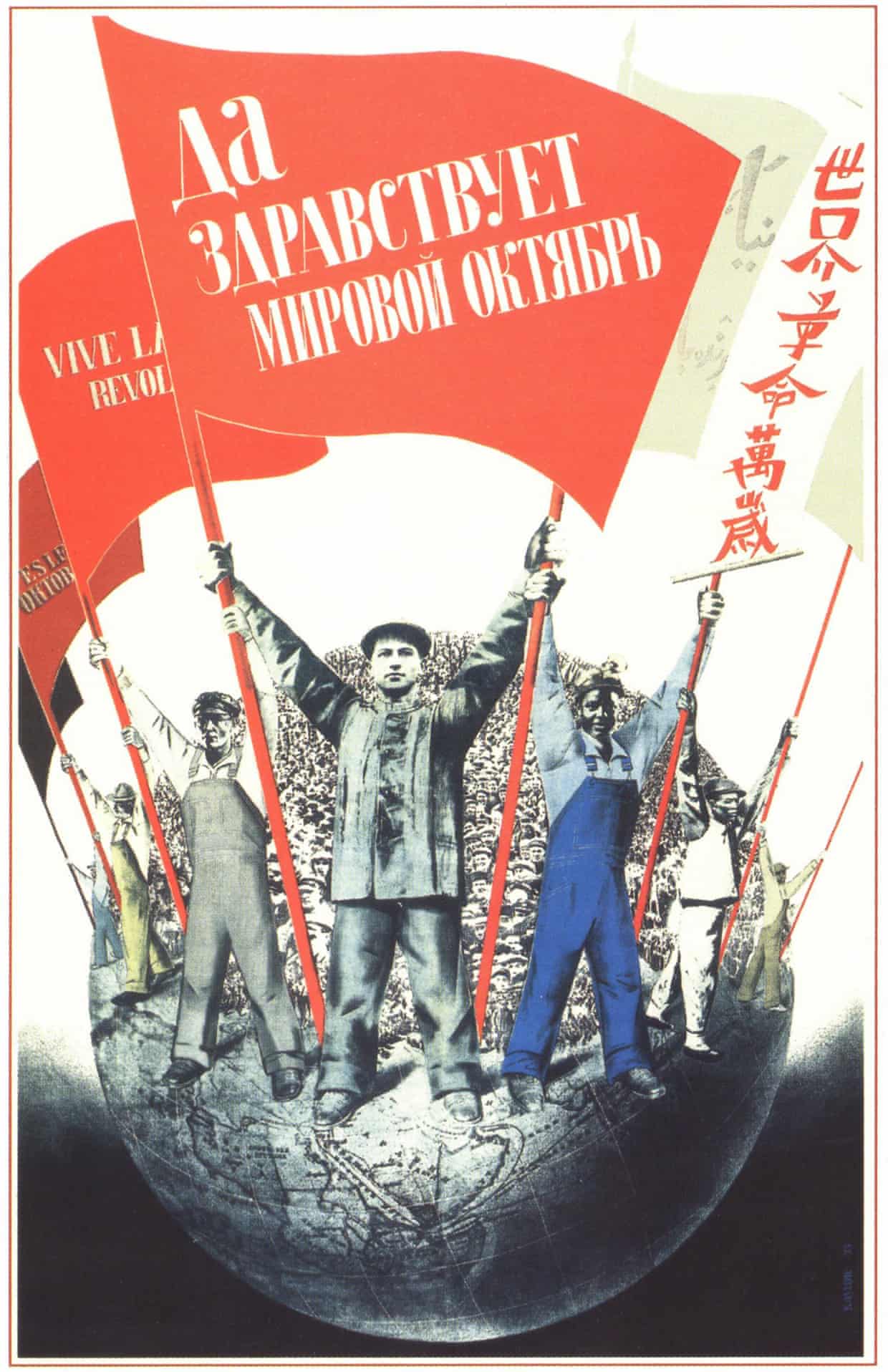
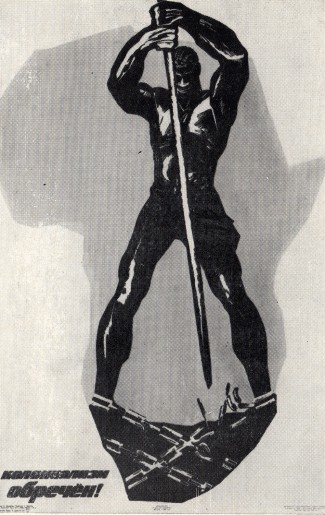
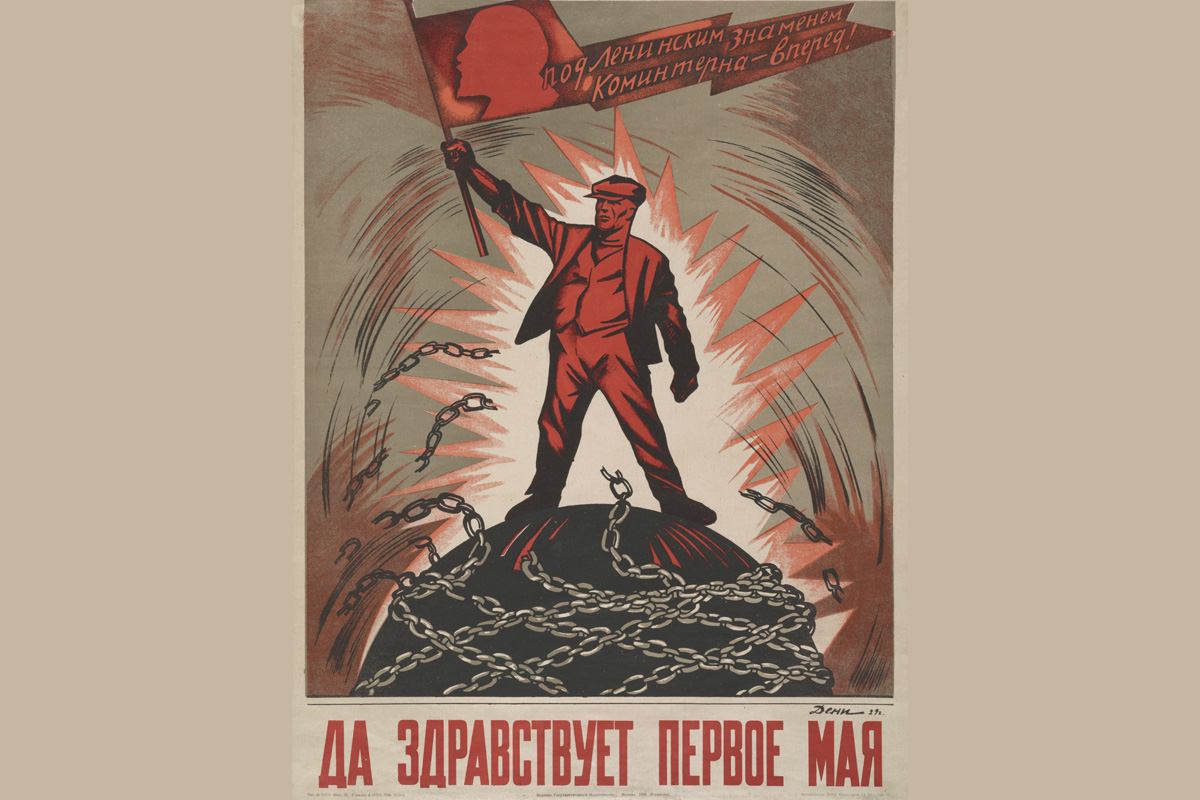
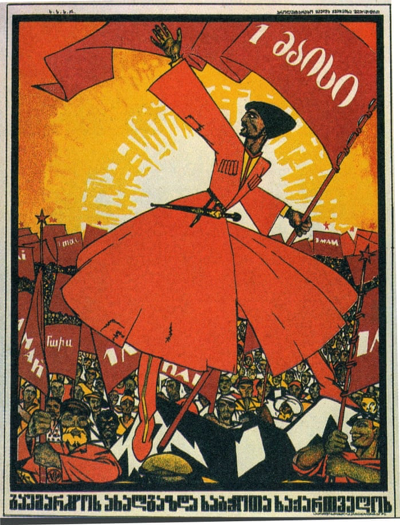
The posters never depict communist revolution as being something that is being imposed on a group of people. Instead, they show the local proletariat overthrowing their colonial masters and revolutionising on their own terms. To assist this, the medium of instruction in the the University of the Peoples of the East was not the same for all students. Instead, they were taught in their local languages, so that they could understand (and perhaps, when they went back to their home countries, teach) important histories and concepts better. In this way, no one language was put on a pedestal and thought of as superior to the rest (which was the case in European colonialism). The main point of focus on communist ideals, and not Soviet culture or language.
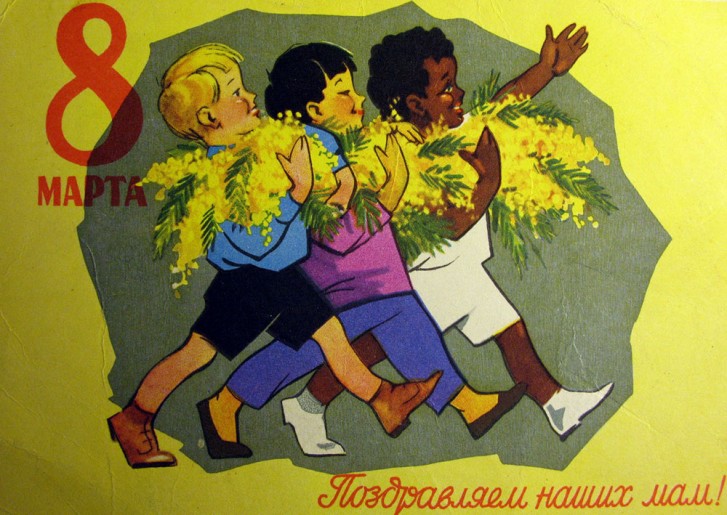
The diversity in nationality and race that Soviet posters represent is talked about in Dada’s memoirs as well. Having travelled around the entire world twice, he had not encountered levels of diversity quite as high as he did in Moscow. In addition to the multitude of nationalities and races he came into contact with, Dada also mentions the intellectual diversity present in the Soviet Union. People from all parts of the world, with different levels of education and lived experiences found themselves studying together in what can be called a ‘melting-pot’ of different cultures. This goes to show that the Communist Party was not only indiscriminate in terms to nationality and race but was also not elitist and did not privilege students that were more educated than others, another example of the egalitarianism that the posters imply.

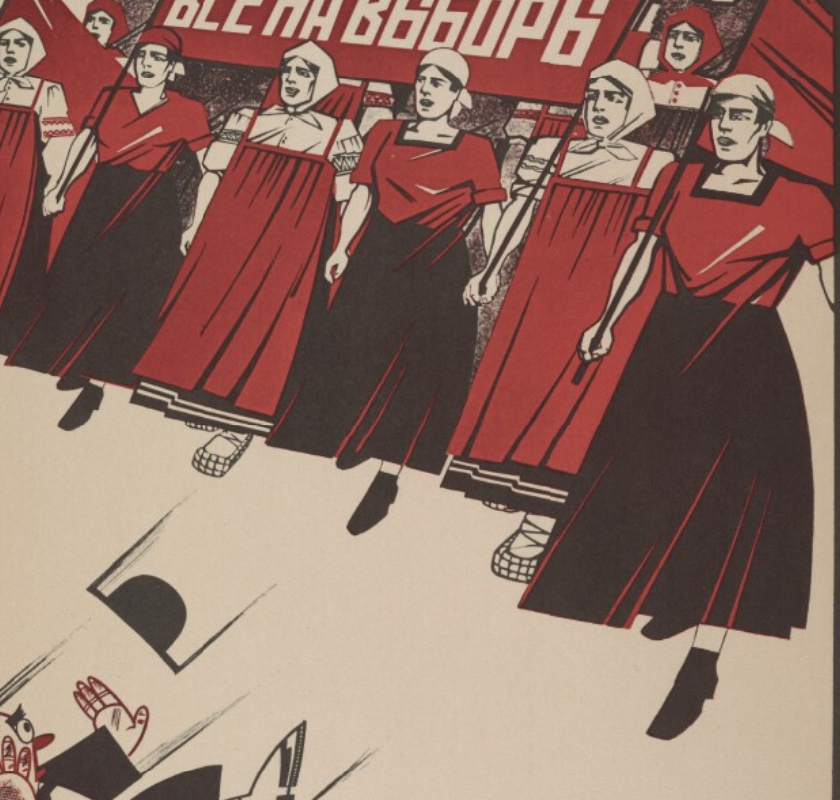
Another instance of equality shown in the Soivet Union that is not present in most other parts of the world is the absence of sexual hierarchies. A number of Soviet posters depict women as being very important contributors to any revolution rather than as just spectators to men’s struggles. Dada also talks about how the female students at the university were virtually indistinguishable from the male ones and were only focused on purposeful activities instead of wasting time on “frivolous” pursuits like other women did at the time.
It is reasonable to consider the ideas put forth by Social Realism and Dada in his memoirs with spoonfuls of salt, given the former’s role as an art form dedicated to propagating pro-Soviet beliefs and the latter’s affinity for and linkage to the communist ideology. Moreover, given the fact that Dada spent almost all his time in Moscow, and mostly under the watch of some sort of Communist Party officials, perhaps the image he paints of the country as being extremely egalitarian and non-prejudiced is not representative of the internal inequality and persecution that exists amongst its territories.
In summary, the lessons he took away from his approximately 2 year stay in Soviet Russia were critical to Dada’s contributions to the Indian national liberation movement. While it did not exactly end up the way the Soviet Union envisioned it would, India’s escape from the ‘waiting room of history’ was the realization of anti-colonial Soviet posters published decades before.





 Decoloniality and Decolonization